Car Rental in Gwangju (South Korea): The Practical Guide
Securing a car rental in Gwangju, South Korea gives you direct access to the Jeolla region, with major pickup spots located in Downtown and Maegok-dong.
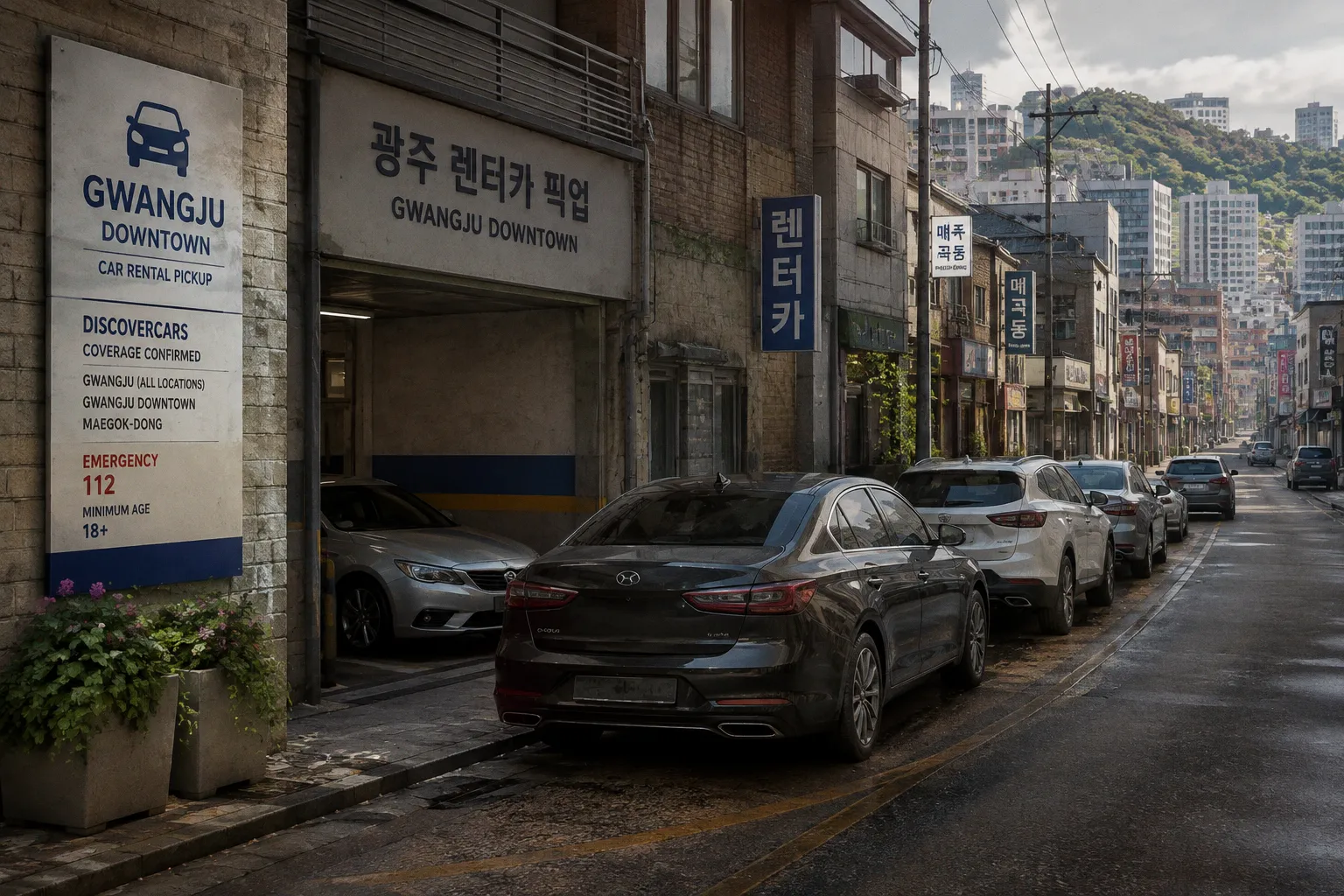
Foreign visitors need an International Driving Permit alongside their national license to pick up a vehicle.
Compare car rental deals in Gwangju
Driving: on the right.
Local currency: KRW.
Pick-up: downtown
Pick-up points: Gwangju (all locations), South Korea · Gwangju Downtown, Gwangju, South Korea · Maegok-dong, Gwangju, South Korea
Partner link — DiscoverCars comparison| City population | About 1,401,235 residents |
| Key pickup locations | Gwangju Downtown, Maegok-dong |
| Minimum rental age | 18 years old |
| Required driving documents | Valid passport, national driver's license, IDP |
| Expressway toll system | Hi-pass electronic transponder |
| General emergency number | 112 |
Gwangju is the cultural and logistical anchor of southwest South Korea, home to about 1,401,235 residents. While the urban core is served by municipal transit, choosing to rent a car in Gwangju unlocks seamless travel across the surrounding national parks, coastal peninsulas, and rural heritage towns of the Honam region. Most vehicle pickup counters are situated in central districts, including Gwangju Downtown and northern residential hubs like Maegok-dong. Before getting behind the wheel, international travelers must secure an International Driving Permit (IDP) and understand local expressway protocols, including electronic Hi-pass tolling. This navigation guide outlines the documentation requirements, vehicle collection locations, toll management, and key regional day trips from Gwangju.
L'Essentiel: Driving Rules, Age Limits, and Tolls
Driving in South Korea involves clear nationwide regulations that apply directly when operating a vehicle in Gwangju:
- Driver requirements: The legal minimum age to rent a car or motorcycle in South Korea is 18. Short-term international travelers must present a valid International Driving Permit (IDP) along with their original national driver's license and passport at the rental desk.
- Highway tolls: South Korea's expressways utilize the electronic Hi-pass system. Rental vehicles are generally equipped with a Hi-pass transponder, where rates vary depending on your vehicle class. Ensure your rental provider clarifies whether toll balances are settled upon vehicle return or via a preloaded card.
- Emergency support: In case of an accident or roadside emergency anywhere in the country, dial 112 for general emergency assistance.
- Green mobility: South Korea has heavily expanded passenger EV support (with national subsidies reaching 936 billion won in 2026), making electric vehicle rentals increasingly accessible across regional charging networks.
Rental Costs and Advance Booking Strategies
Car rental pricing in Gwangju varies based on seasonal demand, vehicle type, and lead time. Peak domestic travel periods, including public holidays and autumn foliage weekends, often see high fleet utilization.
| Booking Aspect | Recommendation |
|---|---|
| Comparison platforms | Compare rates via platforms like DiscoverCars to secure inventory across local desks |
| Lead time | Reserve at least 2–4 weeks in advance for standard sedans; earlier during national holidays |
| Vehicle class | Compact and mid-size sedans offer the best balance for city parking and highway travel |
| Fuel & electric options | Standard gasoline and hybrid models remain standard, with EV options steadily expanding |
Reserving in advance online guarantees vehicle availability in specific hubs like Downtown or Maegok-dong without relying on limited on-the-spot walk-in allocations.
Where to Pick Up Your Rental Car in Gwangju
Rental inventory in Gwangju is distributed across specific commercial and suburban sectors rather than centralized in a single large depot:
- Gwangju Downtown: The primary pickup zone for travelers arriving via regional rail and intercity buses. Counters here provide straightforward access to arterial roads leading out of the city center.
- Maegok-dong: Located in the northern district of Buk-gu, Maegok-dong serves as a convenient collection point if you want to bypass central urban traffic and head straight toward northern expressways.
- All Gwangju coverage: When booking online, filtering for all Gwangju locations allows you to compare availability across both central and neighborhood-specific branches.
Practical Tips for Driving Out of Gwangju
Leaving Gwangju puts you on direct expressway routes connecting to Jeollanam-do and Jeollabuk-do. Keep these practical habits in mind:
1. Navigating toll lanes: If your rental has a Hi-pass transponder, drive through the dedicated blue Hi-pass lanes at moderate speeds. If using cash or credit card, stick to the designated manual toll booths.
2. Urban congestion: Downtown Gwangju experiences heavier traffic during morning and evening rush hours. Plan early morning departures if heading on full-day road excursions.
3. Navigation systems: Request an English-language GPS unit at the rental counter or utilize localized mobile navigation apps for accurate lane guidance on multi-lane interchanges.
Where to go by car
| Destination | Distance | Time | Tolls (est.) | Why go |
|---|---|---|---|---|
| Damyang Bamboo Forest & Metasequoia Lane | ~25 km | ~0 h 35 | — | Visit famous bamboo groves and tree-lined driving avenues just northeast of the city. |
| Mudeungsan National Park | ~15 km | ~0 h 30 | — | Explore prominent columnar joint rock formations and scenic mountain lookouts overlooking Gwangju. |
| Boseong Green Tea Fields | ~65 km | ~1 h 10 | — | Tour terraced tea plantations stretching across the rolling hills of the southern coast. |
| Suncheon Bay Wetland Reserve | ~85 km | ~1 h 15 | — | Walk through extensive coastal reed fields and tidal mudflats. |
| Yeosu Coastal Peninsula | ~120 km | ~1 h 40 | — | Drive along scenic maritime bridges, harbor viewpoints, and southern coastal islands. |
Tolls: rates vary by country and route segment — check current pricing before you go.