Car Rental in La Paz, Bolivia: A Practical Guide
Securing a reliable car rental in La Paz, Bolivia is the key to exploring the high-altitude Andes at your own pace.
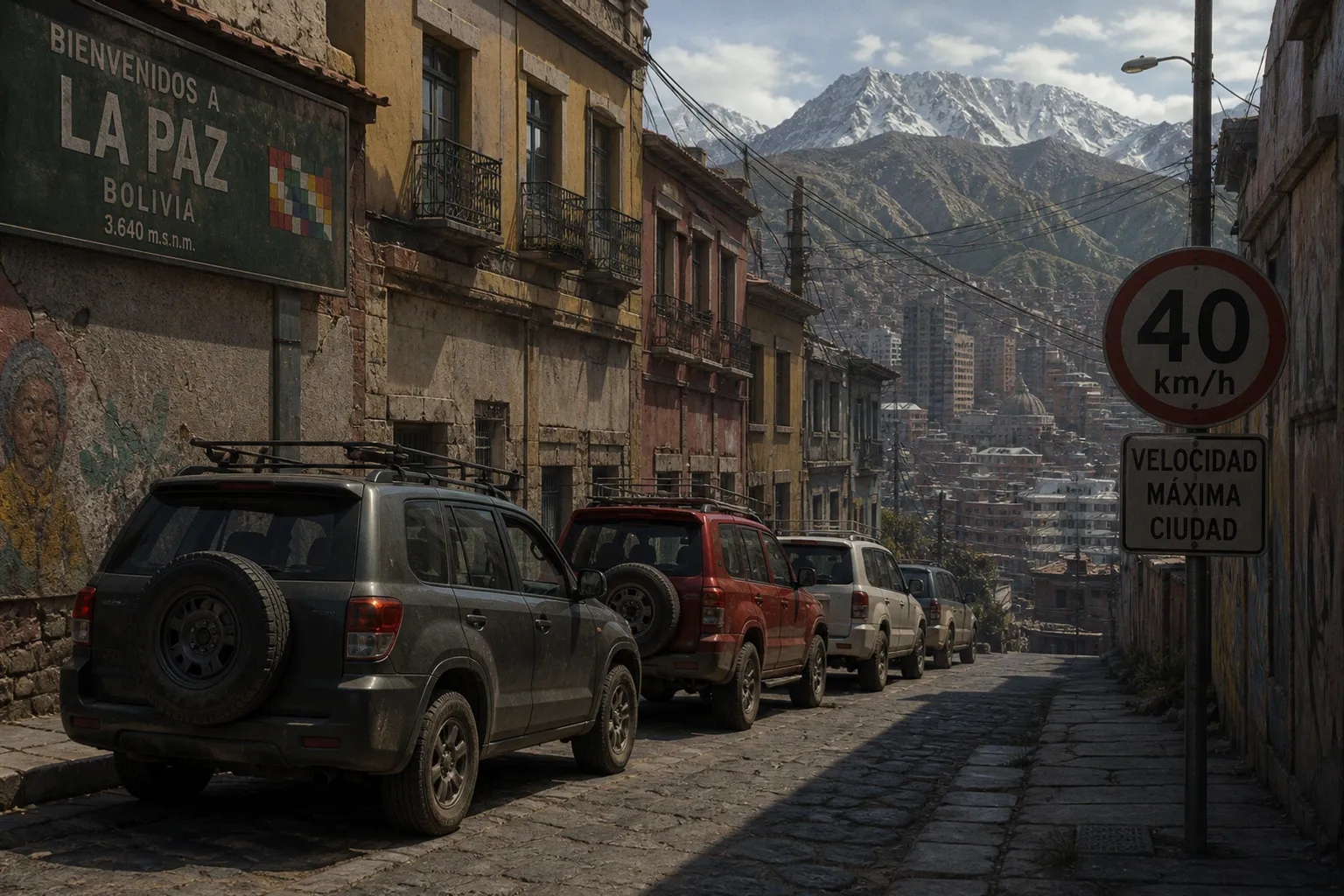
This guide covers essential rental requirements, local road rules, and tips for navigating the mountainous terrain in 2026.
Compare car rental deals in La Paz
Pick-up: airport (LPB) · downtown
Pick-up points: La Paz (all locations) · La Paz Downtown · La Paz Calacoto · El Alto International Airport (LPB)
Partner link — DiscoverCars comparison| Base Rental Rate | Approximately $40–$49 per day |
| Primary Pickup Location | El Alto International Airport (LPB) |
| Minimum Rental Age | 21 to 25 years old (surcharges for ages 18–24) |
| Legal Blood Alcohol Limit | 0.0% |
| Urban Speed Limit | 40 km/h (25 mph) |
| Highway Speed Limit | 80 km/h (50 mph) to 100 km/h (62 mph) |
Renting a car in La Paz, Bolivia provides the ultimate freedom to explore one of the world's most dramatic high-altitude regions. With a population of approximately 2,004,652 residents, La Paz is a bustling metropolis nestled in a canyon, making driving within the city a unique challenge. While public transit and cable cars serve the urban core well, a personal vehicle becomes indispensable if you plan to venture into the surrounding highlands or the Yungas region. Most car hire services operate directly out of El Alto International Airport (LPB), offering a mix of international brands and local agencies. To ensure a safe trip in 2026, you must understand the local driving regulations, prepare the correct physical paperwork, and choose the right vehicle class. This practical guide outlines everything you need to know about securing a rent a car in La Paz, Bolivia, from costs to safety tips.
L'essentiel
To rent a car in La Paz, Bolivia, drivers must typically be between 21 and 25 years old, though young driver surcharges are common for those aged 18–24. You must present a valid home driving license, a passport, and a major credit card registered in the renter's name. Carrying physical paper documentation—including your passport, original driver's license, and rental insurance papers—is strictly required; digital copies are not accepted at police checkpoints. An International Driving Permit (IDP) is also strongly recommended to translate your credentials for local authorities.
Traffic rules in Bolivia are strict. The legal blood alcohol limit is 0.0%, meaning there is zero tolerance for drinking and driving. Speed limits are set at 40 km/h (25 mph) in urban areas and range from 80 km/h (50 mph) to 100 km/h (62 mph) on open highways. While vehicles drive on the right side of the road, a unique exception exists in the Yungas region northeast of La Paz. Here, local custom dictates driving on the left along narrow cliffside routes, allowing drivers a better view of the dangerous road edge.
Price overview and when to book
Rental rates in La Paz vary depending on the season and vehicle class. In 2026, base rental starting rates are approximately $40 to $49 per day for economy models or standard SUVs. Because high-altitude mountain roads require robust vehicles, standard sedans are often insufficient. Booking your vehicle well in advance is highly recommended, especially if you require a specific vehicle class or automatic transmission, which can be limited in Bolivia.
| Vehicle Type | Starting Price (Per Day) | Best Suited For |
|---|---|---|
| Economy / Compact | ~$40 | City driving and paved highways |
| Standard SUV / 4x4 | ~$49 | High-altitude routes & dirt roads |
When budgeting, keep in mind that additional costs may apply. These include young driver surcharges for renters under 25, optional collision damage waivers, and local highway tolls. Note that exact toll amounts for specific roads outside La Paz change frequently, so it is wise to carry extra local currency (Bolivianos) in cash to cover these fees during your journey.
Where to pick up the car
The primary hub for car hire in La Paz, Bolivia is El Alto International Airport (LPB), located on the altiplano high above the city center. Major international providers such as Europcar and Hertz, alongside several local agencies, operate service desks at the airport terminal. Picking up your vehicle at El Alto Airport is highly convenient as it allows you to bypass the steep, congested streets of central La Paz immediately after arrival.
While some agencies offer downtown pick-up locations or hotel delivery services, inventory at these secondary offices is often limited. When collecting your vehicle, perform a thorough inspection alongside the rental agent. Document any pre-existing scratches, dents, or windshield chips on the rental agreement. Ensure the spare tire, jack, and emergency equipment are present in the trunk before signing the paperwork and departing the rental lot.
Tips for driving out of the city
Driving beyond the city limits of La Paz requires careful preparation due to the rugged Andean geography. High-altitude mountain passes and unpaved secondary roads demand a vehicle with high clearance. A 4x4 vehicle or a high-clearance SUV is strongly advised for any travel onto unpaved dirt roads. Do not attempt to drive a small economy hatchback on remote, unpaved mountain routes, as these vehicles lack the traction and clearance needed for safe passage.
Always plan your routes in advance and keep an eye on local travel advisories. Highway blockades (bloqueos) organized by local groups can occur without warning, and their specific schedules are generally unknown in advance. Ensure your fuel tank is full before leaving major towns, as gas stations can be sparse in remote areas. Finally, always carry your physical paper documents—passport, original driver's license, and rental agreement—as police checkpoints are common along major Bolivian highways.
Where to go by car
| Destination | Distance | Time | Tolls (est.) | Why go |
|---|---|---|---|---|
| Tiwanaku Archaeological Site | ~72 km | ~1 h 30 min | — | Explore the ancient Pre-Columbian ruins and monumental stone structures on a paved highway route. |
| Copacabana (Lake Titicaca) | ~150 km | ~3 h 30 min | — | Drive to the shores of the world's highest navigable lake, crossing the Strait of Tiquina by ferry. |
| Coroico (Yungas Region) | ~90 km | ~2 h 30 min | — | Descend from high-altitude peaks into lush subtropical valleys via the modern paved highway. |
| Oruro | ~225 km | ~3 h 15 min | — | Travel south across the high-altitude altiplano plains to visit this historic mining city. |
Tolls: rates vary by country and route segment — check current pricing before you go.