Car Rental in Luanda, Angola: The Complete Practical Guide
Securing a car rental in Luanda, Angola, requires understanding local traffic laws, vehicle restrictions, and deposit requirements.
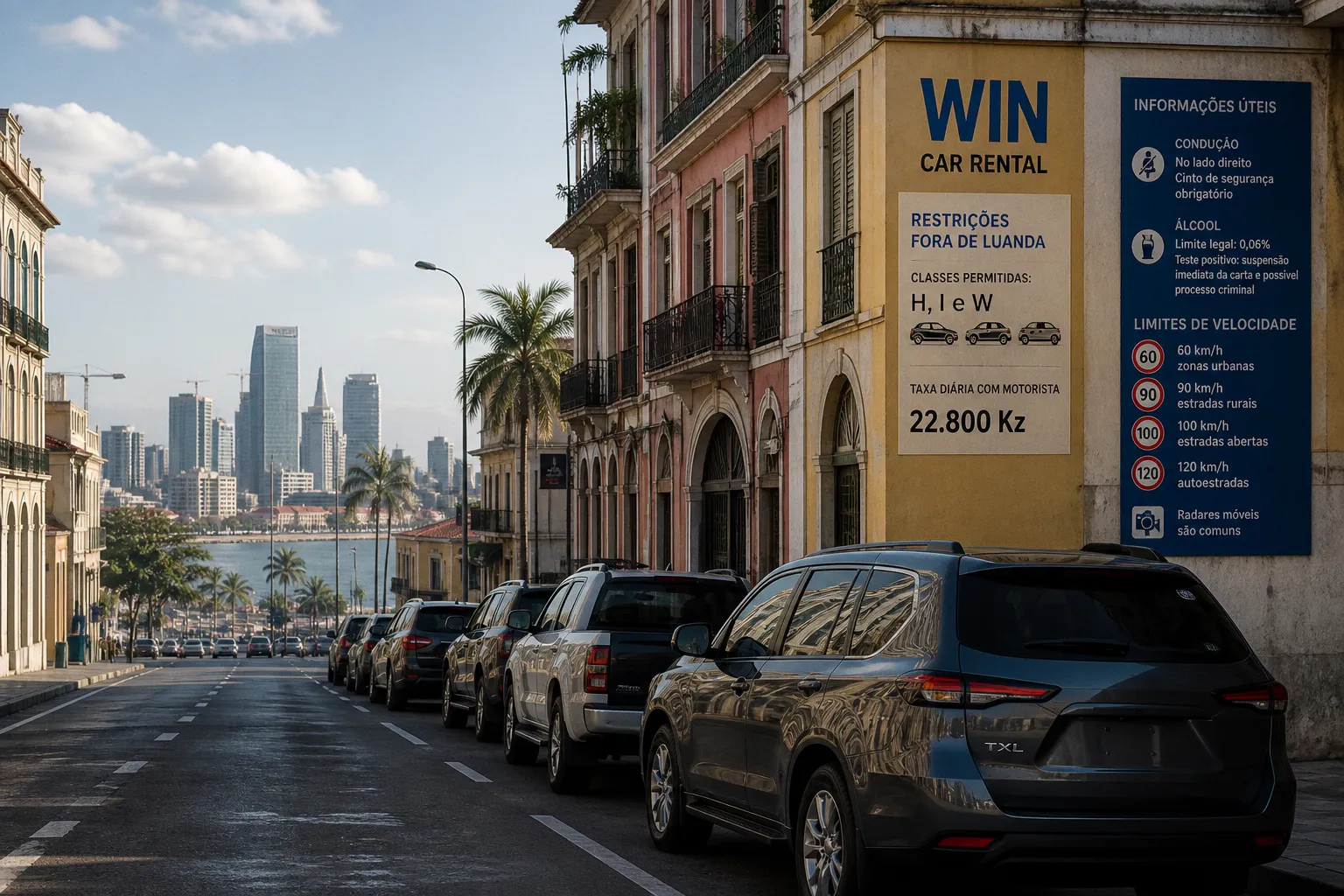
Whether you choose a self-drive vehicle or a chauffeur-driven service, preparing the correct documentation is essential for a smooth journey.
Compare car rental deals in Luanda
Pick-up: airport (LAD) · downtown
Pick-up points: Luanda (all locations) · Luanda Downtown · Cidade do Kilamba · Luanda Airport (LAD)
Partner link — DiscoverCars comparison| Legal Driving Side | Right side of the road |
| Minimum Rental Age | Typically 21 years old |
| Required Documents | National driver's license & International Driving Permit (IDP) |
| Blood Alcohol Limit (BAC) | 0.06% |
| Self-Drive Security Deposit | 200,000 Kz (Win Car Rental) |
| Chauffeur-Driven Deposit | 50,000 Kz (Win Car Rental) |
| Daily Mileage Limit | 150 km (excess: 228 Kz/km at Win Car Rental) |
Navigating a car rental in Luanda, Angola, is a practical way to explore this major city of approximately 2,776,168 residents. However, driving in the capital presents unique challenges, including heavy traffic congestion, lack of signage, and poor road conditions. To ensure a safe trip, travelers must choose between self-drive rentals and chauffeur-driven services. While standard city cars are suitable for urban travel, trips outside Luanda require specific vehicle classes and often incur additional fees. This guide provides essential details on local traffic regulations, rental costs, security deposits, and pick-up locations to help you plan your journey in 2026. By understanding the local requirements, such as carrying a physical driver's license and an International Driving Permit, you can avoid common pitfalls and travel confidently throughout the region.
L'essentiel: Local Rules and Requirements
Driving in Angola is on the right side of the road, and seat belts are mandatory for all occupants in both front and rear seats. The legal blood alcohol content (BAC) limit is 0.06%; failing a test leads to immediate license suspension and potential prosecution. Speed limits are strictly enforced, often with mobile speed traps: 60 kph in built-up areas, 90 kph on rural roads, 100 kph on open roads, and 120 kph on highways.
To rent a car, drivers must be at least 21 years old, presenting a valid national driver's license alongside an International Driving Permit (IDP). For safety, children under 12 years old or under 150 cm in height are legally prohibited from sitting in the front seat and must use an appropriate child restraint system. If stopped by the police, note that official traffic fines must never be paid in cash directly to officers. Drivers must receive a formal document and pay at a designated location, typically within 14 days.
Rental Costs and Booking Guidelines
Rental prices in Luanda vary significantly by vehicle class. Small cars average $31 to $42 per day, medium cars cost around $100 per day, and large cars average $185 per day. Due to challenging local driving conditions, many travelers opt for chauffeur-driven rentals. These services, which include a driver and fuel, start at approximately $230 to $250 per day.
Security deposits also depend on your rental type. For instance, Win Car Rental requires a security deposit of 200,000 Kz for self-drive rentals, which drops to 50,000 Kz if you hire a driver. Additionally, self-drive contracts often include a daily mileage limit of 150 km, with an extra fee of 228 Kz per kilometer exceeded. When hiring a driver, keep in mind that working outside the standard hours of 8:00 to 18:00 incurs an overtime fee of 3,420 Kz per hour.
Where to Pick Up Your Rental Car
Luanda, a major metropolitan area with about 2,776,168 residents, offers several key points for vehicle collection. Most international and local rental agencies operate out of Quatro de Fevereiro International Airport, providing direct access to vehicles immediately upon arrival. Additionally, rental offices are located in central Luanda, major business districts, and near prominent hotels to serve corporate and leisure travelers.
When collecting your vehicle, ensure you have all physical documents ready. Most major rental companies in Luanda require a physical credit card in the main driver's name to hold the security deposit. It is critical to inspect the vehicle thoroughly for any pre-existing damage, check the spare tire, and confirm the fuel level before leaving the lot. Since traffic management cameras have been active in Luanda since 2011, ensuring your vehicle is fully compliant with local road regulations before departure is highly recommended.
Out-of-City Travel and Vehicle Restrictions
Traveling outside the capital requires careful planning due to vehicle restrictions and road conditions. Standard city cars are sufficient for urban Luanda, but a 4x4 or SUV is highly recommended for rural journeys. Local rental agencies enforce strict rules regarding out-of-city travel.
For example, Win Car Rental restricts travel outside of Luanda to specific vehicle classes (specifically Class H, I, and W). If you plan to travel beyond the city limits with a hired driver, the agency charges an additional daily fee of 22,800 Kz. Always check with your specific rental provider regarding their regional boundaries and class restrictions before planning long-distance trips, as driving unauthorized vehicles outside municipal limits may void your insurance coverage.
Where to go by car
| Destination | Distance | Time | Tolls (est.) | Why go |
|---|---|---|---|---|
| Luanda to Kissama National Park | ~75 km | ~1 h 45 | — | Observe local wildlife like elephants and giraffes in a natural reserve. |
| Luanda to Miradouro da Lua | ~40 km | ~1 h | — | View the unique, moon-like cliffs overlooking the Atlantic Ocean. |
| Luanda to Cabo Ledo | ~120 km | ~2 h 15 | ~15 € | Relax on popular surfing beaches and enjoy fresh coastal seafood. |
| Luanda to Barra do Kwanza | ~70 km | ~1 h 30 | — | Visit the scenic mouth of the Kwanza River, ideal for sport fishing. |
Tolls: motorway estimate (~€0.11/km) — free secondary routes often exist.