How the Triangle’s Booming Tabletop Scene Shapes Fantasy Illustration Careers
According to WUNC News, the Triangle area of North Carolina—Raleigh, Durham, Cary—has become a hotbed for tabletop roleplaying communities, with dedicated venues packing out multiple nights a week.
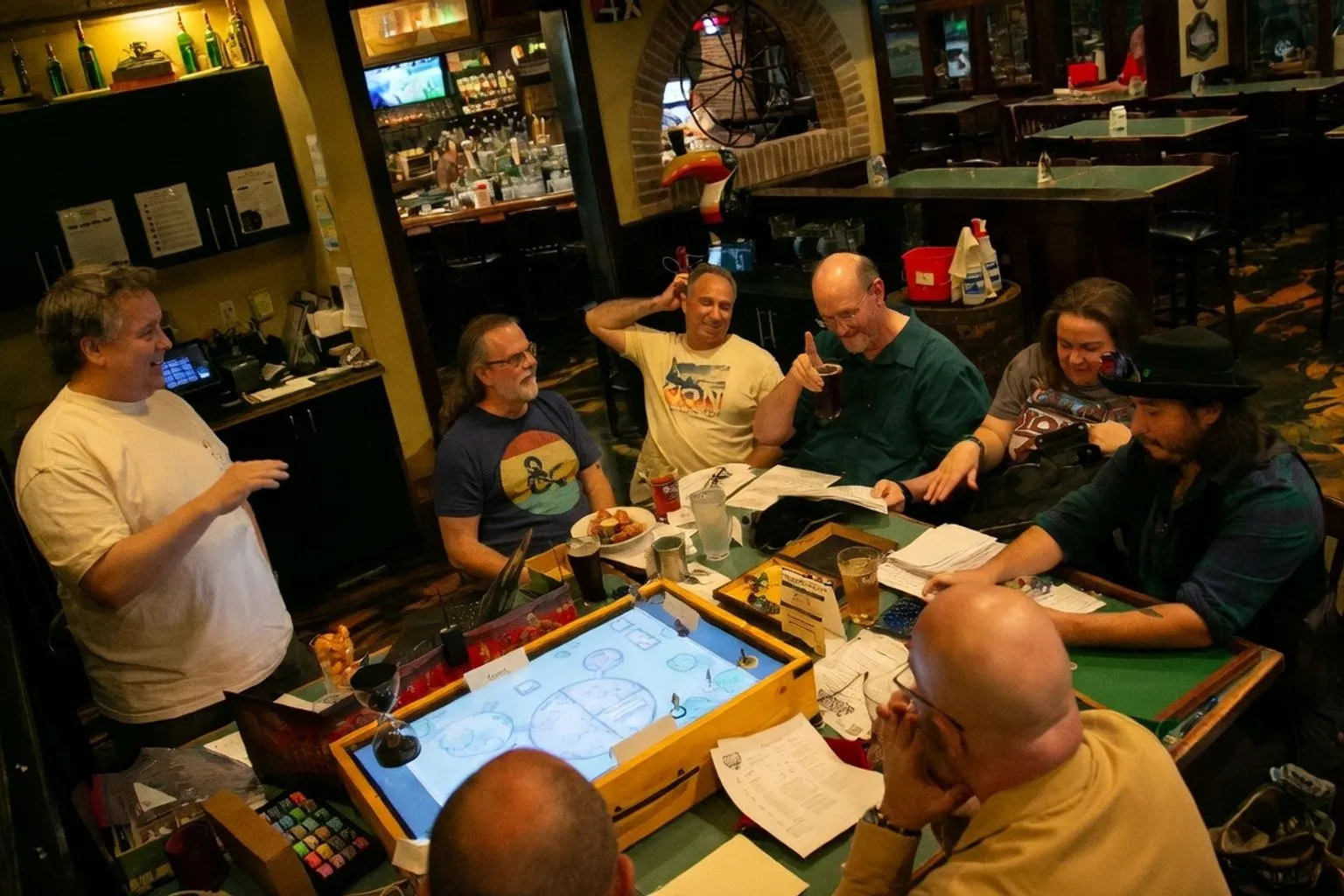
You've probably seen the same thing I have at every convention and game store visit: the tables are fuller than they've ever been. According to WUNC News, the Triangle area of North Carolina—Raleigh, Durham, Cary—has become a hotbed for tabletop roleplaying communities, with dedicated venues packing out multiple nights a week. What caught my eye isn't just the player enthusiasm, though. It's the ecosystem forming around these spaces—and what that means if you're building a portfolio aimed at tabletop, card games, or fantasy illustration.
Community That Fills Rooms—and Builds Careers
Caroline Brucks, a 42-year-old artist and fantasy lover from Apex, found her way back into public spaces through Dungeons & Dragons after years of isolation. She started at Hangar 18 Hobbies in Cary, and the welcoming TTRPG community there gave her something worth leaving the house for. Meanwhile, Gamers Geekery and Tavern—a dedicated gaming venue in Cary with full bar, kitchen, and eight-foot wooden tables designed to hold food platters alongside battle maps—nears capacity four to five evenings a week, according to owner Lance Shrader.
This matters to you because these are your future commissioners, your audience, your community. When Colton Flick, who regularly runs D&D games at Gamers Geekery, talks about the "ritual element" of sitting down with special dice and character sheets, he's describing a culture that craves visual identity. The bespoke dice trays, the custom miniatures, the character portraits—every one of those tabletop moments is a space where illustration earns its keep.
Beyond D&D: Expanding Settings, Expanding Briefs
A Yahoo roundup of alternative TTRPGs highlights how much variety is out there beyond the D&D ecosystem: Mörk Borg's doom-metal aesthetic, the tense survival horror of The Walking Dead RPG, the physicality of Dread's Jenga-block resolution system, and the cyberpunk chaos of Cy_Borg. Each of these systems carries a distinct visual language. If your portfolio only speaks in high-fantasy Tolkien-esque tones, you're leaving a huge range of briefs on the table.
Think about what a publisher commissioning art for Mörk Borg wants versus a Dread scenario. One demands ink-black grotesquerie and apocalyptic palette work; the other needs psychological tension—figures caught in lamplight, environments that feel wrong. Showing range across these tonal registers is exactly what separates a portfolio that gets bookmarked from one that gets skimmed.
What This Means for Your Next Art Drop
The broader news cluster also includes AJC Games charting a path from Kickstarter to retail shelves—a reminder that the publishing pipeline for tabletop products is active and looking for artists. Bunnyhog Games debuted Heroes Never Die at Tabletop Scotland, described as a mini dice wargame, further proof that indie publishers are launching new IP constantly and need visual partners.
If you're an aspiring fantasy or sci-fi illustrator, here's your practical takeaway: visit your local game store or tavern. Sit down at a table. Learn what players respond to visually—not from theory, but from watching someone's eyes light up at a character sheet illustration or a card frame. That firsthand read of your audience is worth more than any online portfolio algorithm. And when you're refining your next art drop, remember that shrinking an oil painting down to card size often kills the subtle glazing that made the original sing. Design for the medium these communities actually hold in their hands.