Designing for Iconic IPs: Lessons from the Magic: The Gathering Star Trek Crossover
As IGN Italia notes in its general coverage of Magic: The Gathering, the…
A Trek into New Territory for TCG Artists
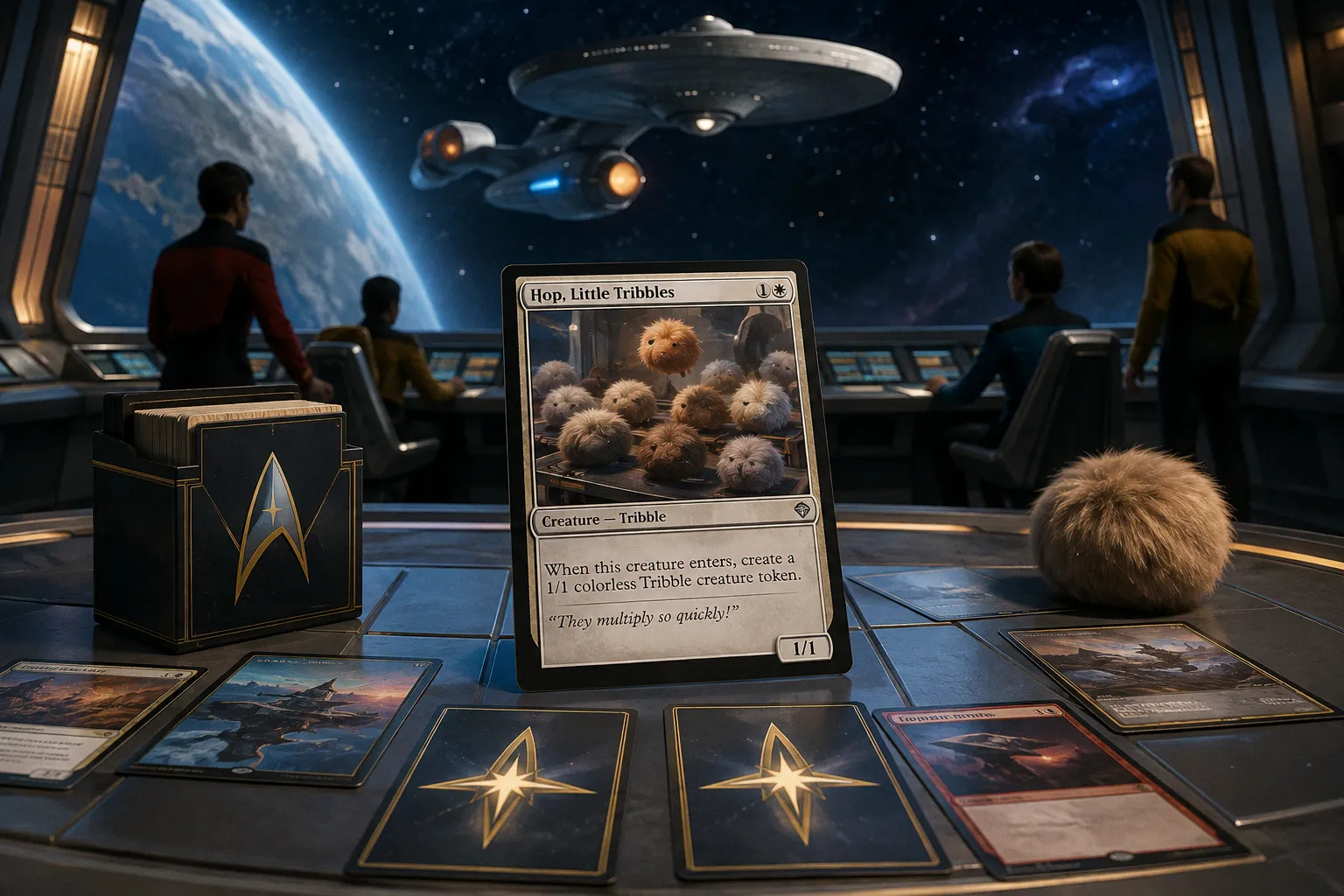
You know that moment when a brief lands on your desk that's both thrilling and terrifying? That's the buzz right now with Magic: The Gathering. According to wargamer.com, the upcoming Star Trek crossover set will officially include Tribbles—those iconic, endlessly multiplying furballs. For anyone building a career in card game art, this isn't just fan news; it's a live case study in designing for beloved, established IP.
More Than a Gimmick: The Practical Brief
So, why should this matter beyond the novelty? Imagine you're the artist handed the Tribble card. Your job isn't just to paint a cute creature. You're translating a visual language from television—where movement and sound sell the character—into a static, two-inch image that still has to pop on a cluttered battlefield. It’s the same challenge we’ve discussed before: making a silhouette instantly readable. The brief from wargamer.com’s confirmation gives us a clear target. Your art has to do two jobs at once: satisfy the hardcore Trek fan who knows every purr and squeak, and function as a clear game piece for the player who’s never seen an episode. That’s a tightrope walk, but a fantastic one for your portfolio.
The Bigger Picture and Your Next Move
This crossover also hints at a broader trend. As IGN Italia notes in its general coverage of Magic: The Gathering, the game’s universe continues to expand in surprising ways. For you, that means the call sheet for external franchises isn’t slowing down. A local trading card games group, as mentioned by The Ellsworth American, might be the perfect place to test your ideas. Get a table, print some playtest proxies of your designs, and watch how people actually interact with the art from three feet away. Does the Tribble’s shape read as a distinct game icon? Does the colour palette separate it from your other critter designs?
Designing for Legacy
This is where your traditional oil painting instincts can shine. A creature like a Tribble is pure texture and form. Shrink it down, and if your glazing or brushwork is too subtle, you’ll lose everything into a muddy smudge. Think like you’re working on a miniature: bold, clear values first, personality second. Use the Trek aesthetic—maybe those distinctive uniform colours or the glow of a ship’s console—as a limited accent palette to anchor it in the franchise without letting it overwhelm the card’s game function.
The takeaway here isn’t just about one fuzzy alien. It’s about calibrating your skills for a market that loves nostalgia and clear, functional design. When a brief asks you to draw someone else’s baby, your technical chops and your practical, player-first thinking are what make the art sing. Keep your portfolio ready for these kinds of deep-cut challenges—they’re the ones that show you can handle any brief that comes your way.