Craig Maher and the Infinite Panorama: Redefining Magic: The Gathering Card Art
According to Card Game Base, Reality Fracture is introducing Magic: The Gathering’s first “infinite panorama” through a returning Special Guests feature.
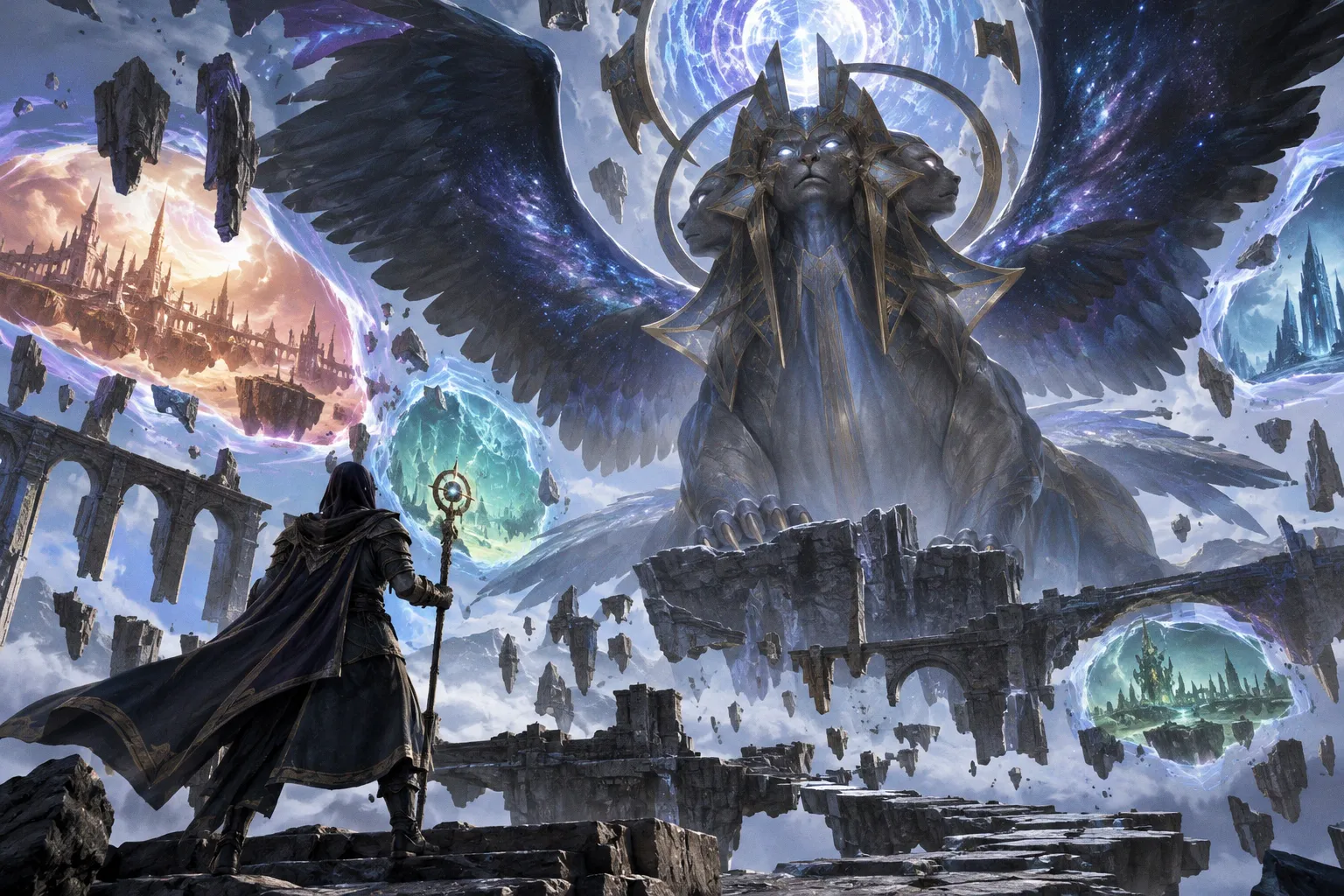
For artists and collectors, the important shift is not simply another batch of reprints: the set is using connected artwork across multiple cards, turning a familiar card-frame format into a wider composition you can read piece by piece.
The panorama is the real art brief
Card Game Base reports that Reality Fracture will include 10 Special Guest cards, all reprints of popular cards from Magic’s history. They can appear in both Play and Collector boosters, but they are not Standard-legal. The report says they may still be used in Draft or Sealed if opened there.
The visual hook is that each Special Guest illustration matches two other cards in the set. The sequence begins with “Root Maze,” connects to “Eye of Ugin,” and continues beyond them—hence the “infinite” description.
That is a deceptively demanding brief. When you design a standalone card illustration, the frame gives you a hard boundary: establish the focal point, protect the silhouette, and make the image read at tabletop size. A panorama changes the job. Every edge now has to do two things at once: finish the current card and invite the eye into the next one.
For your own portfolio, this is worth studying as a composition problem rather than a novelty. Look at where a scene can safely break, how repeated shapes carry the viewer across an edge, and whether each individual panel still has enough pop to work on its own. A clever connected image that fails as a single card is not a successful commercial solution.
The pull rates change the collecting conversation
The reported odds also make the feature relevant beyond the art drop itself. Card Game Base puts the chance of finding a Special Guest in a Play booster at 1 in 55, or 1.8%, replacing a common card. It estimates a 42.2% chance that a 30-booster Play box contains at least one.
Collector boosters are described as having stronger odds: approximately 1 in 16, or 6.1%, with the card appearing in foil. A 12-booster Collector box is estimated at a 53.9% chance of containing at least one Special Guest. These are pack-opening probabilities, not a promise that a particular panorama segment—or a complete sequence—will appear.
That distinction matters if you are approaching the set as an art object. A connected illustration creates pressure to chase continuity, but the reported numbers only address the chance of finding any Special Guest card. They do not establish how difficult it will be to assemble the full visual run, nor do they establish secondary-market value.
So if you are building a reference board, start with the confirmed structure: 10 cards, linked artwork, Play and Collector booster appearances, and different foil treatments. Do not let a dramatic panorama tempt you into treating a partial source report as a complete checklist.
A wider “What If?” direction for the set
The panorama arrives alongside a broader wave of Reality Fracture previews. Polygon reports that 26 new cards were revealed, including five Sphinx commanders. Game Informer says Wizards of the Coast has detailed paired “echoed” legendary cards and multiversal “What If?” mechanics centered around Jace Beleren.
Separately, Comic Book Resources reports that Magic’s most expensive card is making a comeback in Reality Fracture. The available report does not identify the card or provide a confirmed valuation here, so that headline should be treated as a lead to verify rather than a finished collecting conclusion.
From an art-direction standpoint, the useful thread is clear enough: Reality Fracture is presenting its fantasy through relationships—paired legends, alternate possibilities, and images that continue beyond a single card. That is a strong reminder for your own portfolio. If you want a client to remember a piece, a striking character is helpful; a visual system that keeps unfolding is often more valuable. Just make sure every image earns its place before you ask the viewer to follow it onward.