Designing for TCGs: Lessons from Magic: The Gathering Merchandise
When Popverse dropped their 2026 gift guide for Magic: The Gathering fans earlier this month — six picks ranging from playmats to deck boxes — my eye went straight to the surfaces.
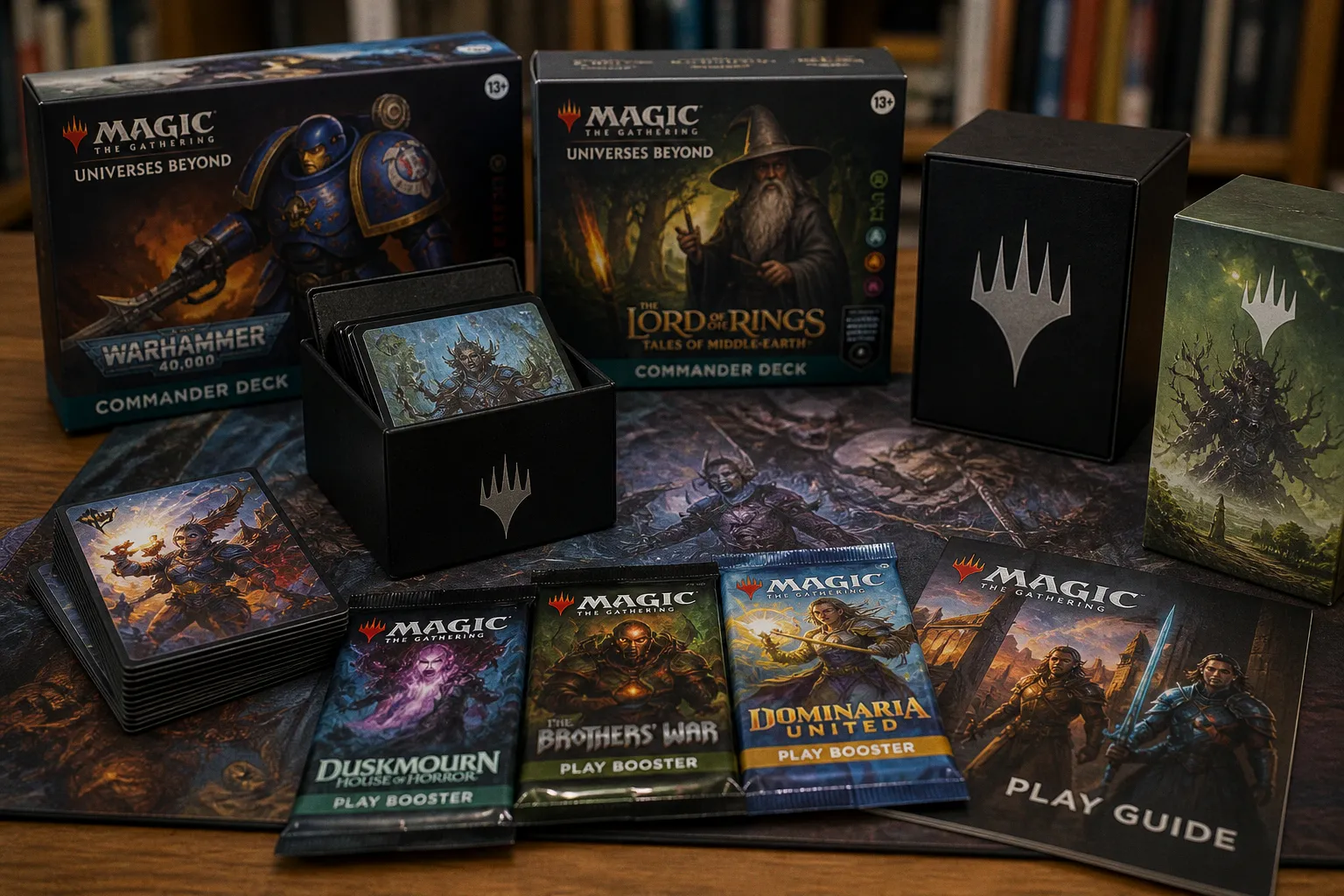
Because here's the thing nobody tells you in art school: a huge chunk of the illustration work you'll get commissioned to create in the tabletop space ends up printed on objects. Tiny ones, often functional, sometimes unglamorous. And if your composition doesn't read at two inches across a dimly lit kitchen table, the client will ask for a revision — or worse, the next brief goes to someone else.
The guide is written for players, but quietly it's a masterclass in what "functional art" means in the TCG merch ecosystem. Let me walk you through what I'd flag for anyone building a portfolio in this corner of the industry.
Readability at thumbnail scale — your first TCG portfolio test
Popverse leads with Gamegenic playmats: lightweight, colorful, easy to transport, and decorated with character art — their own editor owns a Nick Fury piece. A playmat is roughly 24 by 14 inches of printed surface, but your illustration has to survive being glanced at from a chair, across the table, often with bad lighting. That means strong silhouette, high contrast, and a focal point that holds up at distance.
If you're putting together a TCG-adjacent portfolio right now, here's your weekend homework: shrink your top six pieces to thumbnail size. Which ones still read? Which ones turn into mush? The answer tells you more about your commercial readiness than another class on anatomy ever will. Every playmat in the Popverse guide, from character pieces to cleaner graphic styles, is solving the same problem — turning a single illustration into a usable object without losing its identity. That's the brief.
The Edge of Eternities Zipfolio — vintage paperback DNA worth studying
The single most interesting item in the guide, from where I'm sitting at the commissioning desk, is the Ultimate Guard Zipfolio binder tied to Magic's Edge of Eternities set. Popverse notes the design is directly inspired by the book covers of vintage sci-fi paperbacks, pulling from the set's Showcase series. It stores 360 cards, it's acid- and PVC-free (important — cheaper binders will cloud your cards over time), and the art direction is doing something genuinely smart.
This is the one I'd tell a fantasy illustrator to look at, not as merch but as a composition study. Vintage paperback covers were solving the exact problem modern TCG accessory art solves: grab attention on a crowded shelf, read at a glance, deliver mood before the viewer reads a single word. That same problem-solving DNA is what separates a strong card illustration from a strong gallery piece. If you're a Craig Maher-style traditionalist working in this space, study that lineage openly — the bridge between oil-painted paperback covers of the seventies and today's Showcase frames is shorter than most artists admit.
Accessory art as portfolio homework — and what's landing this week
The rest of the guide is sleeves, deck boxes, and a Gamegenic Deck Box Dungeon that fits up to 1,000 double-sleeved cards. Less glamorous — but this is the category where art directors quietly make decisions about color reproduction, material finish, and how much visual weight the art carries versus the brand mark. Gamegenic's Squire deck boxes hold more than 100 sleeved cards and snap shut with magnetic closures; the sidewinder-style boxes load from the side and come in 100+ or 133+ sizes. Dragon Shield sleeves are name-checked as the easiest to shuffle. Boring to list, useful to know — because if you ever land an accessory commission, your client will hand you a brief that cares as much about matte board stock as it does about your screen file.
While you're studying surfaces, keep two adjacent drops on your radar this week. Wizards of the Coast revealed the full decklists for the Magic: The Gathering | Star Trek Welcome Decks, with around 100 new cards previewed across the main TRK set (Standard-legal) and the TRC commander set (not Standard-legal), per Star City Games' write-up. That's a meaningful chunk of new illustration surface area — and Star Trek art direction is its own homework assignment if you grew up on those vintage paperback influences.
For artists: study the accessories. For collectors: the Popverse list is solid. For the rest of you — go look at a vintage sci-fi paperback next to that Edge of Eternities Zipfolio. The lineage is right there, and it's the kind of cross-pollination that makes a portfolio feel considered instead of merely competent.