Why the Premodern Magic Format Is Reshaping TCG Illustration Trends
That's the situation right now with Premodern, the unofficial Magic: The Gathering format that, according to a Wargamer interview with Martin Berlin, has exploded in popularity roughly fifteen years…
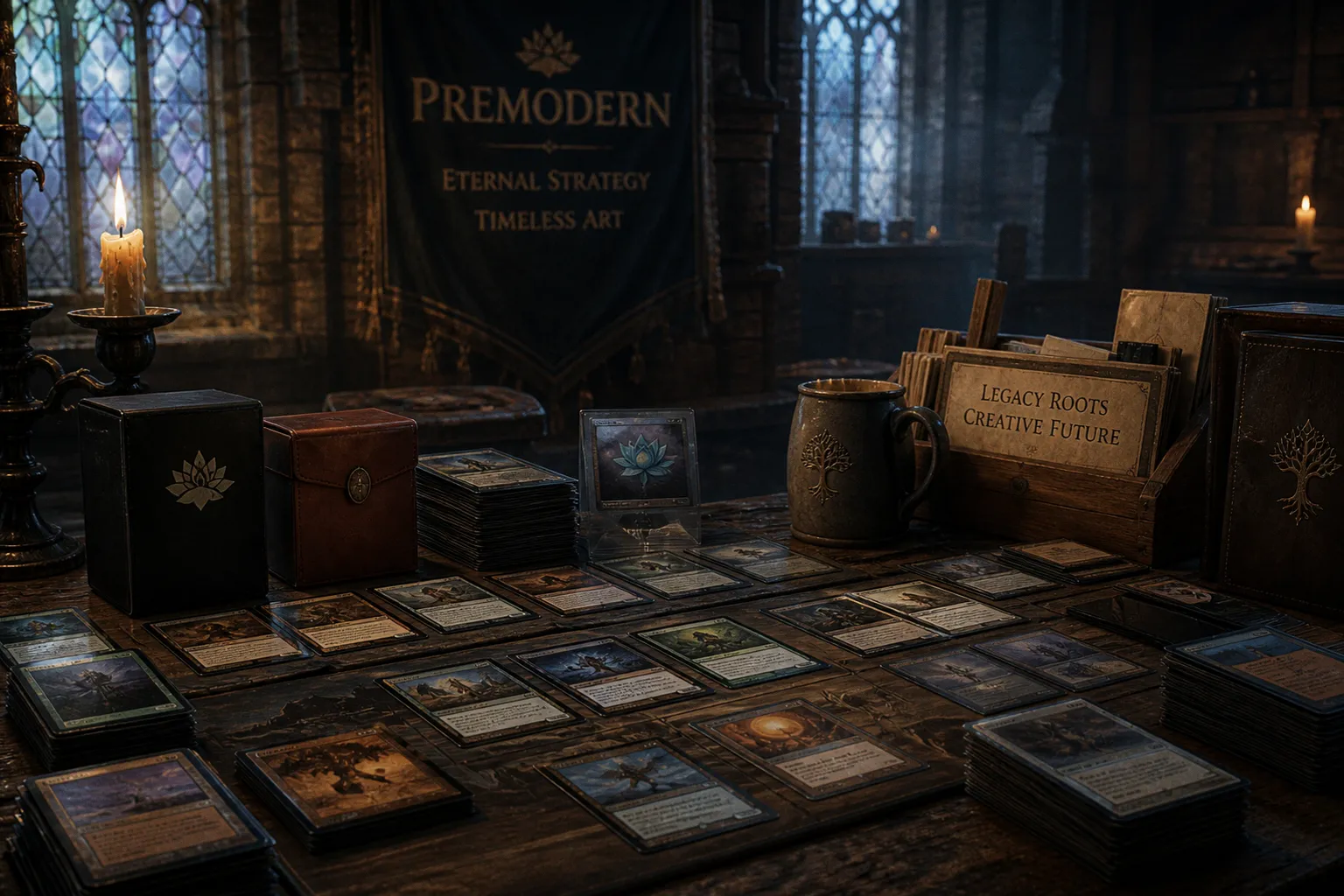
When a format no one was watching suddenly pulls a crowd, the illustrators whose work lives inside that card pool usually feel it before anyone else. That's the situation right now with Premodern, the unofficial Magic: The Gathering format that, according to a Wargamer interview with Martin Berlin, has exploded in popularity roughly fifteen years after it was first played. For anyone building a TCG portfolio — or trying to land commissions in this corner of the industry — it's worth understanding why, because the art in those card frames is about to get a lot more attention.
What Premodern covers, and why the art matters here
Premodern, as described in that interview, excludes modern sets and keeps the focus on an older card pool. For an artist, that makes the format essentially a curated museum of illustration from a very specific window — work that was commissioned under briefs, palettes, and production constraints that don't really exist anymore. If you've ever wondered why a piece from that era reads the way it does when it's shrunk down to two inches, a lot of the answer lives in how those paintings were built in the first place: simplified silhouettes, controlled value structure, and a discipline around what gets to sit in the foreground.
This is also why the surge matters from a portfolio standpoint. The artists who illustrated those cards are suddenly seeing renewed interest from collectors, players, and — increasingly — younger illustrators pulling the work into their reference folders. The aesthetic of that period has a specific readability and a kind of restraint that holds up under scrutiny, and art directors notice when an applicant has studied it closely.
What to watch if you're doing TCG-adjacent work
Two threads worth tracking. First, the Premodern conversation itself: it's unofficial, community-run, and that means the visual identity of the format is being shaped by whoever keeps writing about it and illustrating for its events. If you take TCG-adjacent commissions, pay attention to the cards people are championing in that space — the briefs tend to follow the conversation.
Second, on the official side, Standard just went through a banned-and-restricted announcement on August 10, with Badgermole Cub, Stormchaser's Talent, and Gran-Gran all banned, according to magic.gg's Metagame Mentor column. The first wave of Regional Championship Qualifiers is already producing a noticeably more diverse metagame, and the recent release of Magic: The Gathering | The Hobbit is putting new licensed art into players' hands. For artists, that's a live brief to study — how Wizards is currently commissioning for a major IP, what they're asking for in silhouette and color, and which pieces are reading well at card scale.
A practical note for your portfolio
Pull the cards that define Premodern and put them in your reference folder. Look at how the figures sit inside the card frame, how color is managed across a tiny print, and how the compositions survive at thumbnail. Those are exactly the things an art director screens for when they open your PDF — and formats like this give you a tighter, more focused set of examples to learn from than the entire modern card pool ever could.