How Creative Assembly Translates Tabletop Lore into Total War Combat Mechanics
Here's something worth sitting with, especially if you're building a wargame or TCG portfolio right now: according to iXBT Games, Creative Assembly's developers have been sharing new technical…
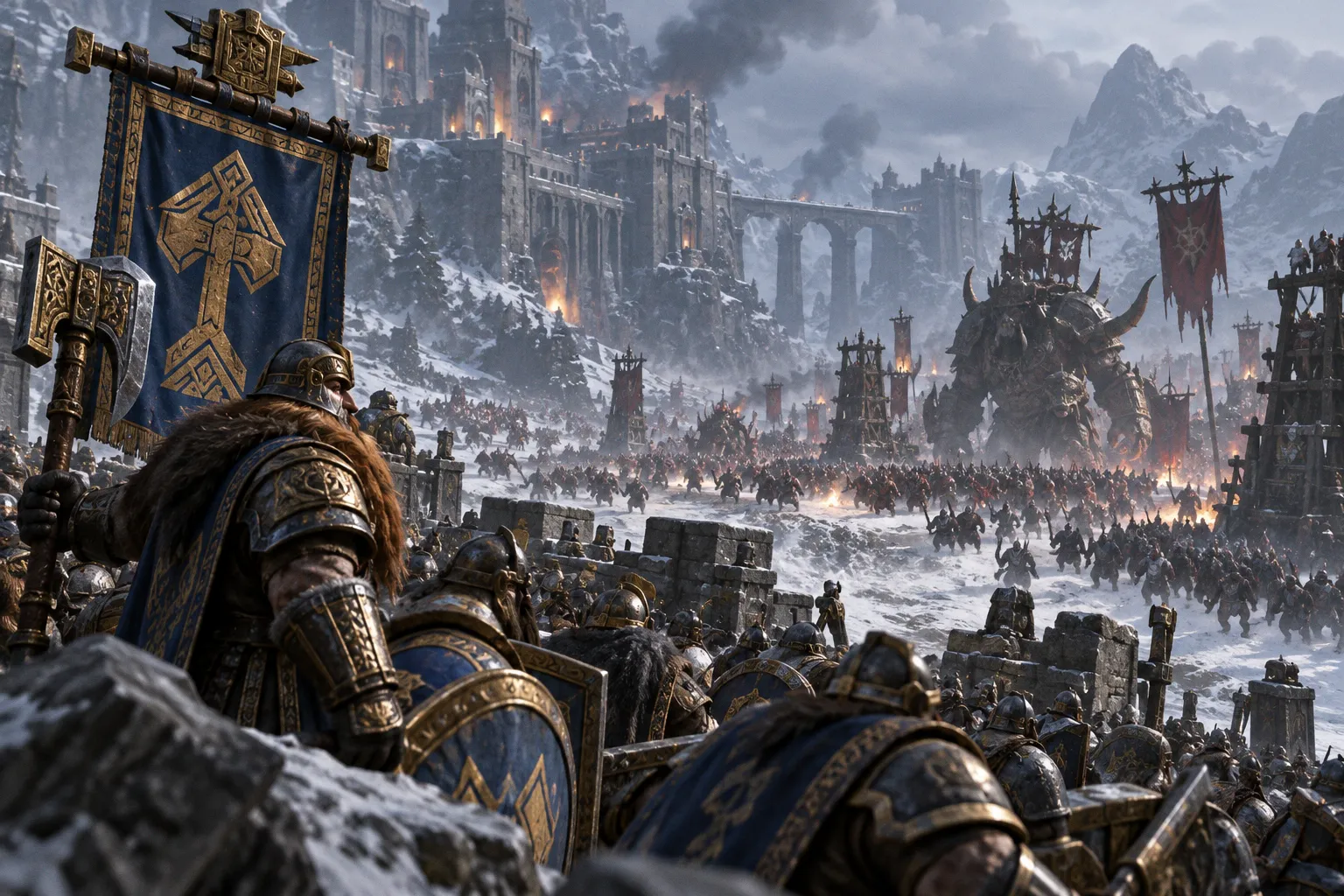
Here's something worth sitting with, especially if you're building a wargame or TCG portfolio right now: according to iXBT Games, Creative Assembly's developers have been sharing new technical insights into how Games Workshop's tabletop rulebook — and the miniature lore baked into it — are quietly steering the tactical combat mechanics of Total War: Warhammer 40,000. And that feedback loop, from painted miniature to combat behavior, is exactly the kind of thing I flag when I'm reviewing portfolios from artists who want to break into this space.
The approach Creative Assembly is taking
The headline from CA's developers is straightforward: they're using tabletop lore and rulebook context as a north star, but they're not copy-pasting mechanics one-to-one. Instead, the team is prioritizing what they're calling authentic lore representations — translating the feel of a unit's codex entry into tactical behavior on the battlefield. So a unit that reads on the tabletop as relentless, grinding, and attrition-based needs to play like that in the engine, even if the exact stat block doesn't port over cleanly.
For you as an illustrator, that's a pretty significant admission. The art brief is usually where that lore gets nailed down first. When you paint a squad with a hunched, defensive posture, muted palette, and heavy weathering, you're already telling the design team how that unit should move and behave. CA is effectively confirming what commissioning editors like me have been saying for years: the silhouette is the first rulebook page.
What this means for your portfolio
Sitting at that coffee table with you, here's where I'd push:
- Readability beats decoration. Combat readability on a Total War battlefield — can a player parse what's happening at a glance — depends almost entirely on the silhouette you establish in your concept. If your hero piece has three gorgeous background details but the central figure breaks apart against the composition, design teams will quietly compensate with mechanics. You want to be the one setting the tone, not letting it be reverse-engineered around you.
- Lore fidelity is a brief requirement, not a vibe. "Authentic lore representations" is studio-speak for: the art has to match the established visual canon. That means pulling miniature paint schemes as reference, knowing the faction's iconography cold, and respecting what's already on the tabletop before you touch the brief. The artists who get hired into these pipelines are the ones who already speak the visual language fluently.
- Your piece will outlive the brief. When a unit's combat behavior is designed around its visual identity, that art effectively becomes part of the rules. Worth keeping in mind next time you're tempted to phone in a background element because "no one will notice."
What to watch from here
Keep an eye out for the fuller developer breakdown once Creative Assembly publishes more detail. The specific unit examples they choose to highlight will tell you which visual cues they consider load-bearing for mechanics — and that's a free curriculum for anyone serious about wargame art direction. Until then, if you're building out a TCG or wargame folio, don't skip past Games Workshop's own miniature ranges as reference material. The brief is already written; you just have to learn to read it.