How Organized Play Infrastructure Shapes the Future of Cyberpunk TCG
GamingTrend reports that WeirdCo has partnered with Galactic Events Studio to support organized play for Cyberpunk Trading Card Game through the Melee.gg event platform.
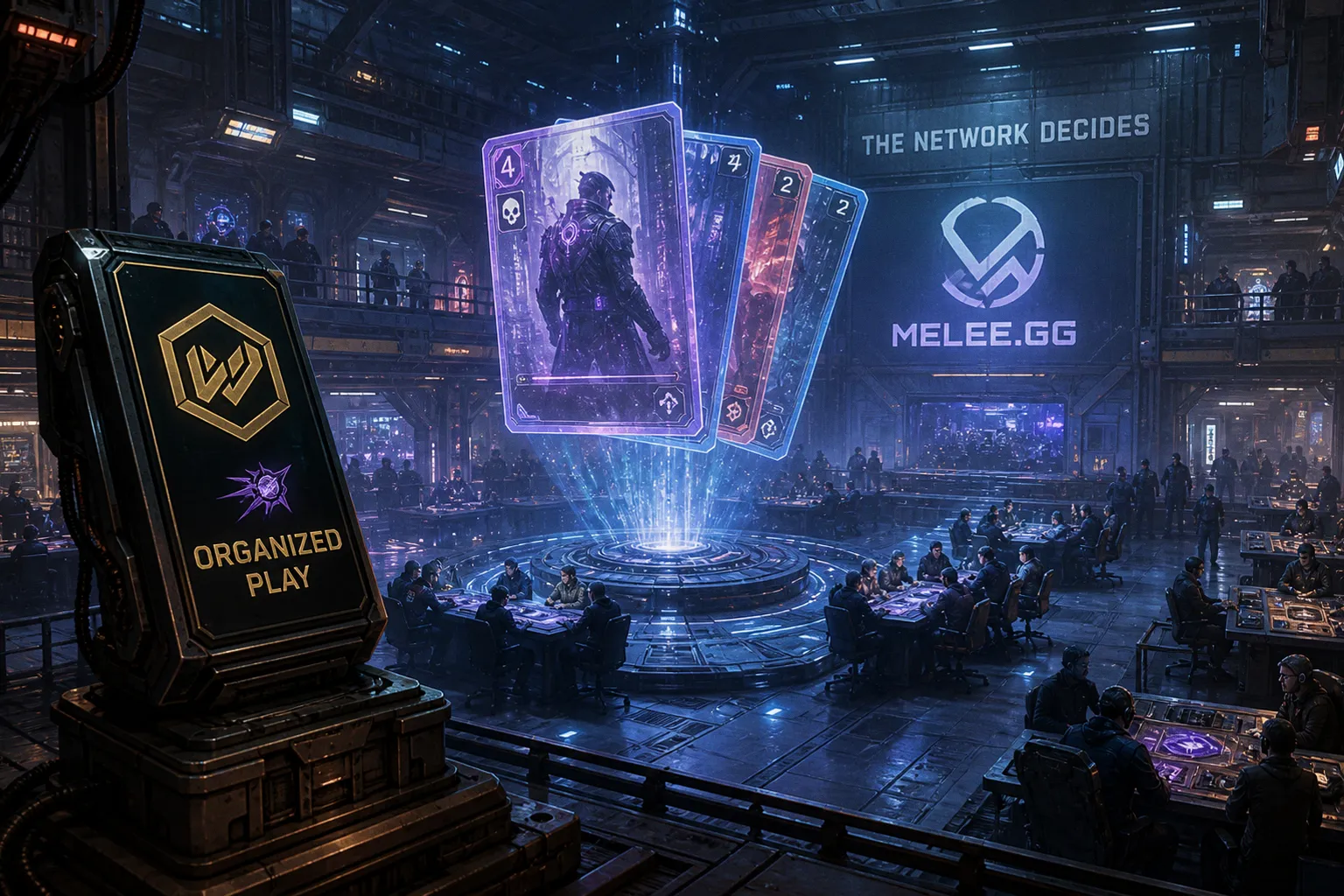
The system is intended to cover registration, tournaments, decklists, results, and reporting as the game expands globally. For players and artists watching the game’s competitive identity take shape, this matters because organized play is where a TCG’s visual language, community presence, and event culture begin to meet.
The important part is the infrastructure
A new card game can have striking character art, a strong setting, and an enthusiastic audience, but none of that automatically produces a usable tournament scene. Players still need a clear way to register, submit decklists, follow results, and understand how events are being run. Organizers need tools that reduce the administrative drag around each tournament.
That is the practical role Melee.gg is being brought in to support. According to the announcement, the platform will handle the core workflows around events rather than simply serving as a place to post final standings. Registration, tournament management, decklists, results, and reporting are all included in the stated scope.
For your portfolio, this is the useful signal: Cyberpunk TCG is being positioned as more than a one-off art-led release. The partnership points toward a repeatable event structure, where the game’s cards and characters will appear across local play and larger competitive settings.
Why this matters to TCG artists
Organized play creates a different kind of pressure on visual direction. A card illustration may first be judged at full size in a portfolio review, but in a real event ecosystem it also needs to read quickly across decklists, coverage, social posts, and player discussions. Silhouette, faction clarity, character recognition, and strong value grouping become especially valuable when the artwork is repeatedly encountered outside the card frame.
That does not mean every image should be simplified into a logo. It means you should understand where the art will live. A dense scene can be beautiful and still lose its pop when reduced. A clean focal point, readable gesture, and controlled contrast give the image more routes into the audience’s attention.
When I review a TCG portfolio, I want to see that the artist can move between splashy key art and functional card illustration. A competitive program increases the number of contexts in which that distinction matters. Your best submission should show not only rendering skill, but also that you can protect readability under tight constraints.
What to watch next
The confirmed announcement establishes the partnership and the platform’s intended responsibilities, but it does not provide a detailed event calendar or explain the final competitive structure. That is the gap players, stores, organizers, and commissioned artists should keep an eye on.
For players, the next practical checkpoint is whether registration and decklist workflows become easy to find and consistent across events. For organizers, the useful test will be whether the tools make tournaments easier to run rather than adding another layer of admin. For artists, watch for how the game presents its event identity: recurring art drops, promotional assets, tournament materials, and the visual hierarchy used to distinguish cards, teams, and competitive moments.
The partnership gives Cyberpunk TCG a foundation for organized play. It does not, by itself, prove how successful that program will be. But it does identify the next route clearly: follow the tools, then judge the player experience once events begin taking shape.