Mastering TCG Illustration Through the Lens of Final Fantasy's Symphony of Heroes
When Square Enix dropped word of Symphony of Heroes — the 31st Opus booster set for Final Fantasy TCG, per ICv2's reporting — my eye went straight to one card number: Cloud [31-004L], illustrated by Rina Yoshiura.
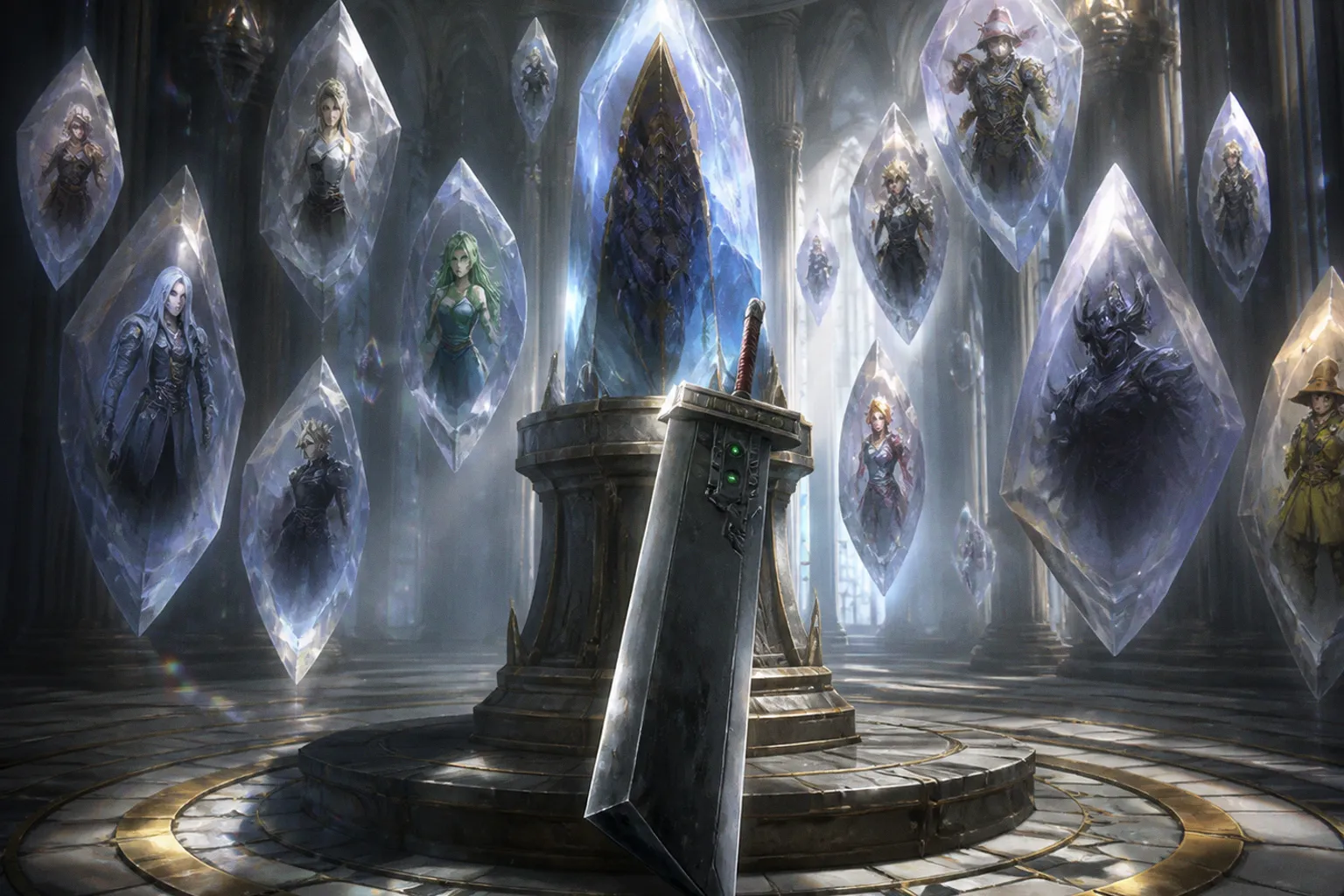
That's the kind of line item I tell every artist I mentor to study closely, because a single named illustration in a full-art premium slot tells you exactly where the publisher is spending their visual budget. The set lands in retail on March 26, 2027, and features protagonist characters drawn from several different Final Fantasy games.
Why the Yoshiura Cloud is the brief to study
If you're building a portfolio aimed at TCG work, treat premium full-art slots like the cover art of a magazine — they're the proof a publisher can hold up and say "this is the level we're commissioning right now." A new Cloud piece, in a set built around protagonists from across the franchise, means Square Enix trusts this artist to carry the visual identity of the set's flagship character. That's not a small brief, and it's not a coincidence that the flagship reveal happens to be the one piece with a named illustrator attached.
Pull the high-res scan the moment it's available. Trace it. Look at how Yoshiura handles Cloud's silhouette against the background, where the value structure breaks from the game model sheet, and how much negative space the card frame eats into the composition. That's where the real commission lesson hides.
The Level Up mechanic and your composition homework
Symphony of Heroes introduces a mechanic called Level Up, which lets players evolve characters into more powerful forms during play. For illustrators, this is worth paying attention to beyond gameplay — evolve-style mechanics tend to invite multi-stage illustrations, and you'll often see related artworks sharing a single card slot budget. When the full card list drops, check how the art team split or unified those compositions across stages. The decisions they make about pose continuity, palette shift, and prop evolution are decisions you can borrow directly into your own sequential art pitches.
28 premium slots, three Legacy reprints, and a wider signal
The set packs 28 new full-art premium cards, plus Legacy reprint slots filled by Thancred [12-124L], Lightning [24-070L], and Vaan [27-039L]. Reprints matter to your practice too — they're a quiet reminder that strong silhouette and color identity outlast a single release cycle. Lightning and Vaan in particular have been re-illustrated multiple times across Opuses, which is its own masterclass in reading what a publisher considers iconic enough to revisit. If you're stuck on a piece that feels "too quiet," pull those reprints side by side and ask yourself what each new illustrator kept and what they cut.
In related TCG illustration news, One Piece Card Game has reportedly tapped Yoshitaka Amano for special card artwork, according to recent coverage. Two major TCGs commissioning high-profile illustrators in the same quarter is a healthy market signal for anyone thinking about where to point their portfolio into 2027 — and a reminder that cross-franchise art drops are becoming the rule, not the exception.