Yoshitaka Amano Brings His Signature Ethereal Style to the One Piece Card Game
Polygon and Crunchyroll are both reporting that the One Piece Card Game is rolling out a new set featuring original artwork from Amano himself.
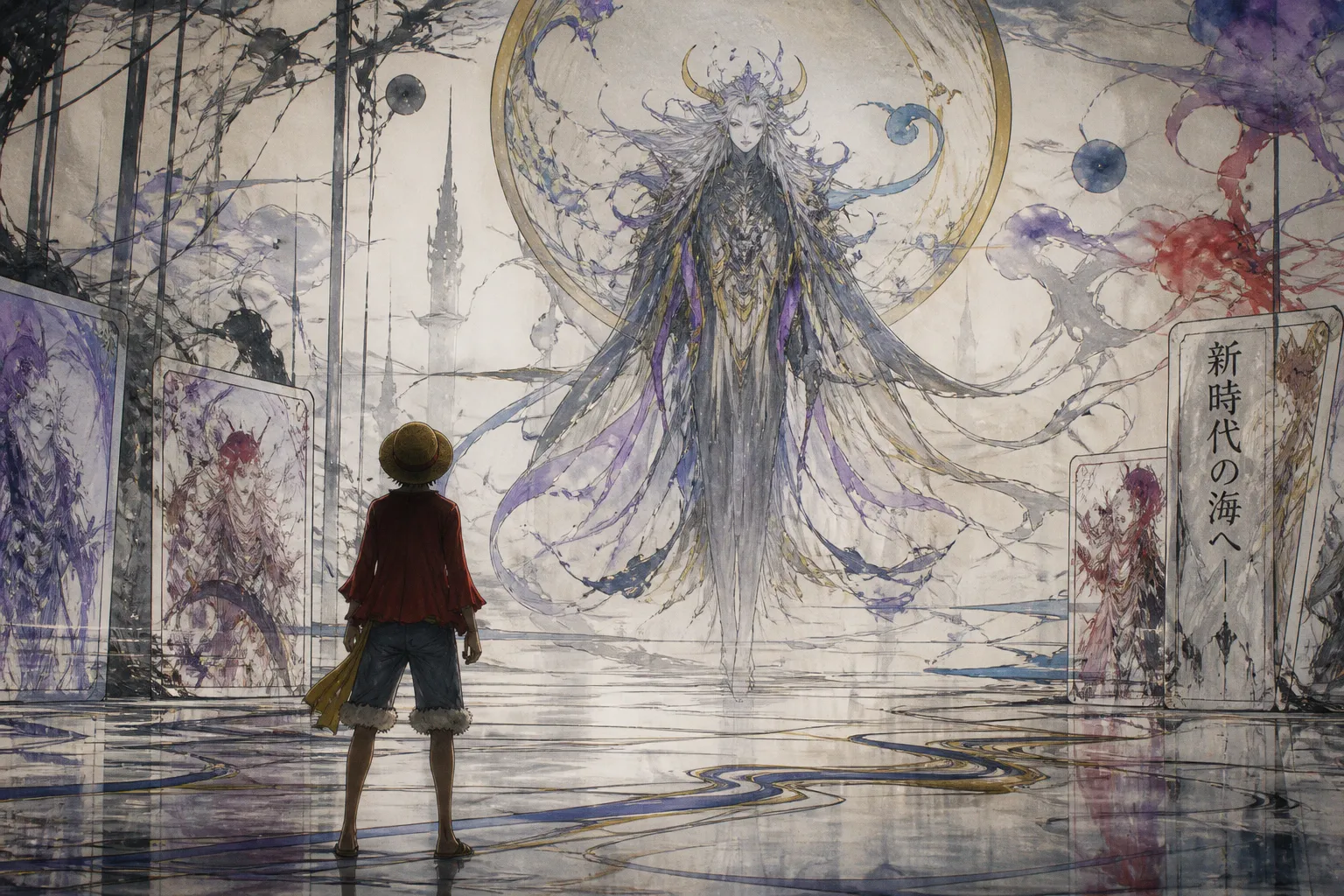
You know that moment when a client sends you a brief for a card game set and the art direction document says "painterly, ethereal, iconic" — and you realize they want you to channel Yoshitaka Amano without saying his name? If you've ever tried to reverse-engineer that signature watercolor bleed and ink-line elegance into a two-inch card frame, this one's for you.
That's the Yoshitaka Amano — the artist whose visual language essentially defined what Final Fantasy looks like in our heads. For anyone working in TCG illustration, this is a crossover worth paying attention to.
Why Amano's Style Hits Different on Cards
If you've studied Amano's work — and if you haven't, go do it now, I'll wait — you know his illustrations live in a space between fashion illustration and fever dream. Long, attenuated silhouettes. Watercolor washes that bleed past every edge. Ink lines that feel like they were drawn with a calligraphy brush held sideways.
Now imagine that approach meeting the One Piece universe. Eiichiro Oda's characters are famously rubbery, exaggerated, full of kinetic energy. Amano's aesthetic is the opposite — still, elongated, almost spectral. The tension between those two visual languages is exactly what makes this collaboration interesting from a craft perspective. How do you honor both? That's the kind of challenge that separates portfolio pieces from professional work.
What This Means for Your Portfolio Thinking
Here's what I'd actually pay attention to: the fact that Bandai (the company behind the One Piece Card Game) is bringing in a fine-art-adjacent illustrator for a major set tells you something about where premium TCG art is heading. Collectors and players respond to distinctiveness. Amano's work is instantly recognizable at arm's length — and that's the bar.
If you're building a card game portfolio right now, ask yourself: does my work have a silhouette test? Could someone identify my style from across a table? Because that's what studios are commissioning for — not just technical competence, but a visual signature that makes a set feel like an event.
What We're Still Waiting On
The reporting so far confirms the collaboration and the new set, but specifics — which characters Amano is illustrating, how many cards, release timing — haven't been detailed yet. Given Amano's typical output, I'd expect something closer to key-art illustration than a full set of 100-plus cards, but that's speculation on my part. Keep an eye on official Bandai announcements if you want the full breakdown.
For now, I'd recommend pulling up Amano's older Final Fantasy concept art alongside some Oda character sheets and just looking at them side by side. The visual conversation between those two styles is the real story here — and if you can articulate why it works in your next portfolio review, you'll sound like someone who actually understands the industry you're trying to break into.