What TCG Illustrators Can Learn from Amber Glenn’s Massive Magic Collection
According to Variety, gold-medal figure skater Amber Glenn is also a serious Magic: The Gathering superfan, with a reported 100,000-card collection and ideas for a personal Secret Lair drop.
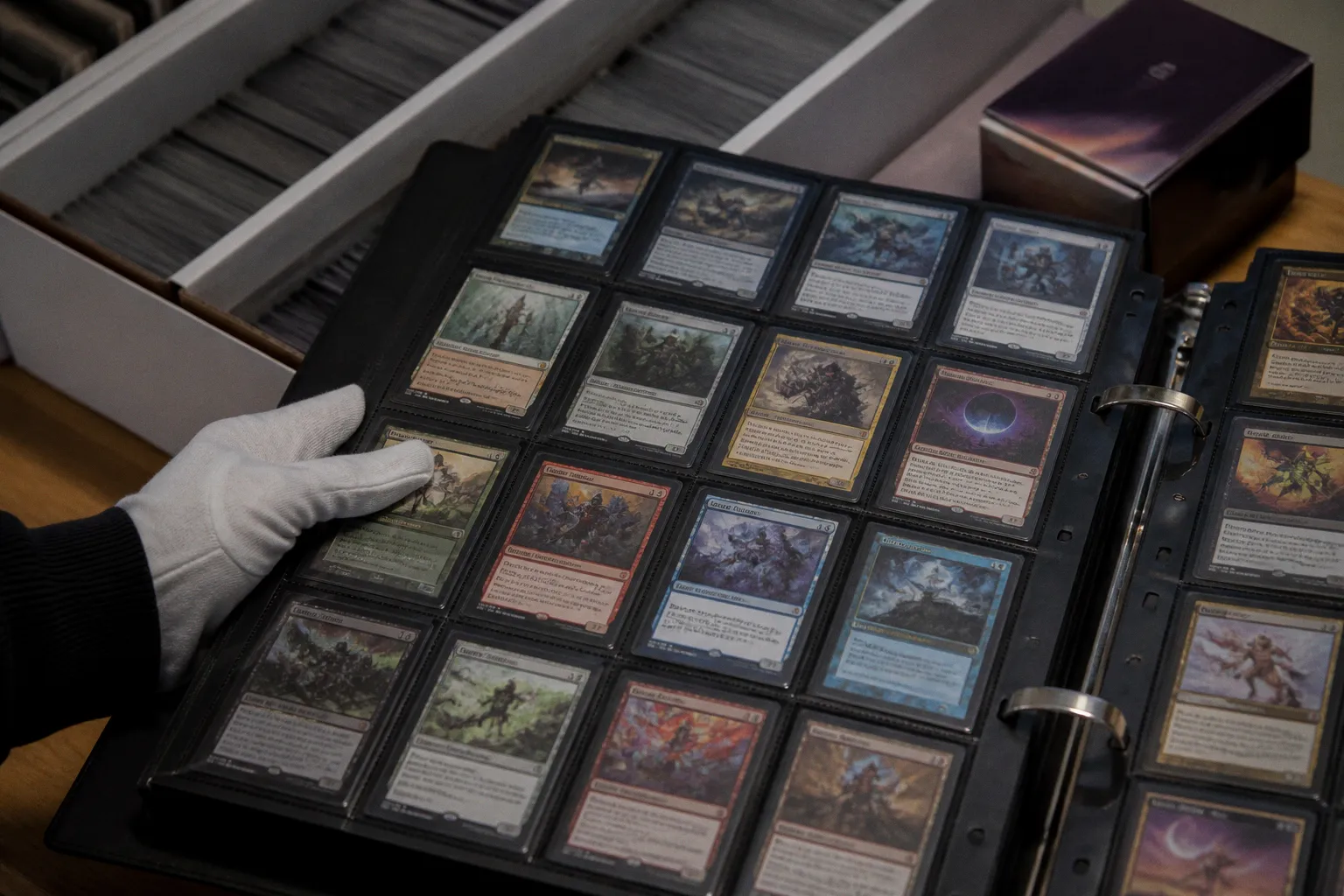
For TCG artists, that is the useful part of the story: a high-profile player is not simply adjacent to the game’s imagery — she is fluent in the visual language collectors notice, keep, and talk about.
Glenn became widely visible during the Milano Cortina 2026 Winter Olympic Games after winning gold and openly sharing her enthusiasm for Magic. That kind of crossover attention can be noisy, of course, but it also reminds commissioners and artists that a card illustration has to work for people who live with the game, not only for a campaign thumbnail.
A Secret Lair brief needs a point of view
The phrase “celebrity Secret Lair” can make artists picture a familiar face dropped into an existing fantasy template. That is usually where the work loses its pop.
A collector with a collection on Glenn’s reported scale is likely to recognise the difference between surface-level branding and a treatment that understands card culture: iconic silhouettes, readable gestures, a focal point that survives at actual card size, and a world that feels intentional rather than merely decorative. Your portfolio should show that you can solve those problems before the brief arrives.
For traditional painters, this is especially worth remembering. A lovely passage of glazing may sing on the easel, then disappear when reduced to a small printed frame. Build the design first: large value shapes, a clear character read, and enough separation for the image to hold up beside rules text, frames, foiling, and collector scrutiny.
Collectors are an art audience, too
The reported 100,000-card figure is striking not because it is a trophy number, but because it describes the kind of viewer every card artist eventually meets: someone who has seen thousands of compositions, treatments, borders, and reprints. They may not use an art-director’s vocabulary, but they know when an image has silhouette, atmosphere, and replay value.
Sports Illustrated’s recent coverage of Magic’s Marvel Super Heroes set points to the same broader pressure. Universes Beyond releases put recognisable popular-culture characters into Magic card form, while borderless and double-sided treatments make the individual object part of the appeal. In that environment, the illustration cannot rely only on character recognition. It needs a visual decision that gives the card its own reason to exist.
That is a healthy standard for your portfolio. Include a few pieces where the assignment is immediately legible: a hero image that reads in two inches, a dramatic transformation designed for two faces, or a scene with a strong enough compositional hook to justify a premium treatment.
What artists should watch next
Variety’s headline says Glenn has thoughts about what she would want in her own Secret Lair set, but the supplied report does not detail those choices. So there is no art brief to reverse-engineer yet — and it would be a mistake to invent one.
Still, the practical takeaway is clear. Keep a small cluster of portfolio work that proves you can handle fandom without becoming generic: character-led pieces with strong readability, alternate-frame thinking, and enough authored mood to make a collector pause. The best crossover card art does not just say, “Here is a famous person or property.” It gives that audience an image they want to pull, display, and return to.