Why Wizards of the Coast’s Final Fantasy Strategy Matters for TCG Illustrators
Per Polygon's coverage this week, Magic: The Gathering isn't done with Final Fantasy just yet.
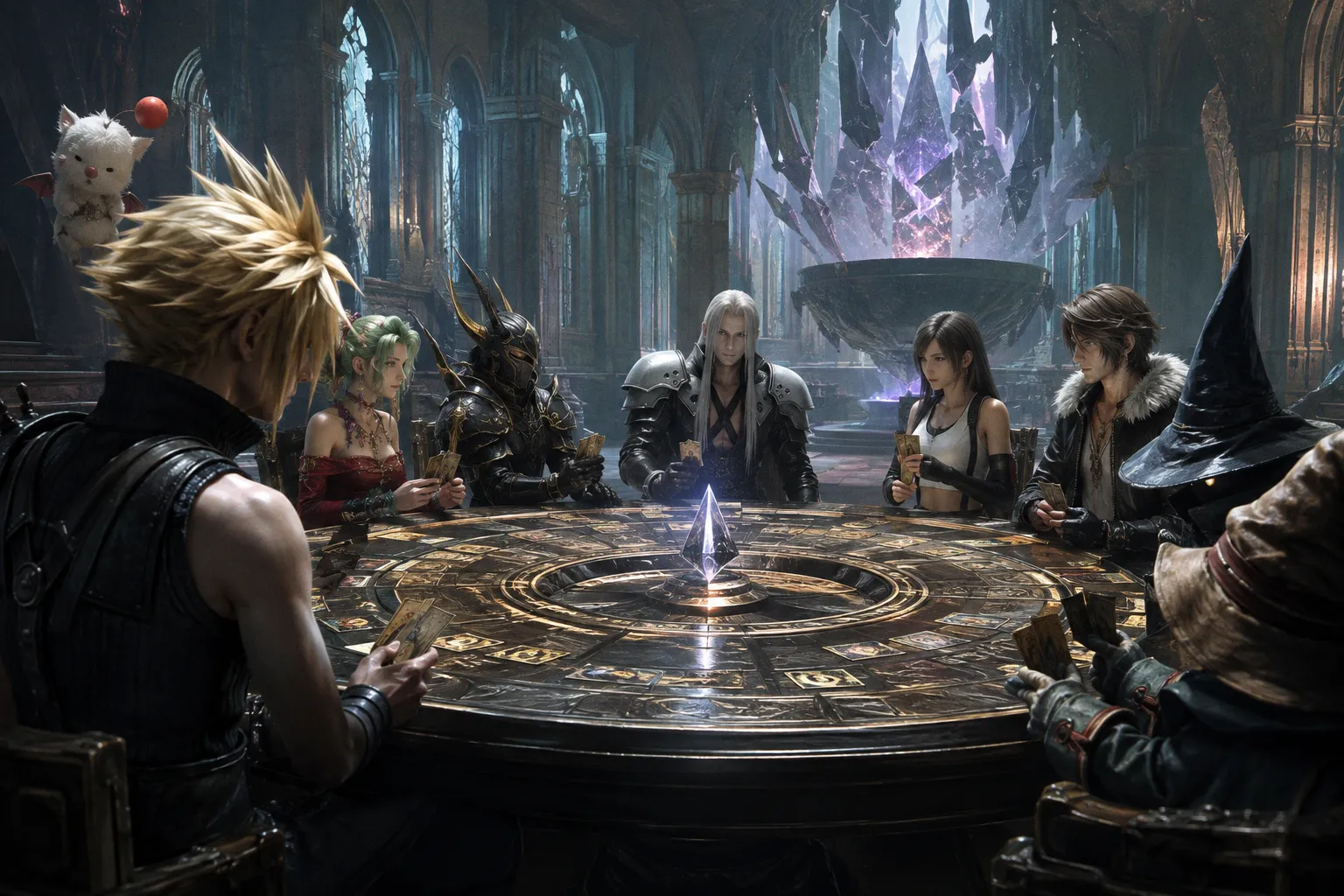
That single headline matters if you're a working or aspiring card illustrator, and so does the rest of the conversation happening alongside it. ICv2 and Kotaku are both reporting that Wizards of the Coast has publicly characterized their recent Zeta Set launch as a disaster, with Kotaku noting the company expressed deep regret over the rollout. Both stories sit at the exact intersection of art direction and client management that I think about every time I review a TCG portfolio.
What the Zeta Set stumble tells you about briefs
When a publisher admits a launch went sideways, the art team rarely hears about it in real time. You get a brief, you deliver, and the downstream reception becomes someone else's problem — until the publisher goes public and calls the whole thing a disaster. If Wizards is openly acknowledging a rough sale, you can bet there are internal conversations happening about what went wrong across production, marketing, and execution. For artists, the lesson isn't to panic. It's to remember that readability still rules. A card that pops at two inches is a card that survives a tough launch, a reprints cycle, and a secondary market dip. When I'm commissioning, I push painters to ask a simple question: does this silhouette hold up without the foil treatment?
Why the Final Fantasy crossovers aren't slowing down
If you're building a TCG portfolio right now, fantasy IP work isn't a side bet — it's a steady pipeline. Final Fantasy characters translate beautifully into the MTG card frame because they were designed with strong silhouette and clear focal hierarchy, the exact same muscles you need for a combat scene or a creature study. Polygon's framing that Wizards isn't done with the collaboration signals sustained demand for character-driven art that can carry a licensed property. That's your cue to make sure your portfolio has at least one piece with a clear, single hero figure that reads instantly at thumbnail size.
What to check in your portfolio this week
Pull up your top six pieces and shrink them to card size on your screen. If two of them lose their focal point, those are the ones to rework before submitting to any TCG art director — myself included. Make sure your contact sheet shows range: a human character, a creature, an environment, and at least one piece with strong negative space. Read the Polygon piece alongside the ICv2 and Kotaku coverage, because understanding how a major publisher talks publicly about their own missteps is part of professional literacy now. You're not just making art. You're entering a conversation about how this industry treats the people who make it, and your portfolio is how you show up to that conversation.