How D&D Universes Beyond Impacts Commercial Illustration Standards
According to Wargamer, Dan Ayoub describes Dungeons & Dragons’ forthcoming Universes Beyond line as “just yet another way for people to experience” the game.
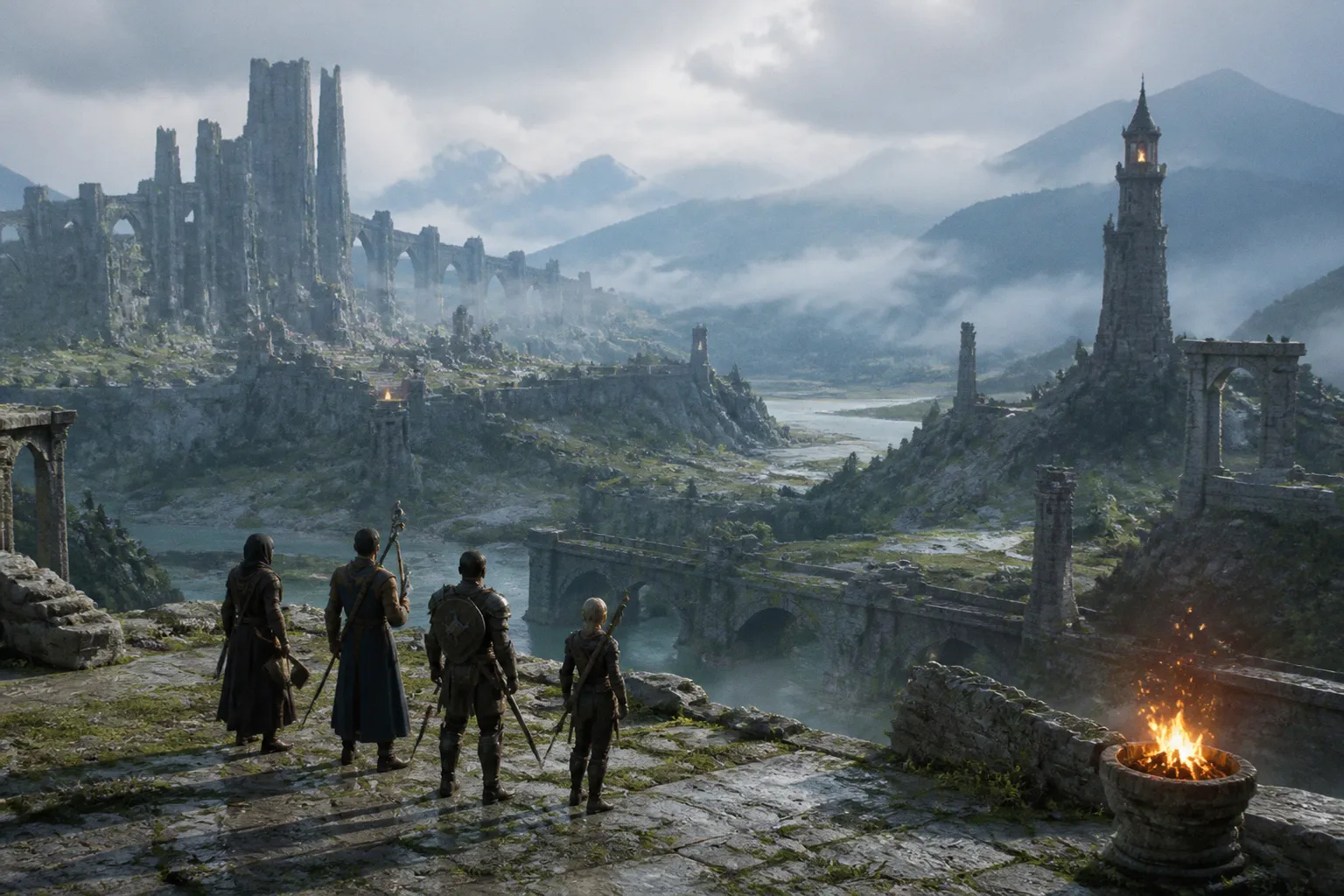
For artists watching the tabletop brief landscape, that small piece of positioning matters: Wizards is presenting crossover material as an entry point, not a replacement for D&D’s own visual identity.
The first confirmed release is a Dungeons & Dragons: World of Warcraft tabletop crossover. GamesReviews reports that Wizards of the Coast confirmed it at Gen Con 2026, with the sourcebook due on November 17, 2026, as the opening product in the new D&D Universes Beyond line.
A crossover still needs to read as D&D
This is the portfolio trap I see often: an artist hears “crossover” and reaches for a straight replica of the guest property’s look. That may make a handsome fan image, but it does not automatically solve a commercial brief.
If Universes Beyond is another route into D&D, the art has to carry two signals at once. The visiting world needs enough recognisable silhouette, costume logic, and material language to create an immediate hook. But the final piece also has to function inside a D&D product: readable at sourcebook scale, clear in its action, and useful as an invitation into play rather than simply a poster for a familiar franchise.
For your portfolio, that distinction is worth practising. A character design can be lavish, painterly, and packed with lore details, yet still fail the tabletop test if its focal point disappears when reduced or its story beat cannot be read in one glance. Big crossover concepts need visual hierarchy even more than usual.
What to put in your art drop
I would not try to predict the exact visual direction of this release from a headline alone. There are no confirmed art briefs, artist names, or style details in the available reporting, and it is better not to invent them.
What you can do is make your relevant work easier to find. If you want to be considered for fantasy and card-game adjacent commissions, an art drop with a few tightly edited examples will travel farther than a broad gallery of unrelated finished paintings. Show that you can handle:
- a clean, readable character silhouette;
- a setting that supports the figure rather than swallowing it;
- strong value separation for small-format reproduction;
- an encounter moment with a legible narrative hook;
- designs that feel referential without becoming a costume-copy exercise.
That last point is the useful one here. You are showing a client that you can translate between visual languages while keeping the image coherent. In a crossover brief, that ability is not decorative polish; it is the job.
Keep an eye on the product language
Ayoub’s framing suggests that the value of Universes Beyond will be judged partly by how effectively it welcomes different audiences into D&D. For illustrators, that means accessibility is not the enemy of specificity. A piece can be strange, textured, and richly designed, while still giving a new viewer an obvious place to look and a reason to care.
The World of Warcraft sourcebook’s November 17, 2026 launch is the concrete date to watch. Until Wizards shares more about the book itself, treat this as a signal about the kind of problem crossover art creates: not “can you paint the famous thing?”, but “can you make two worlds read as one playable image?”