How Wildmagic Frontier Redefines Art Direction for Hybrid Tabletop Games
that moment when a brief crosses your desk and you immediately start imagining how you'd art-direct it? Sky Castle Studios just put Wildmagic Frontier on Kickstarter, and if you work anywhere near tabletop or TCG art, this one is worth a slow second read.
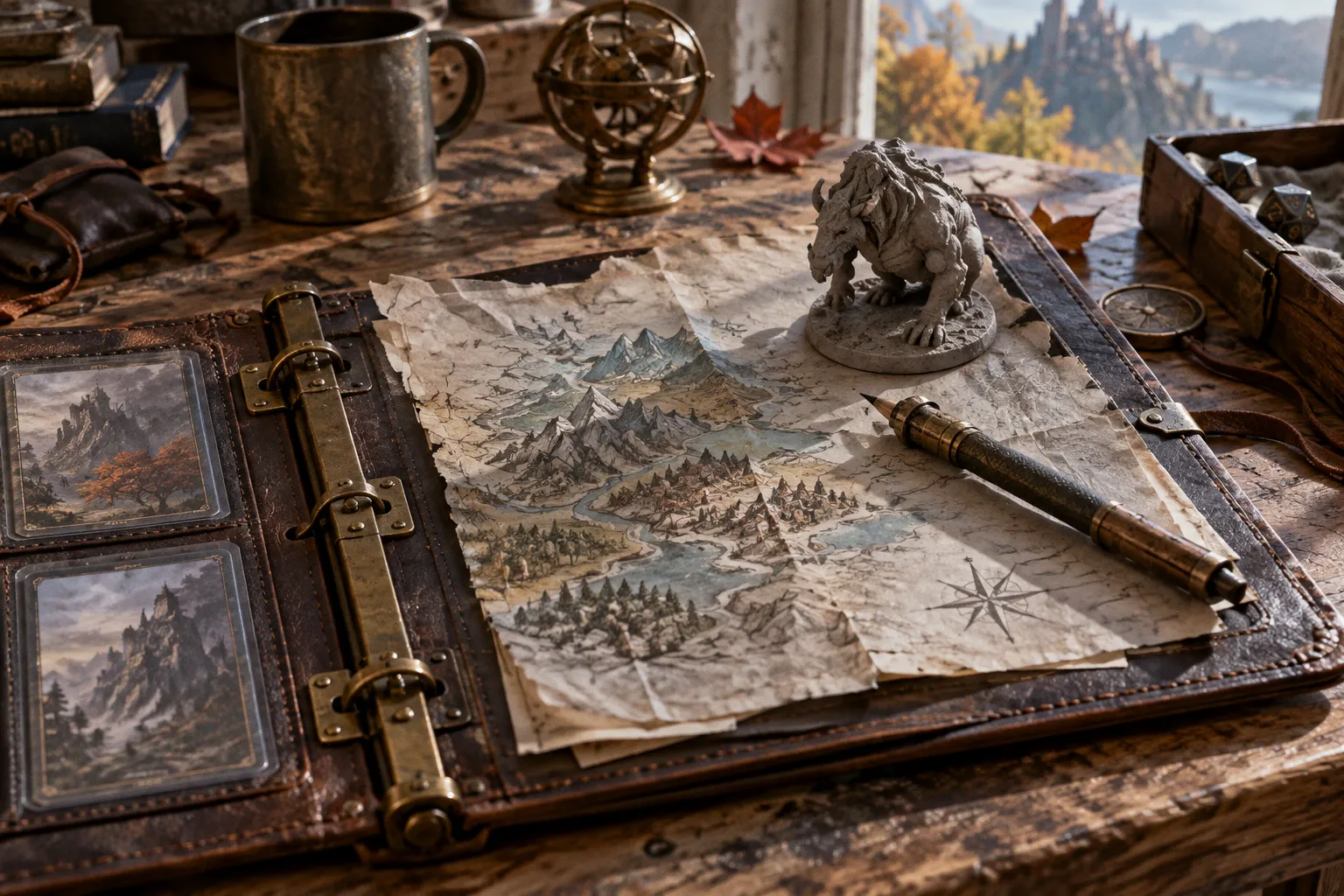
According to DLH.net's coverage — and confirmed by GameSpace.com's launch-day report — the project is pitched as a deck-building tactical RPG built around physical and 3D miniature sculpted dioramas, pairing traditional tabletop grid aesthetics and hand-crafted fantasy art with digital card-driven mechanics.
What the hybrid format actually means for art direction
Here's what caught my eye the moment I read the brief: "sculpted dioramas" sitting right next to "card-driven mechanics." That tells me the art team isn't only supplying flat illustrations for a deck — they're producing dimensional reference pieces the game itself revolves around. In my commissioning seat, that's a different brief than a standard TCG drop. You're not just thinking about silhouette and readability at card size; you're thinking about how a sculpted piece reads from multiple angles, under varied lighting, and as a physical object on someone's table.
If you're building a portfolio aimed at studios working in this hybrid lane, I'd nudge you toward showing at least one piece that proves you can plan a character or creature for both 2D painting and 3D translation. A turnaround sketch, even a rough one, sitting next to your final render tells a commissioning editor that you've already solved the volume problem before they had to ask.
A complementary read on the commission grind
In separate coverage, Creative Bloq ran a process walkthrough from an illustrator who landed a cover commission for Armenia Edizioni's debut fantasy novel — a scarred young warrior facing a wingless dragon covered in scales in shades of red and black, set inside a gloomy, Moria-inspired fortress. The artist kept sketches to one or two black-and-white studies, then isolated the warrior at a larger scale before compositing him back into the scene. That's a workflow worth borrowing when a brief asks for "epic fantasy tone, warm palette" and the reference list lands somewhere around Joe Abercrombie. Painting your hero separately lets you protect the focal point from the visual noise of ruins, atmospheric effects, and supporting cast — a habit that holds whether you're painting for a novel cover or a boss card.
What to watch before you reshare the campaign
Public-facing coverage so far is thin — mostly campaign-launch announcements from DLH.net and GameSpace.com, with no pricing tiers, stretch goals, or sculptor credits visible in what I could verify. Before you send the link to your studio contacts, I'd hold out for Sky Castle Studios to post actual diorama renders and a named art team. A "deck-building RPG with sculpted dioramas" pitch can mean anything from a passion project with three sculptors to a fully staffed production — and your portfolio hours are too valuable to pivot on the first announcement alone.