Stardew Valley Magic: The Gathering Crossover: What We Know So Far
The official Magic announcement names the A Marvelous Mathoms™ Secret Lair Superdrop, while Star City Games has also covered the individual drops revealed so far.
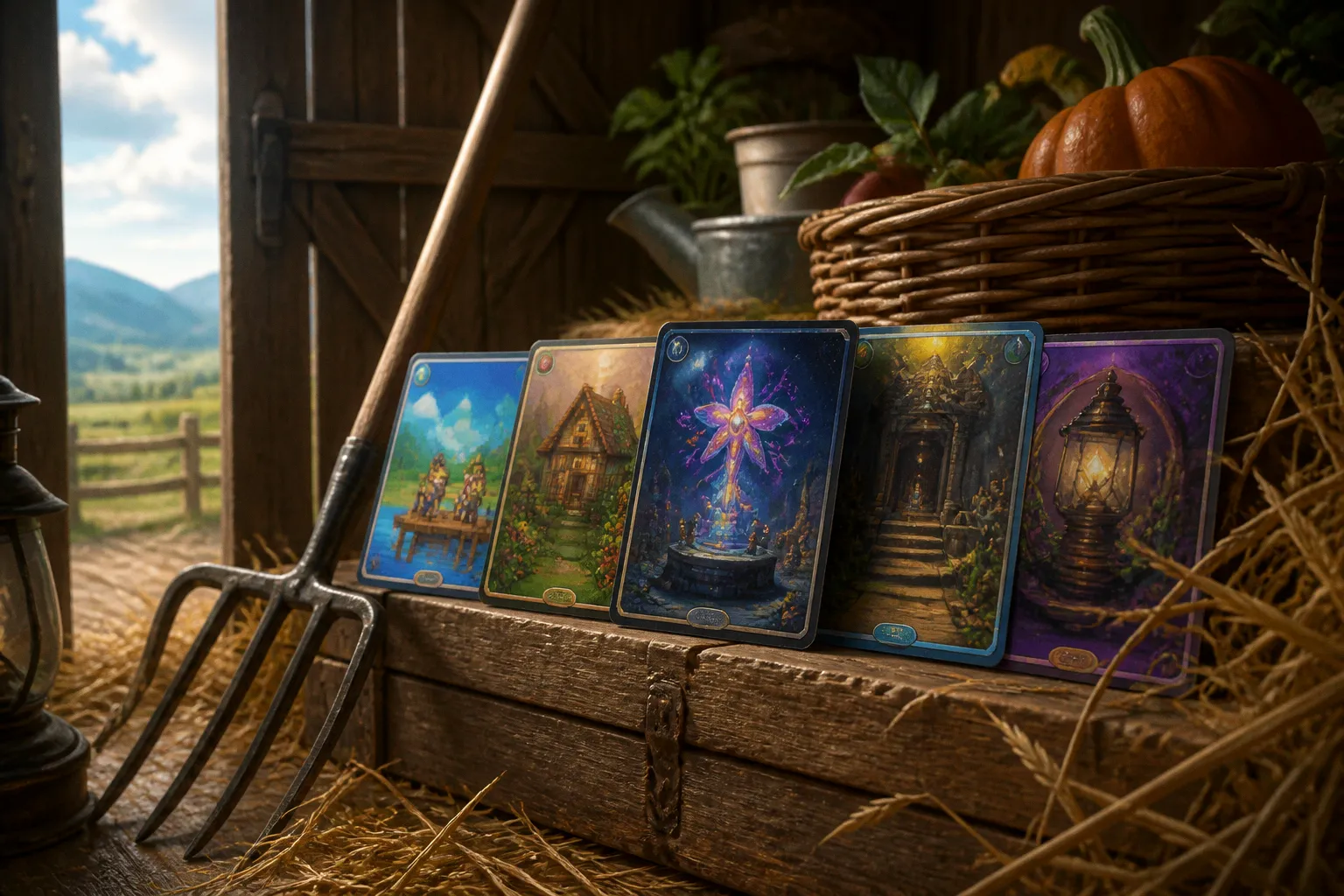
According to Magic: The Gathering’s announcement, A Marvelous Mathoms™ Secret Lair Superdrop is the umbrella release now associated with a Stardew Valley Secret Lair. Coverage from games.gg and TheGamer points specifically to the cards, release date, product options, and pricing—but the material currently available to us does not provide those details in a form worth repeating as fact.
That restraint matters. A crossover can have a lovely brief and still land unevenly as a card-art assignment: the real test is whether the illustration survives at trading-card scale, where soft atmosphere, tiny props, and subtle value shifts can simply disappear.
The Stardew Valley drop: confirmed, but not yet a card list
Separate reports identify Stardew Valley as part of this Secret Lair conversation, with games.gg focusing on its cards and release date and TheGamer on its products and prices.
What we cannot responsibly fill in yet is the useful collector-facing fine print: individual card names, treatment variants, exact release timing, product breakdown, or price points. If you are planning a purchase, wait for the official listing rather than building a budget around headlines alone. Secret Lair’s presentation, contents, and availability are the practical parts of the brief—not decorative footnotes.
Why this crossover is an art-direction watch
Stardew Valley brings a very particular visual problem to Magic. Its appeal lives in small rhythms: a crop row, a familiar building shape, a seasonal palette, an object placed exactly where a player expects it. On a standard card frame, that material needs strong silhouette and a clear focal hierarchy. If every nostalgic detail gets equal weight, the image may reward a close-up but lose its pop in a hand, binder page, or tabletop spread.
I would be looking for a smart translation rather than a literal screenshot approach. The strongest TCG crossover art preserves the source’s visual shorthand while giving the image enough contrast, gesture, and readable storytelling to work as Magic art. Your portfolio can take a useful lesson here: when a client asks for “cozy,” don’t mistake that for “low contrast.” Cozy still needs structure.
What to check when the full reveal arrives
When Wizards publishes the complete Stardew Valley information, start with the images at their smallest usable size. Ask whether the key character, creature, tool, or location reads before you chase the Easter eggs. Then compare the cards as a set: do the palettes create a coherent art drop, and does each piece keep its own visual job?
For collectors, confirm the exact contents and purchase terms directly from Magic before choosing a version. For artists, save the reveal as a miniature case study in adaptation: what was retained from the game’s identity, what was simplified for the frame, and where the artwork found room to breathe. That is the balancing act behind a successful licensed card commission—and it is usually decided long before the final flourish goes on the canvas.