Visualizing Magic: How to Illustrate Distinct TTRPG Spellcasting Traditions
According to Tabletop Gaming UK's review, Dragonbane: Book of Magic is the kind of supplement that treats magic less like a fireball checklist and more like a lived-in system — thirteen distinct…
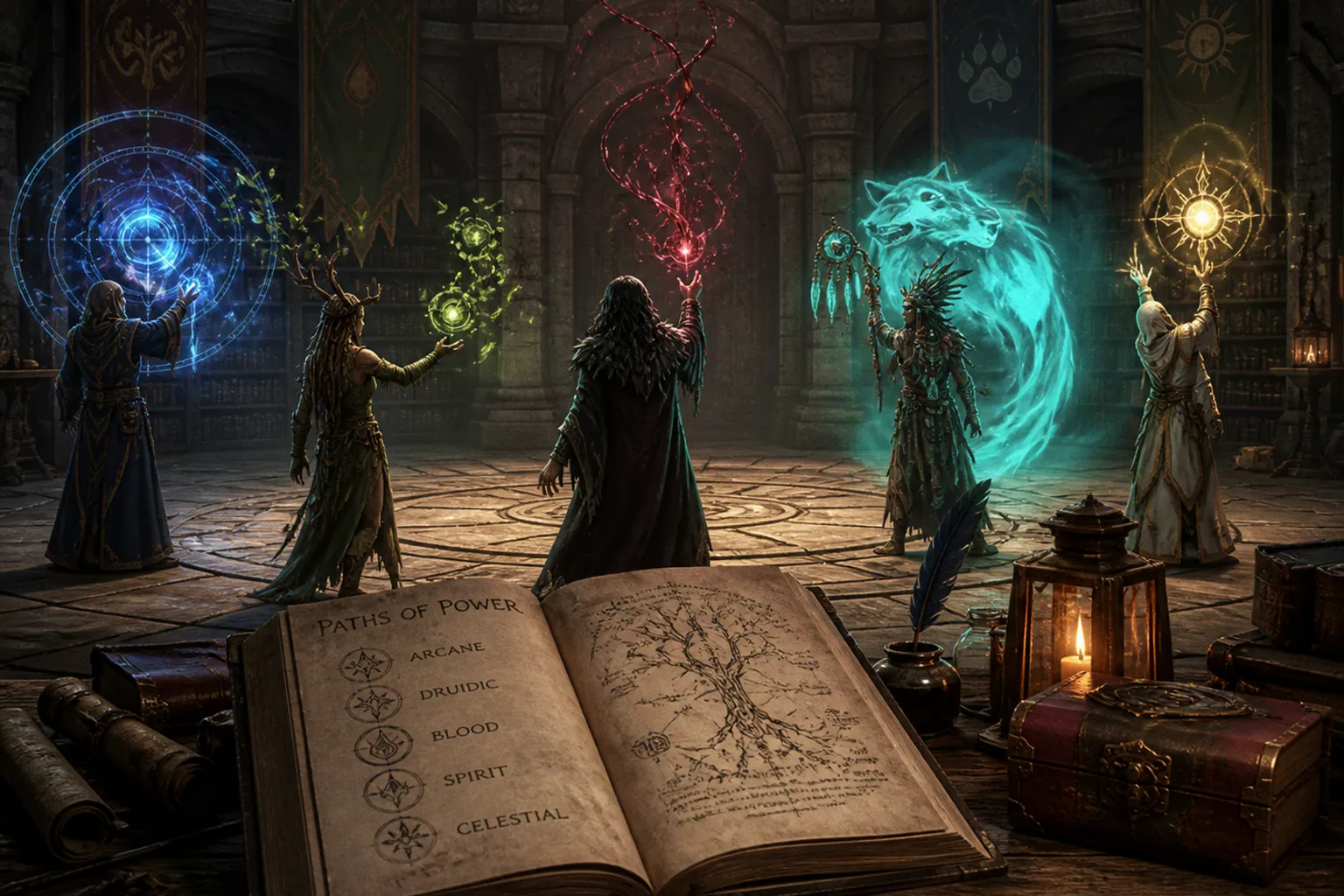
According to Tabletop Gaming UK's review, Dragonbane: Book of Magic is the kind of supplement that treats magic less like a fireball checklist and more like a lived-in system — thirteen distinct schools, each with its own flavour, prerequisites, and quirks. For anyone working in TTRPG or TCG art, the more interesting story is the brief hiding inside that review: how do you illustrate thirteen flavours of wizardry without them blurring into the same stock wizard?
What an art director reads between the spell lines
The review flags something game designers sometimes miss: every school has its own texture. The Familiar tradition works with elemental animal companions — cats, dogs, flames, clouds. Necromancy and Demonology carry obvious friction. Enchanting leans on crafting skill. Harmonism leans on performance. Casting speeds range from quick incantations to long rituals. Powerful spells have prerequisites that build on each other like real training. Even the magical crafting rules at the back describe items with their own flaws rather than world-breaking artifacts.
That's a visual brief in disguise. Every one of those distinctions is a costume decision, a prop choice, a posture, a palette. If you drew all thirteen traditions identically, you'd lose the system — and you'd lose the art director reviewing your portfolio.
What to actually do with this for your portfolio
If you're building TTRPG or card game samples this quarter, here's the homework. Pick a tradition — from Dragonbane or any magic system you love — and answer four questions before you sketch:
1. What's the practitioner's tool? What do they carry, wear, or keep nearby that signals their school? A Familiar caster has an animal companion. An Enchanter has a workbench.
2. What does failure look like? The review points out that even artefacts have flaws. Paint one. It's the most underused piece of any fantasy portfolio.
3. What's the casting posture? Quick incantation versus long ritual is a body language problem — and your composition lives or dies on it.
4. What's the prerequisite? If the mage had to master three lesser spells first, show the layering: tools, notes, ingredients, scars.
The mistake I see in young portfolios isn't bad drawing. It's generic drawing. A wizard with glowing hands and a robe is a thumbnail. A pyromancer who had to master three lesser heat spells first, keeps a scarred leather journal, and carries a flawed brass focus that burns her palm — that's a portfolio piece. Dragonbane: Book of Magic gives you exactly that kind of granular worldbuilding. Use it.