Why Magic: The Gathering Struggles to Scale Up Its Card Art
According to coverage from Popverse, Rosewater's answer came in two layers.
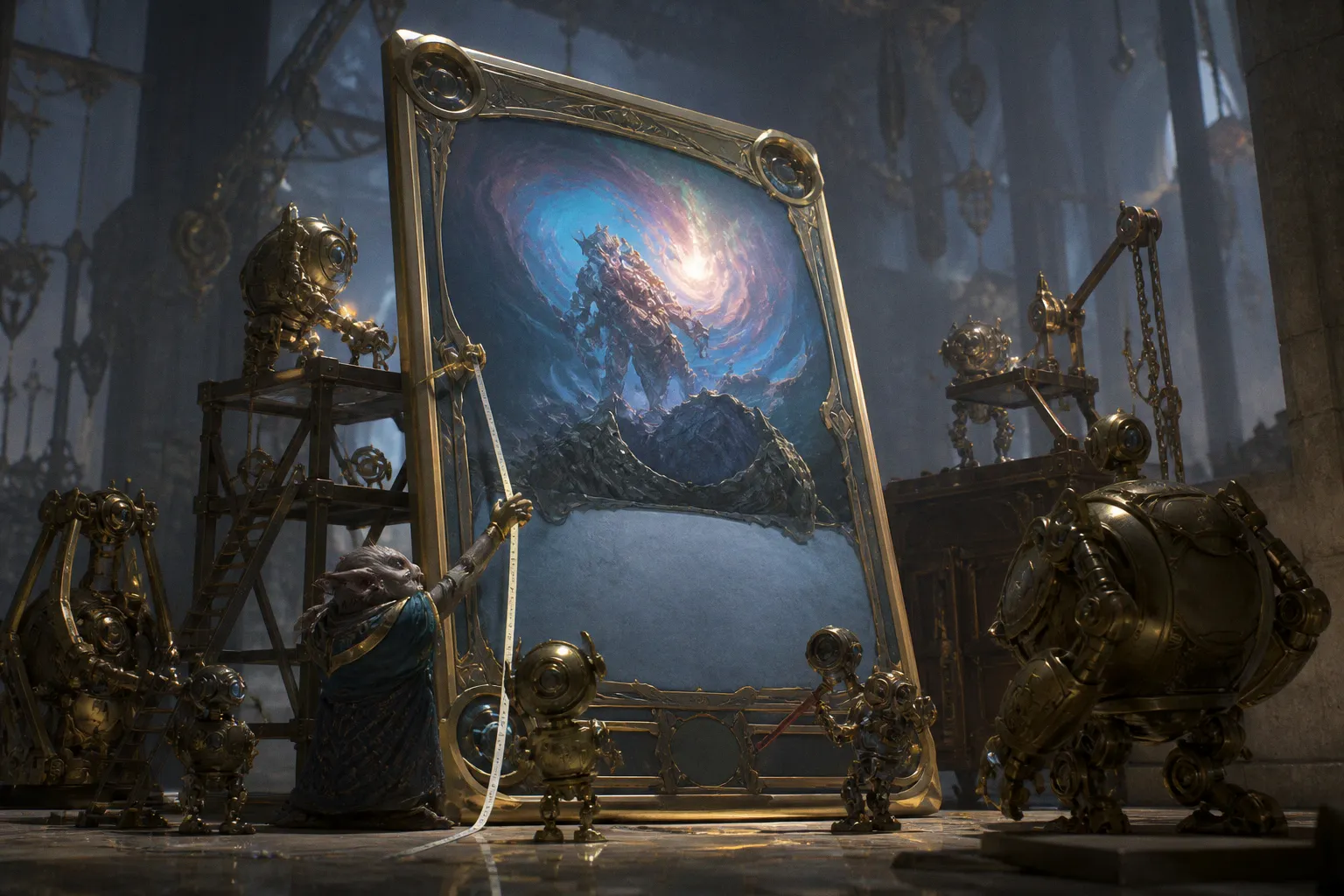
Magic's head of design Mark Rosewater recently took to the official MTG website to field a fan question that I suspect a lot of you have asked at some point: will the game ever ship oversized, playable cards — the kind of dramatic statement pieces Pokémon has been printing as jumbo collectibles? According to coverage from Popverse, Rosewater's answer came in two layers. First, the good news: oversized cards already exist in the ecosystem. They show up in supplemental products — think the Commander 2020 pre-con that included Otrimi, the Ever-Playful as a premium oversized card — and occasionally drop as a bonus when you buy a full booster box. So the format isn't foreign territory.
What is foreign is putting one inside a regular booster pack. And this is where it gets interesting for anyone who cares about the art side of the game.
For last summer's Edge of Eternities set, the design team handed off a concept called "cosmic" cards — twice the size of a standard Magic card. As an illustrator, that sentence alone should make your ears perk up. Twice the canvas. Twice the room for silhouette, atmospheric depth, and the kind of subtle glazing work that simply collapses when you shrink a painting down to two inches. For a brief, beautiful moment, there was going to be more space for art to actually breathe.
Then reality intervened. Rosewater outlined two structural obstacles. The first is print scale: Magic's premier sets run across numerous printers worldwide, all of which have to meet the same production criteria. A small per-card cost increase that would be manageable for a smaller print run balloons into serious money at Magic's volume. The second is packaging geometry. Every booster is calibrated to a specific card size and shape, and changing that spec for a normal release creates a cascade of problems — from plastic wrap to shipping boxes to shelf dimensions at your local game store.
So the art team tried, and the logistics team said no. That tension — creative ambition bumping into industrial constraint — is something every working illustrator knows intimately. You spec a beautiful piece on a generous canvas, and then the printer calls with "the bleed needs to come in by a quarter inch." Scale is rarely the artist's friend.
What to watch from here, if you're building a portfolio aimed at TCG work: the supplemental and promo channels remain the most likely place oversized art surfaces. Pre-cons, box-toppers, and special editions don't carry the same packaging constraints as premier boosters. That's where the bigger, weirder, more painterly pieces tend to land — and where commissioners and art directors are most willing to push format boundaries. Keep an eye on those releases. They're the closest thing Magic has to a sketchbook page, and they're where the ambitious work has the best chance of surviving contact with a printer.