The Professional Reality Behind Illustrating Magic: The Gathering Cards
According to Marketplace's recent piece on how Magic: The Gathering cards actually get made, that's not poetic license — it's the brief.
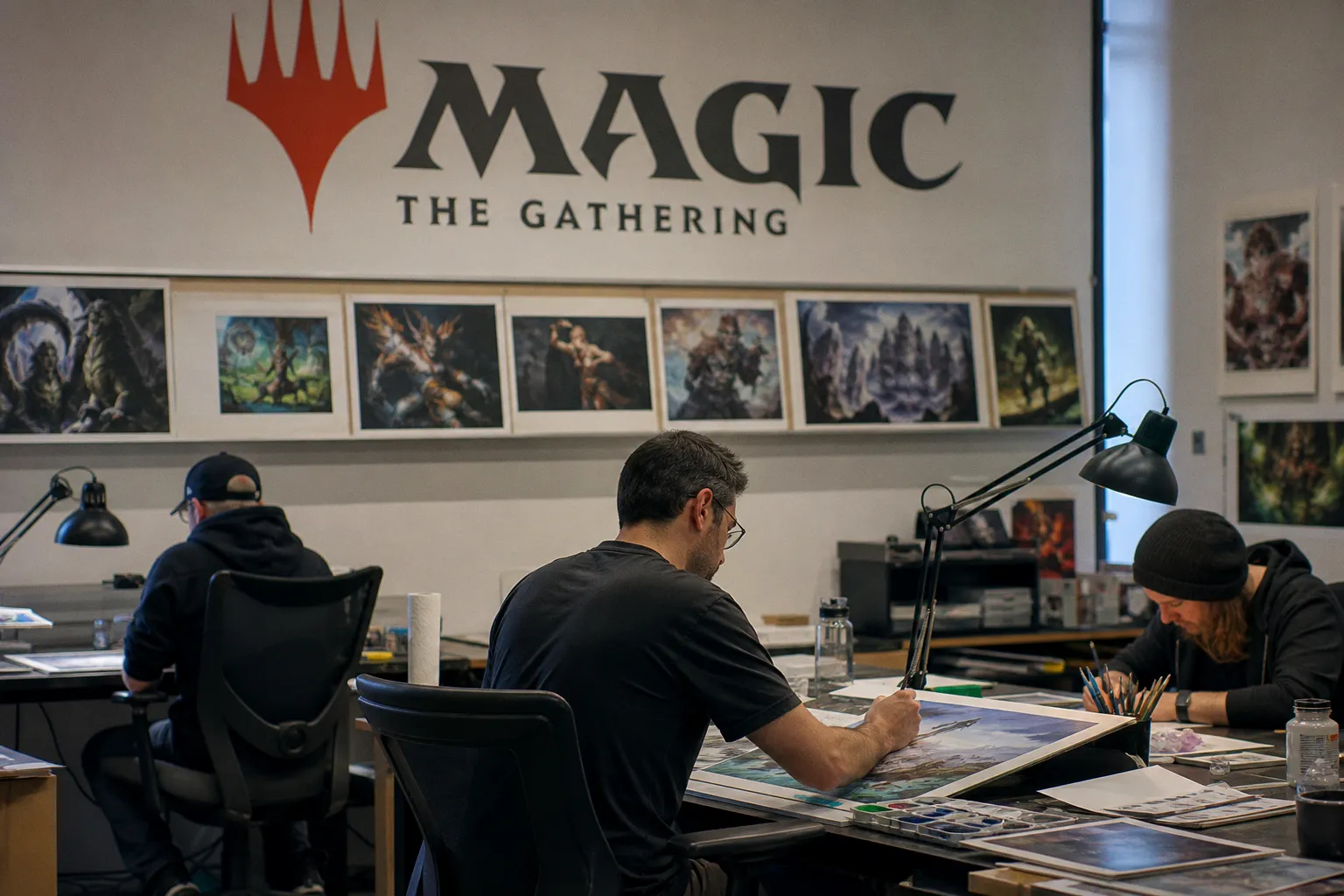
You know that moment when a client asks for "a dragon that looks like it could come right out of the wall at you"? According to Marketplace's recent piece on how Magic: The Gathering cards actually get made, that's not poetic license — it's the brief. The same episode profiles illustrator Alayna Danner and principal game designer Gavin Verhey, and it quietly hands every aspiring TCG artist a map of the road between your sketchbook and a printed card. Pair that with Hasbro's note that Magic revenue jumped 32% in the second quarter to a record $545 million, and it's clear the pipeline is wide open — but it's also gated by something very specific.
What the art directors are actually looking for
Here's the part of the Marketplace feature I want you to sit with. Danner describes Magic's visual language plainly: "The art is very highly realistic. It's not cartoony or stylized. It's all about rendering." That word — rendering — matters more than any style label you can slap on your portfolio. If your dragon reads as a flat graphic, a confident silhouette, or a stylized symbol, you're speaking a different dialect than what the briefs at Wizards are asking for. Danner's own work leans into fantastical landscapes that "may or may not break the laws of physics," but the underlying technique is grounded in traditional realism. The brief is the constant; the imagination is yours to push.
The seven-year grind is the assignment
I keep meeting young artists who assume the leap from "good portfolio" to "freelance Magic illustrator" is one strong image away. Danner's timeline tells the real story. She attended the Milwaukee Institute of Art and Design, worked a full-time job at a small indie video game studio in Madison, Wisconsin, and took illustration commissions on the side — sometimes for $10 to $50 per piece. From the day she started chasing Magic work to the day she landed her first freelance illustration for the game: about seven years. Her GameStop years, sketching on receipt paper between customers, weren't prologue. They were practice.
The feedback loop you can start this week
Here's the move Danner says was "worth more than gold": getting feedback from Magic art directors at annual conventions. That's the part you can actually act on. Pin down which shows draw the Wizards AD team — Gen Con, Magic-focused events, the larger fantasy conventions — and bring a printed portfolio, not a tablet. Ask for a specific critique. Then go home and apply one note at a time. Verhey's origin story in the same Marketplace piece — the sleepovers where his mom cut and sleeved the homemade cards — is charming, but the lesson underneath it is the same one Danner earned: the people who make it into Magic are the people who kept making the thing, in public, until the work spoke for itself.