Château de Chantilly tickets: artist route to the galleries
Château de Chantilly is not a museum where the collection adjusts itself to the visitor. The visitor adjusts to the building, the light, the sequence of rooms, and the fixed arrangement of the works.Château de Chantilly · from €9 · Book online
That distinction matters before you buy tickets to Château de Chantilly, because the visit is governed by more than opening hours. You are entering a preserved installation: a 19th-century collection whose architecture, hanging scheme, and visual relationships are part of the experience.
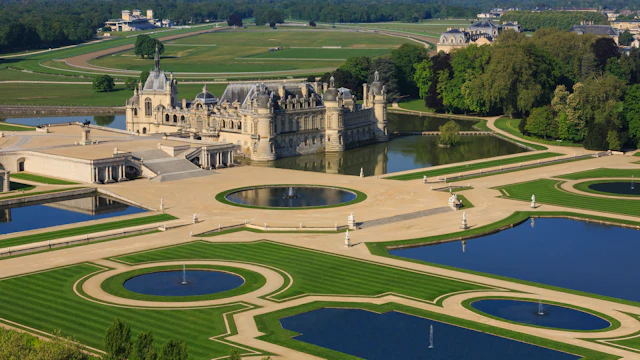 Chantilly
Tickets and prices
Château de Chantilly
Entry ticket · Private 7-seater van transfer
from€429
Book onlineEntry ticket · Park access
from€9
Book onlineSkip-the-line ticket · Chateau, stables, and gardens
from€15
Book onlineGuided tour · Private tour with transfer
from€185
Book onlineAt the Musée Condé, the objective is not simply to see individual masterpieces. It is to understand how those works operate inside the system created for them. The practical sequence is therefore inseparable from the artistic one: book a timed ticket online, arrive with enough time to move through the estate, and reserve your attention for the rooms where the collection reveals its logic.
Navigating the Musée Condé: A Permanent 19th-Century Masterpiece
The Musée Condé is not a conventional gallery. It is closer to a preserved specimen of private collecting. In 1884, Henri d’Orléans, Duke of Aumale, drafted a bequest to the Institut de France. The terms were deliberately restrictive: the collection was not to be loaned, sold, or rearranged. After his death in 1897, the gift became public, and visitors entered the museum in 1898.
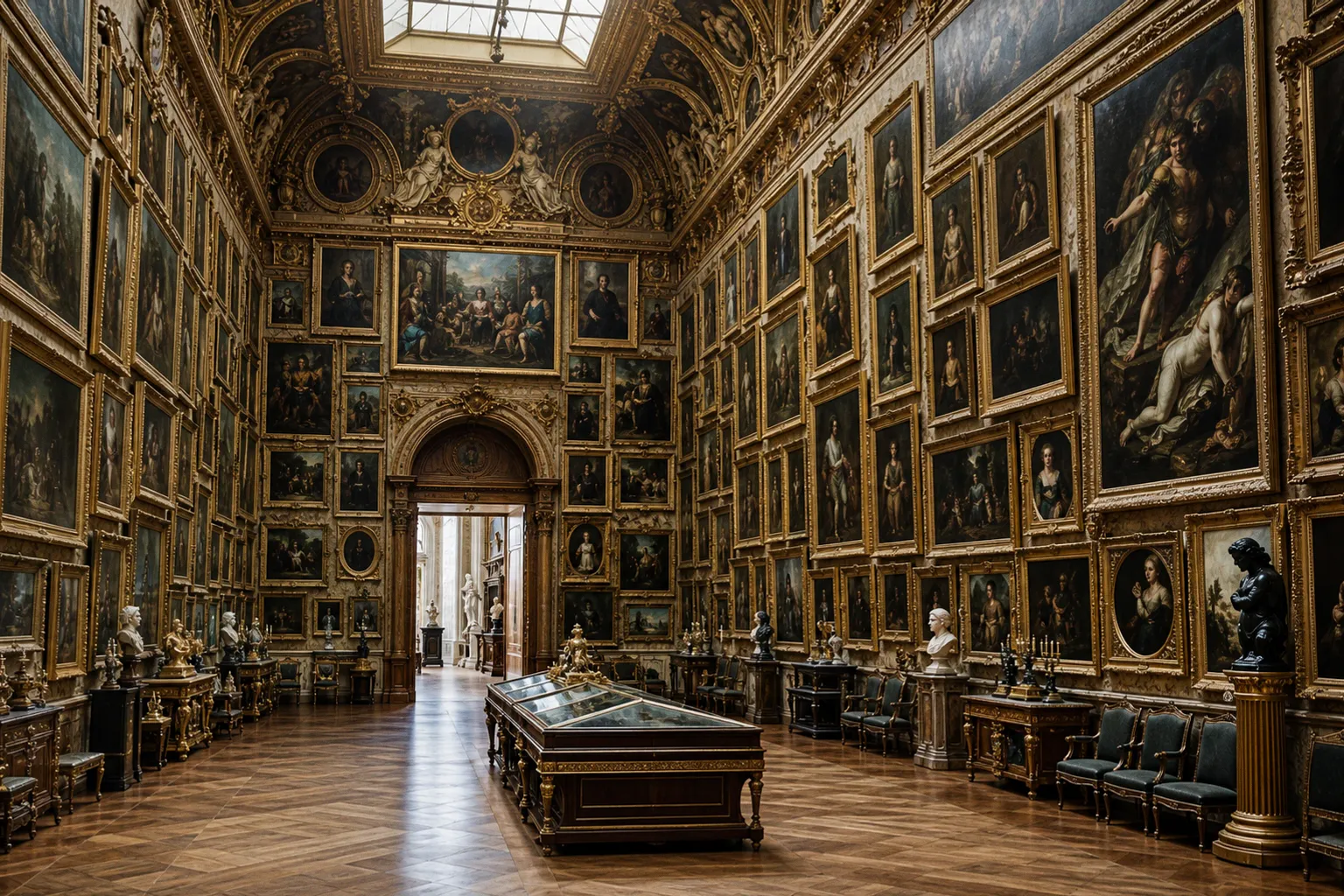
That history still controls the way the rooms are read. The paintings do not circulate through temporary exhibitions or migrate between walls according to a current curatorial fashion. They remain in the positions assigned to them by the Duke. The frame beside a painting, the height at which it is hung, the color of the surrounding wall, and the density of the installation all belong to the historical record.
This is why the Musée Condé can feel disorienting to anyone accustomed to the clean chronology of a modern museum. The layout is not primarily chronological. It follows the logic of a 19th-century salon: works are assembled by importance, taste, association, and visual impact. Paintings may be arranged floor-to-ceiling, with the eye required to move vertically as well as horizontally.
In the Gallery of Painting, the density is especially striking. Around 85 works occupy the room, creating a field of pigment, gilded frames, and competing focal points. The correct response is not to rush from one famous title to the next. First read the room as a composition. Notice where the strongest color accents sit, how large canvases anchor the wall, and how smaller pictures interrupt the rhythm. Only then isolate individual works.
For an artist, this arrangement offers something that a white-cube gallery usually removes: evidence of how pictures behave in proximity to one another. A painting is never seen in a vacuum. Its apparent temperature changes beside a colder canvas; its scale changes beside a monumental frame; its surface seems more or less active depending on the visual pressure around it. The Duke’s installation makes those relationships visible.
At Chantilly, the hanging is not background information. It is one of the works you have come to study.
The museum rewards a slower form of looking. Stand far enough away to register the full wall, then move closer to inspect edges, glazes, drawing, and the condition of the surface. This alternating distance is more productive than treating every canvas as an isolated object. It also helps prevent the common mistake of spending all available attention on the first room and arriving at the Tribune already visually exhausted.
How to read a salon-style hang
A useful approach is to divide the visit into three scales:
- The room: Observe the architecture, light, wall color, and the general distribution of attention.
- The cluster: Compare works that have been placed near one another, even when they belong to different periods or schools.
- The surface: Only after the wider relationships are clear should you concentrate on brushwork, drawing, material, and finish.
This is not a rigid method. It is simply a way to keep the collection from becoming a sequence of disconnected details. The Musée Condé is most distinctive when its individual works remain visible as parts of a deliberately preserved environment.
Essential Ticket Logistics: Pricing and Booking Requirements
Entry to the estate is controlled by a timed-ticket system. Visiting the Château de Chantilly requires booking a timed ticket online, and this is particularly important during peak periods, when available entry slots may be limited. Do not plan the visit around arriving without a reservation and negotiating admission at the gate. The practical starting point is the official online booking process: choose the date, select the available time, and make sure the ticket covers the areas you intend to visit.
The ticket is not a minor administrative detail. A late or poorly chosen slot can compress the museum visit, especially if you want to examine the permanent collection rather than make a quick circuit of the château. The estate is spread across several distinct attractions, so the amount of time required depends on whether your focus is the Musée Condé, the grounds, the Great Stables, or a combination of all three.
The following structure is the useful point of comparison when planning Château de Chantilly ticket booking:
| Ticket type | Adult (26+) | Youth (7–25) | Coverage |
|---|---|---|---|
| 1-day timed ticket | €21 | €17.50 | Château, grounds, Great Stables, and temporary exhibitions |
| 2-day timed ticket | €26 | €21 | The same coverage across two consecutive days |
| Grounds only | €9 | €7 | Formal gardens and parkland |
A guided tour of the painting collections carries an additional €7 fee. Whether that supplement is worthwhile depends on the kind of visit you want. A guide can supply context and point out connections that are easy to miss in a dense display. An artist working through a personal study, however, may prefer the freedom to remain in one room, return to a picture, and let the arrangement reveal itself without following a fixed spoken route.
For most visitors whose priority is the collection, the 1-day ticket is sufficient. It allows focused time in the château while leaving room to see the principal areas of the estate. The 2-day option makes more sense when the gardens, library, Great Stables, and museum are all part of the same artistic investigation. Chantilly is not a single-room destination, and the grounds can absorb as much attention as the gallery walls.
The estate closes on Tuesdays. The stated opening hours are:
- High season, late March to late October: 10:00 AM–6:00 PM.
- Low season: Château, 10:30 AM–5:00 PM; Great Stables, 10:00 AM–5:00 PM.
Check the selected date and time when booking, since seasonal schedules determine how much of the estate can realistically fit into one day. An early arrival is generally the strongest choice for close looking. The first hours offer a better chance of working through the rooms before the flow of visitors becomes visually and physically intrusive.
The ticket does not guarantee a private encounter with the collection. It guarantees a scheduled opportunity to enter the estate. The quality of the visit still depends on how you spend the hours after admission: whether you move quickly for coverage or deliberately sacrifice breadth for sustained observation.
The Duke of Aumale’s Bequest: Why the Art Never Moves
The central fact behind the museum is the bequest. The works are not merely displayed in a historically flavored interior; they are bound to the installation that the Duke created. That legal and curatorial constraint gives the Musée Condé its particular character. The paintings are not waiting for a new exhibition design. They remain in an arrangement shaped by one collector’s judgment.
This can initially seem restrictive. Modern museums often present flexibility as a virtue: collections are reinstalled, objects are lent, and individual works are placed into new conversations. Chantilly offers the opposite experience. Its value lies partly in the fact that the conversation has been preserved. The visitor encounters not only a picture by a particular artist, but also the selection, framing, adjacency, and spatial hierarchy chosen for it.
For an artist, that fixed context is an advantage. It permits the study of reception as a physical problem. How high is the painting from the floor? What does the neighboring frame do to its color? Does a dark canvas intensify a pale one? Does a crowded wall make a restrained composition appear quieter or more forceful? These questions are difficult to answer from a reproduction or a solitary museum label. They become immediate when the works remain in a stable relationship.
The Santuario demonstrates the principle clearly. This small, chapel-like room houses Raphael’s The Three Graces. The space was conceived as a dedicated setting for a single masterpiece, so the conditions of viewing become part of the meaning. Light, distance, silence, and the transition from the surrounding rooms all influence the encounter. The painting is not simply taken from the wall and carried into a neutral study environment. Its prescribed environment is part of what the visitor is looking at.
That does not mean the installation should be treated as untouchable or beyond criticism. A preserved display can also preserve the assumptions of its period: ideas about hierarchy, taste, authorship, and what deserved prominence. The interest lies in seeing those assumptions directly. The museum turns connoisseurship into architecture. The Duke’s judgments are not hidden in a catalogue; they are made legible in the order and density of the rooms.
Why the fixed arrangement matters to artists
A reproduction gives you information about an image. A stable installation gives you information about an image’s behavior.
That difference is especially important for anyone studying:
- Scale: The physical size of a work changes the way its composition is perceived, particularly when it is placed beside much smaller panels.
- Color interaction: A palette can appear warmer, flatter, or more luminous depending on the works and wall surfaces around it.
- Framing: The frame is not a neutral border. It establishes period, status, distance, and visual separation.
- Viewing height: The relationship between the viewer’s eye and the painted field affects the sense of intimacy or authority.
- Sequence: The work seen immediately before it shapes the first impression of the next one.
These are not abstract observations. They are practical tools for a painter, illustrator, or visual researcher trying to understand how an image occupies space. The Château de Chantilly ticket gives access to a collection, but the collection becomes intelligible only when you pay attention to the conditions in which it is encountered.
Planning Your Artistic Pilgrimage: From Paris to the Gallery Walls
The route from Paris is straightforward, but it should be planned as part of the visit rather than treated as disposable transit. The museum asks for sustained visual concentration. A rushed departure, a missed train, or an improvised final connection can reduce the most valuable part of the day to a hurried walk through the galleries.
The standard sequence is:
1. Begin at Gare du Nord in Paris.
2. Take a TER train toward Chantilly–Gouvieux station. The journey is approximately 25 minutes.
3. Continue from the station to the estate. You can walk or take a taxi.
4. Use the reserved entry time as the anchor for the day. Leave enough margin for the connection from the station rather than aiming to arrive at the last possible moment.
The walk from Chantilly–Gouvieux takes roughly 30 to 45 minutes. It is not simply a delay between railway and museum. The approach gives you time to register the town, the forested setting, and the way the château’s silhouette emerges in relation to the landscape. For an artist, this external sequence has value: the estate is not an isolated façade but the culmination of a longer visual approach.
A taxi is the more efficient choice when the main purpose is close study in the galleries. It preserves physical and mental energy, particularly in low season when opening hours are shorter. The correct option depends on what kind of material you want from the day:
| Priority | More useful choice | Reason |
|---|---|---|
| Study the approach and setting | Walk | The route reveals the estate gradually and keeps the château connected to its landscape |
| Maximize time for paintings | Taxi | It reduces the transition from station to entrance |
| See the estate at a measured pace | Walk one way, taxi the other | The outbound and return journeys can serve different purposes |
From central Paris, the total journey is roughly one hour, depending on the connection at each end. Treat that estimate as a planning guide, not as permission to book an entry time with no margin. Timed admission works best when the train and final transfer are allowed to breathe.
The return journey follows the same general sequence in reverse. It is worth deciding in advance whether you want to leave immediately after the museum or spend additional time in the grounds. A full day of looking can make the return trip feel longer than the outward journey, and the 2-day ticket may be the more considered choice if the estate itself is part of your subject.
A practical rhythm for the day
A strong visit usually has three phases. First, make an orientation pass through the principal rooms. Do not try to solve every painting at once. Identify the spaces that require a second look and note where the visual density is highest.
Second, return to the rooms that matter most to your purpose. This is where the Tribune, Santuario, Rotunda, and Gallery of Painting should be treated as distinct environments rather than entries on a list. Give each room enough time to establish its own scale and atmosphere.
Finally, step away from close analysis. Review your notes, revisit one or two works without the pressure to extract information, and allow the broader relationships of the collection to settle. The museum is too dense for a single uninterrupted act of attention. Strategic pauses improve the quality of observation.
A small notebook is useful. Keep the sketches structural rather than reproductive: mark the direction of a figure, the placement of a bright accent, the interval between two frames, or the way a doorway controls the next view. The purpose is to record relationships that photographs and memory tend to flatten.
Key Viewing Areas: The Tribune, The Santuario, and The Rotunda
These rooms are critical nodes in the itinerary because each offers a different model of display. They should not be approached as interchangeable highlights. The Tribune concentrates works and status; the Santuario isolates a single image; the Rotunda manages transition and resonance.
The Tribune
The Tribune is an octagonal salon modeled after the Uffizi’s Tribuna. It functions as an apex within the museum’s spatial hierarchy, bringing important works into a compact and highly charged field. Italian Renaissance and French 17th-century masterpieces appear in direct visual dialogue, and the room’s organization encourages comparison rather than detached inspection.
The octagonal form complicates the ordinary museum route. There is no simple flat wall that can be read from end to end. Instead, the eye pivots around the room, recalibrating scale, color, and distance with each change of angle. Take a moment near the entrance to absorb the whole space before approaching individual paintings. The first impression is not incidental: the room is designed to produce a collective sense of importance.
Look for the points where the room’s concentration becomes most intense. Which painting catches the eye first? Which frame interrupts that pull? How does the light distribute attention across the walls? The Duke’s installation does not merely place valuable works together; it stages an argument about value.
The Santuario
The Santuario is smaller and more focused. It is a chapel-like chamber dedicated to Raphael’s The Three Graces. After the density of the Tribune or Gallery of Painting, the isolation of this work changes the pace of looking.
Here, the relevant comparison is not between several neighboring masterpieces but between the painting and the conditions of its room. Study the transition into the chamber. Notice how proximity alters the reading of scale, how the quieter setting changes the tempo of inspection, and how the absence of competing pictures allows details of drawing, flesh, and surface to carry more weight.
For an artist, this is a useful reminder that emphasis can be produced by subtraction. The work does not need to become larger or brighter to dominate. The room removes visual noise and makes the encounter more deliberate. The effect is not neutral; it is the result of a particular curatorial decision preserved over time.
The Rotunda
The Rotunda acts as an antechamber to the Tribune and presents a selection of Italian Renaissance works. It is a transitional space, but not an empty one. Its purpose is partly to prepare the eye for the concentration that follows.
Pay attention to palette coordination and repeated formal cues. The grouping is not simply a lesson in chronology or school. Works are brought into relation through aesthetic resonance: similar colors, gestures, compositional structures, or ideas of finish. That approach can feel unfamiliar if your reference point is a museum organized by strict historical sequence. It is more productive to ask what the Duke wanted the eye to compare.
The Rotunda also demonstrates how a passage can be an active part of a museum’s argument. A threshold changes expectations. The room before the Tribune controls the speed at which the visitor enters it, just as a frame controls the edge of a painting.
The Gallery of Painting
Beyond these three rooms, the Gallery of Painting is the primary fieldwork area for anyone interested in composition, framing, and visual hierarchy. With approximately 85 works, it presents the central challenge of the Musée Condé: how to look at a dense installation without reducing it to a catalogue of titles.
Begin by walking through the room without attempting a complete analysis. Find the far end, where the crowd may be thinner, and look back toward the full arrangement. Then work through selected clusters. Compare a large canvas with the smaller works around it. Notice how the wall distributes pauses and pressure. Look for unexpected rhymes in color temperature, directional movement, and brushwork.
A modern gallery often gives each painting a generous perimeter of silence. Chantilly denies that silence, and the denial is instructive. A subdued work may gain force from the drama around it. A brilliant picture may lose some of its apparent dominance when surrounded by equally emphatic surfaces. The salon hang makes the act of choosing a focal point part of the experience.
Do not try to photograph your way through the room. Images can help retain a detail, but they cannot reproduce the physical relationships between works, nor the way the room changes as you move. A few written observations may be more valuable than a large number of undigested photographs.
The final verdict is technical rather than merely atmospheric. A visit to the Musée Condé is an examination of a closed system: a collection preserved according to a collector’s will, with its legal restrictions and 19th-century display logic still shaping the visitor’s eye. The timed entry, seasonal hours, fixed layout, and journey from Paris are not incidental obstacles. They define the conditions under which the collection can be studied.
You buy a ticket to Château de Chantilly for access to the estate, but the real subject is more precise: a set of viewing circumstances that has resisted rearrangement for more than a century. Book the timed ticket online, choose a schedule that leaves room for the galleries, and enter with enough patience to read the rooms as carefully as the paintings. At Chantilly, the arrangement is not a preface to the art. It is the art’s continuing condition.
Key facts
Built: 1882
Architect: Jean Bullant
Heritage status: monument historique inscrit
Official website: chateaudechantilly.com