The Mechanics of Macular Defense: Framing Your Eye Supplement Strategy
Most sci-fi covers fail because they try to paint the entire book instead of nailing a single narrative hook. Buying an eye supplement without understanding the mechanical function of the macula is the exact same mistake.

Most sci-fi cover art fails for a simple, mechanical reason: the artist tries to paint the entire 500-page book onto a single 6x9 canvas. They clutter the frame with spaceships, alien flora, and three different protagonists, completely destroying the visual hierarchy. The result is an unreadable mess. Buyers approach eye health supplements with the exact same flawed methodology. They look for a bottle that promises to cure eye strain, fix astigmatism, and grant night vision, ignoring the actual structural mechanics of the eye. The publishing market sells the illusion of epic scale, while the supplement market sells the illusion of invincibility. Both are traps.
| Product | Price | Rating | Best for |
|---|---|---|---|
| Doctor's Best Lutein Lutemax 2020, 60 Softgels | €13.75 | ★ 4.7/5 · 35,689 reviews | The mainstream blockbuster that nails the core visual hierarchy with a patented extract. |
| Nutricost Zeaxanthin with Lutein, 60 Softgels | €10.19 | ★ 4.8/5 · 6,143 reviews | A high-contrast formulation that flips the script by prioritizing zeaxanthin over lutein dominance. |
| Carlson Super DHA Plus Lutein, 120 Softgels | €45.37 | ★ 4.8/5 · 666 reviews | A complex composite piece combining structural omega fatty acids with macular pigments. |
| Codeage Amen Lutein Zeaxanthin, 90 Veggie Capsules | €27.94 | ★ 4.7/5 · 402 reviews | An absorption-focused formulation utilizing black pepper extract to force the narrative hook. |
| 21st Century Lutein, 60 Tablets | €8.01 | ★ 4.7/5 · 909 reviews | The minimalist sketch—stripping away the softgel format entirely for the lowest possible entry cost. |
| Micro Ingredients Lutein With Zeaxanthin, 400 Softgels | €25.35 | ★ 4.8/5 · 190 reviews | The bulk asset library, providing sheer volume for long-term, uninterrupted daily maintenance. |
At a glance
| Product | Best for |
|---|---|
| Doctor's Best Lutein Lutemax 2020, 60 Softgels | The mainstream blockbuster that nails the core visual hierarchy with a patented extract. |
| Nutricost Zeaxanthin with Lutein, 60 Softgels | A high-contrast formulation that flips the script by prioritizing zeaxanthin over lutein dominance. |
| Carlson Super DHA Plus Lutein, 120 Softgels | A complex composite piece combining structural omega fatty acids with macular pigments. |
| Codeage Amen Lutein Zeaxanthin, 90 Veggie Capsules | An absorption-focused formulation utilizing black pepper extract to force the narrative hook. |
| 21st Century Lutein, 60 Tablets | The minimalist sketch—stripping away the softgel format entirely for the lowest possible entry cost. |
| Micro Ingredients Lutein With Zeaxanthin, 400 Softgels | The bulk asset library, providing sheer volume for long-term, uninterrupted daily maintenance. |
Our picks: Structural Lutein Formulations
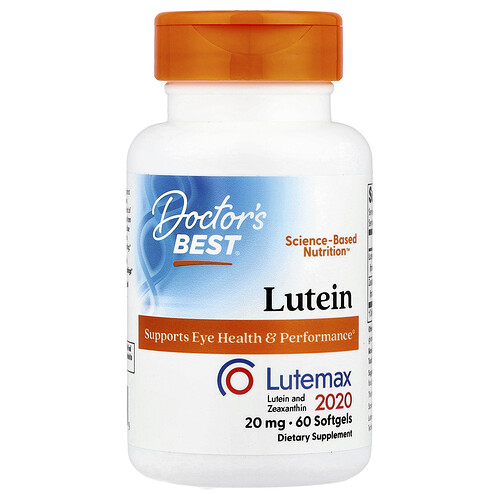
Best for: The mainstream blockbuster that nails the core visual hierarchy with a patented extract.
Pros
- Utilizes the heavily tested Lutemax 2020 standard
- Massive public dataset with over 35,000 reviews
- Excellent price-to-performance ratio for daily use
Cons
- Softgels contain gelatin, alienating vegan buyers
- Relies entirely on a single proprietary extraction method
What to watch: Check your current multivitamin label to ensure you aren't overlapping massive doses of lutein unnecessarily.
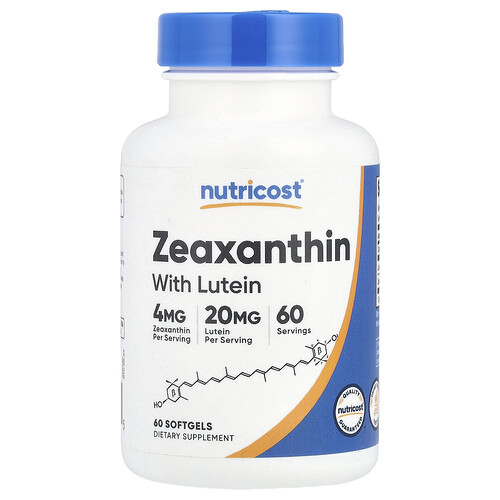
Best for: A high-contrast formulation that flips the script by prioritizing zeaxanthin over lutein dominance.
Pros
- Aggressive pricing structure for budget-conscious buyers
- Shifts the focal point directly to foveal support via zeaxanthin
- Streamlined, no-nonsense ingredient profile
Cons
- Smaller review dataset compared to industry giants
- Basic softgel delivery lacks advanced lipid carriers
What to watch: The inverted ratio may not suit users who were specifically advised to maximize their lutein intake first.
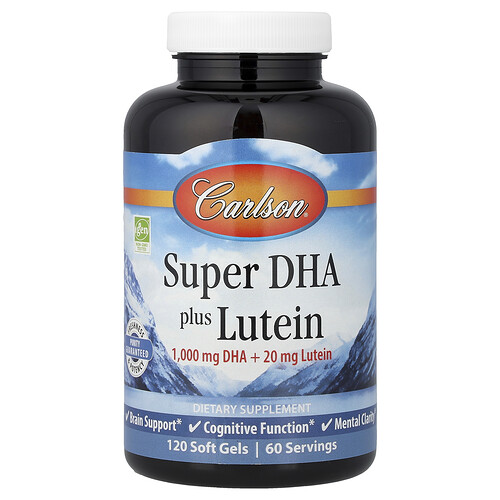
Best for: A complex composite piece combining structural omega fatty acids with macular pigments.
Pros
- Builds a broader narrative by including DHA for membrane support
- High-capacity 120-count bottle reduces reorder frequency
- Premium formulation from a legacy lipid brand
Cons
- Premium price tier demands a significantly larger budget
- Softgels are physically larger due to the fish oil volume
What to watch: Contains fish derivatives, making it strictly off-limits for those with seafood allergies or plant-based diets.
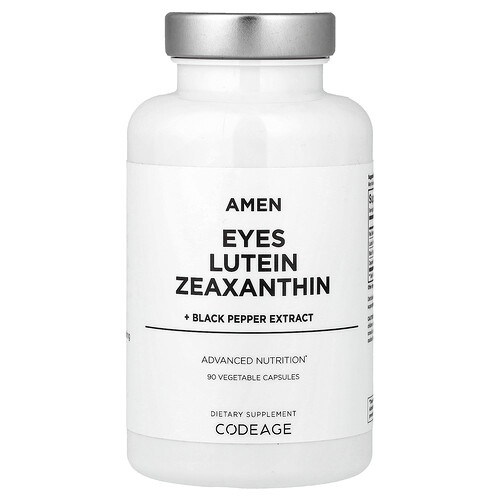
Best for: An absorption-focused formulation utilizing black pepper extract to force the narrative hook.
Pros
- Integrates piperine to mechanically enhance absorption efficiency
- Uses plant-based capsules rather than animal gelatin
- Solid 90-count supply offers a good medium-term runway
Cons
- Higher price point driven by the added pepper extract
- Dry capsule format lacks built-in fats for the carotenoids
What to watch: Black pepper extract (piperine) alters the metabolism of various other supplements and medications, requiring careful timing.
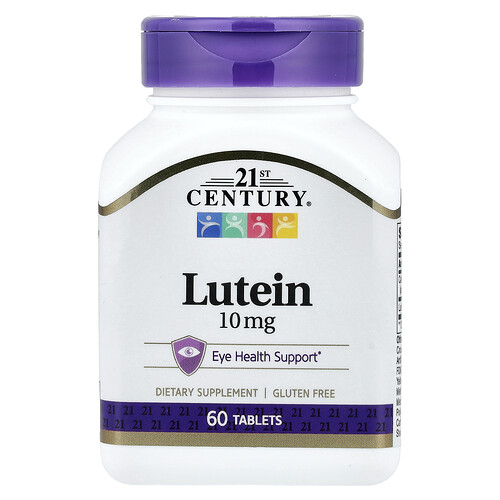
Best for: The minimalist sketch—stripping away the softgel format entirely for the lowest possible entry cost.
Pros
- Extremely low financial barrier to entry
- Tablet form completely sidesteps gelatin issues
- Straightforward, single-ingredient focus
Cons
- Tablets generally offer poorer absorption for fat-soluble compounds
- Lacks the crucial zeaxanthin pairing entirely
What to watch: Because lutein is fat-soluble, you must consume this dry tablet alongside a heavy dietary fat source to ensure any real uptake.
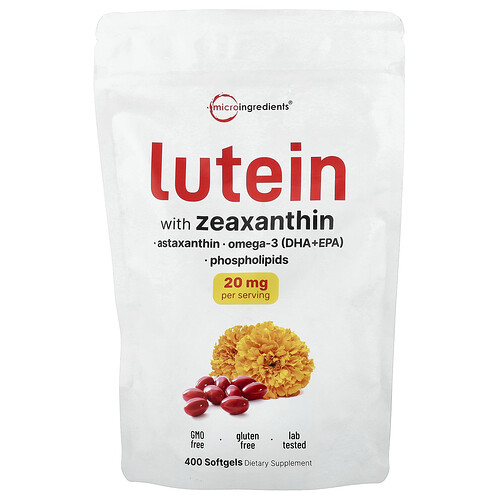
Best for: The bulk asset library, providing sheer volume for long-term, uninterrupted daily maintenance.
Pros
- Massive 400-count inventory prevents running out mid-project
- Incredibly low cost per individual softgel
- Includes the necessary zeaxanthin pairing for complete coverage
Cons
- High upfront commitment to a single brand's formulation
- Softgels are prone to clumping if stored improperly over a year
What to watch: A 400-day supply risks expiration and oxidation if not stored in a cool, dry place away from direct sunlight.
Let's cut the romance. The macula doesn't care about your holistic wellness journey or your innate talent. It operates as a mechanical light filter, relying on a dense layer of pigment to absorb high-energy blue light before it scorches your photoreceptors. When that pigment thins out from age, poor diet, or relentless screen fatigue, your visual contrast drops. It is a structural failure requiring a structural fix. There is no magic here, only the hard work of daily maintenance.
Lutein and its partner, zeaxanthin, are the raw pigments your body uses to rebuild that filter. You don't need a magical proprietary matrix; you need a reliable delivery system that deposits these carotenoids directly into the retinal tissue. We are going to deconstruct the current market offerings, stripping away the marketing noise to identify which formulations actually deliver the necessary raw materials to the focal point.
Why do most eye supplements fail to deliver visual clarity?
They dilute the focal point with unnecessary filler vitamins instead of prioritizing the critical lutein-to-zeaxanthin ratio. The macula requires specific carotenoids to maintain its physical pigment density, not a scattershot, low-dose multivitamin blend.
When a manufacturer crams twenty different botanical extracts into a single capsule, they are forced to reduce the dosage of the active ingredients that actually do the heavy lifting. This is the equivalent of muddying a sharp ink drawing with a dozen conflicting watercolor washes. A pragmatic formulation isolates the primary narrative—in this case, macular pigment density—and delivers it without distraction. If you want to protect your vision, you have to stop buying the supplement equivalent of a cluttered, unfocused sketch.
How does lutein physically interact with the macula?
Lutein acts as a mechanical light filter and structural antioxidant within the retina. It absorbs incoming high-energy blue light before it hits the delicate photoreceptors, functioning exactly like a physical UV filter screwed onto a camera lens.
Beyond simply blocking light, it neutralizes the oxidative stress generated when light photons strike the retinal tissue. Think of it as a localized defense grid. Without sufficient lutein density, the constant bombardment of light degrades the cellular structure over time, leading to a loss of visual contrast and sharpness. It is a consumable resource; if you are staring at monitors for twelve hours a day, you are burning through your pigment reserves faster than your diet can replace them.
What defines the visual hierarchy of a supplement label?
The core narrative hook is the exact milligram count of lutein and its paired zeaxanthin, followed immediately by the delivery mechanism. Everything else—botanical blends, proprietary matrices, or flowery marketing copy—is background noise designed to inflate the price.
A strong label reads like a good composition: clear, high-contrast, and instantly understandable. You should look for a minimum of 10 to 20 milligrams of lutein, paired with a fat-based delivery system like a softgel, since carotenoids require lipids for intestinal absorption. Fat-soluble compounds need a primer to stick to the canvas; in this case, dietary fat is that primer. If the label hides its lutein count behind a "proprietary vision blend," walk away immediately.
The Final Verdict
Doctor's Best Lutemax 2020 anchors the composition as the most reliable daily driver, offering a standardized, highly tested extract that suits the average screen-worker perfectly. For those needing a broader structural base and willing to pay a premium, Carlson's DHA composite provides the best secondary narrative by reinforcing cellular membranes alongside pigment delivery. Both options cut the noise and deliver the necessary mechanical support directly to the macula without romanticizing the process.
This article is not medical advice. Food supplements replace neither a balanced diet nor treatment — if you have symptoms, your doctor decides.
Ad · affiliate links · If you buy through these links, we earn a commission.