Mantic Games Adapts the Original Ghost in the Shell Manga into a New TTRPG
If you've ever stared at a Shirow panel — those impossibly clean linework cybernetics, the layered reflections in rain-slicked visors — and wondered how that visual language translates to tabletop, Mantic Games is about to answer the question.
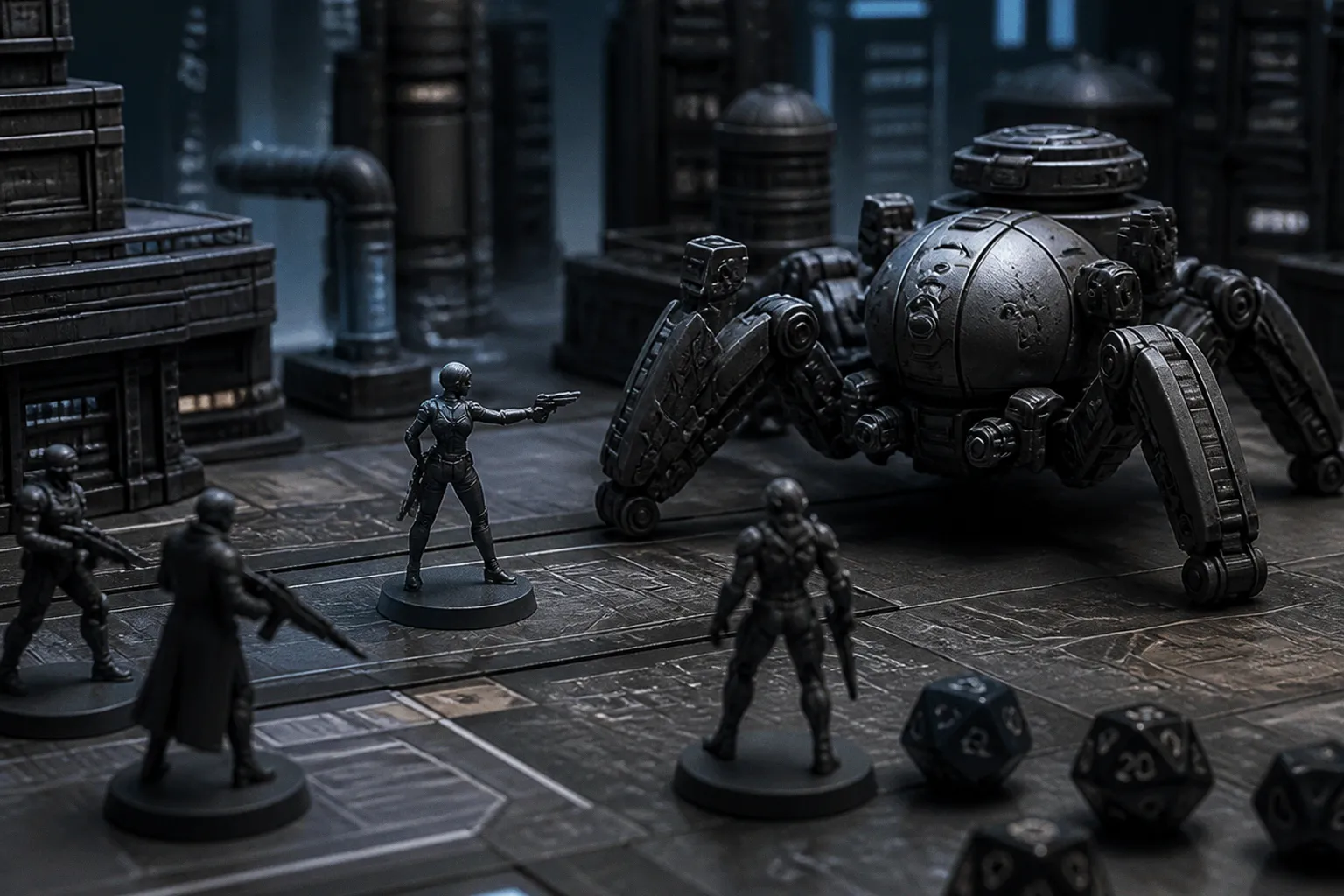
Their officially licensed Ghost in the Shell TTRPG draws directly from Masamune Shirow's original manga rather than the anime adaptations, which means the art direction is rooted in that dense, crosshatched, deeply technical illustration style from 1989. For anyone building a portfolio that bridges hard-sci-fi design and painterly atmosphere, this is a project worth watching closely.
What Mantic Is Actually Building
Lead designer Alessio Cavatore — a veteran of Games Workshop and founder of River Horse Games — has been collecting Shirow's work since 1992, when the manga first appeared serialized in Italy's Kappa Magazine. In 2024, Cavatore sold River Horse to Mantic, transferring the recently acquired Ghost in the Shell licence in the process. The game lets players create original Section 9 agents and explore Shirow's cyberpunk world through what the studio describes as a bespoke roleplaying system.
That's a significant detail for artists. When a TTRPG goes back to the source manga rather than adapting a film or TV series, the visual brief shifts. You're not referencing Sakamoto's colour palette from the 1995 film or the cleaner aesthetic of Stand Alone Complex. You're working with Shirow's dense, information-heavy pages — the ones packed with technical annotations, exploded diagrams of cybernetic limbs, and backgrounds that feel like architectural blueprints. If Mantic stays faithful to that approach, the art direction for supplements, sourcebooks, and promotional pieces will demand a very different skill set than the typical fantasy RPG commission.
Why This Matters for Your Portfolio
Here's the practical takeaway: cyberpunk TCG and RPG art is having a sustained moment, but most of it leans toward the neon-soaked, cinematic look popularized by video games. A project anchored in Shirow's manga sensibility — precise, cerebral, heavy on mechanical detail — opens a different lane. Think clean silhouettes with intricate internal linework, muted palettes punctuated by surgical highlights, and compositions that reward close reading rather than instant impact.
If you've been building a portfolio that shows you can handle complex mechanical subjects — prosthetics, weapons systems, vehicle design — without losing readability at card size, this is exactly the kind of brief where that skill set pays off. The challenge with Shirow-inspired work is the same one you face shrinking an oil painting to two inches: all that gorgeous detail has to survive reduction. Your thumbnails need to read clean, your value structure has to carry the composition, and your linework has to stay legible even when the piece is printed on a poker-sized card.
What to Watch For
Mantic hasn't released art samples or announced illustrators yet, so the visual direction remains an open question. But given Cavatore's deep familiarity with the source material and the manga-first mandate, expect commissions that reward artists comfortable with technical illustration, mechanical design, and the kind of quiet, atmospheric storytelling Shirow does in his quieter panels — not just the action sequences.
Keep an eye on Mantic's announcements for art director credits and style guide previews. If you're serious about pitching for tabletop work in this space, start studying Shirow's manga pages now — not just the splash pages everyone knows, but the dense, dialogue-heavy sequences where the worldbuilding lives in the background art. That's where the real brief will hide.