Nausicaá tickets: booking strategies for peak season visits
Booking Nausicaá tickets for a busy day in Boulogne-sur-Mer is less about finding a clever discount than about removing uncertainty from the first hour of your visit.

During summer, French school holidays, and popular weekends, arriving without a reservation can leave you dealing with the ticket office before you have even seen the aquarium. The Centre National de la Mer is a large, high-demand attraction, and its dated-entry system is designed around visitors choosing their date and arrival window in advance.
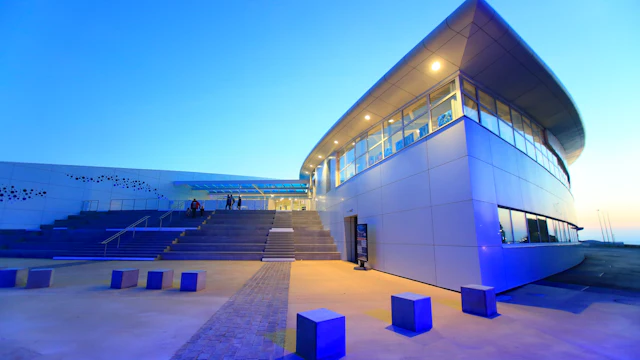 Boulogne-sur-Mer
Tickets and prices
Nausicaá
Day trip · Full-day entry
from€30
Book onlineOfficial ticket · 1-day off-season (ages 12+)
from€30
Book onlineThat matters because the ticket question affects the whole day. If your entry is not secured, every later decision — lunch, parking, the sea lion presentation, or a walk through Boulogne-sur-Mer — remains provisional. If your booking is sorted, the visit becomes much easier to pace.
The practical formula is simple: book online when your date is known, choose a sensible arrival time, keep the confirmation accessible, and allow enough flexibility for the entrance process and the aquarium itself.
Why advance online booking is the safest choice in peak season
For a peak-season visit, online booking should be treated as the default rather than an optional convenience. It allows you to select a date and available arrival window before travelling, instead of leaving admission to whatever remains when you reach the ticket office.
The distinction is important. Online booking can remove the need to purchase a standard ticket at the on-site window. It does not mean that you avoid every part of the entrance procedure. Visitors still need to present their booking confirmation and pass through the venue’s security screening. The reservation solves one bottleneck; it does not turn the entrance into a private passage.
Walk-up admission may be possible when tickets remain available, but that is precisely the weakness of relying on it during a busy period. You are making two assumptions at once: that the date has not sold out and that the remaining entry options suit your schedule. A family arriving after a long drive has less room for that kind of uncertainty than a local visitor who can simply return another day.
What online booking changes
A confirmed online reservation gives you several practical advantages:
- You can check availability before committing to the rest of the day.
- You have a defined entry date and time window rather than an entirely open-ended arrival.
- You reduce your dependence on the ticket-office queue for standard admission.
- You can coordinate the visit with transport, meals, and other plans in Boulogne-sur-Mer.
- You have time to notice whether the chosen date falls within a particularly busy travel period.
That last point is easy to underestimate. A ticket may be available, but not necessarily at the time you would prefer. Morning availability can disappear before afternoon availability, or the reverse may happen on a day when groups arrive early. The booking screen is therefore not just a payment page. It is a useful snapshot of how much flexibility remains.
Book the date first, then build the rest of the day around it. At Nausicaá, improvisation is most expensive before you enter the building.
The difference between a reserved entry and a shorter queue
It is tempting to describe online booking as a way to skip the queue altogether. That is too broad. The more accurate description is that it helps you avoid the standard ticket-purchase queue. Security screening remains part of the arrival process, and all visitors should plan for it.
This distinction also helps set expectations for families. A pre-booked ticket does not guarantee that you will walk from the pavement straight to the first aquarium gallery. You may still need to gather the group, open the confirmation, present the code, and move through screening. The advantage is that you are not also trying to decide whether tickets are still available or negotiating the options at the cashier.
Navigating ticket pricing: standard rates and reduced-entry options
Nausicaá uses separate standard and reduced-entry categories, with prices that can vary according to the season and the current booking period. For that reason, the live booking page is more reliable than an old static price list. A price quoted in a previous guide may no longer describe the date you are trying to reserve.
The basic structure is straightforward:
- Standard adult admission covers visitors aged 12 and over.
- Standard child admission covers children from 3 to 12.
- Children under 3 enter free.
- Reduced rates are available for eligible categories, including seniors, students, job seekers, and visitors with disabilities, subject to the required proof.
The important complication is where the reduced rate is handled. The reduced categories are dealt with at the ticket office when the visitor presents valid documentation. That means the online booking route for a standard ticket and the on-site process for a reduced ticket should not be treated as interchangeable steps.
A safer approach for reduced-rate visitors
If someone in your group may qualify for reduced admission, check the current procedure directly with Nausicaá before payment. The practical questions are:
1. Is the reduced category available for your chosen date and entry period?
2. Does the eligible visitor need to buy at the ticket office rather than online?
3. Which document is accepted as proof?
4. Does the reduced-rate visitor need a separate reservation or registration?
5. Can the rest of the group reserve standard tickets online while the eligible visitor completes the reduced-rate purchase on arrival?
Do not assume that buying a standard online ticket automatically creates a right to a later price adjustment. The available information confirms the reduced-rate ticket-office route, but it does not establish that a standard online purchase can be converted into a reduced ticket with the difference refunded.
That is a small administrative detail with a large effect on the day. If the reduced-rate visitor arrives without the required proof, the ticket office may not be able to apply the concession. If the group arrives with a standard booking but has not confirmed how the eligible visitor should enter, the party may need to split temporarily while the procedure is clarified.
| Ticket type | Typical eligibility or use | Practical booking point |
|---|---|---|
| Standard adult | Visitors aged 12 and over | Online booking is the straightforward option when the date is known |
| Standard child | Children aged 3 to 12 | Reserve with the group where online availability is shown |
| Free admission | Children under 3 | Check whether on-site registration or another formality applies |
| Reduced-rate admission | Eligible seniors, students, job seekers, and visitors with disabilities | Verify the current ticket-office procedure and bring valid proof |
| Group booking | Families or parties travelling together | Check that everyone’s date and arrival period match |
The cheapest theoretical ticket is not always the easiest ticket to use. A slightly more expensive standard reservation may be simpler for a visitor who does not qualify for a concession, while a reduced-rate visitor needs to prioritise documentation and procedure over speed.
Strategic timing: choosing the best time to visit Nausicaá
Once the ticket is secured, time of day becomes the second major decision. Nausicaá’s visitor guidance points towards two useful arrival windows during busy periods: around opening time, or after 3:00 p.m. These options produce different kinds of visit, but both are preferable to drifting into the densest middle of the day without a plan.
An early arrival is the better choice for visitors who want to make the major galleries the centrepiece of the experience. The building is quieter at the start of the day than it will be once families, school groups, and day-trippers have accumulated. You also have more time to absorb the larger exhibits without immediately worrying about the closing time.
The later window works differently. By mid-afternoon, some visitors are already moving towards the exit, and the atmosphere can become less compressed than it was around lunchtime. It is a good fit for travellers who have other plans in Boulogne-sur-Mer in the morning or who prefer not to organise the entire day around an early start.
Morning or after 3:00 p.m.?
| Arrival strategy | Strength | What to watch |
|---|---|---|
| Around opening | More time inside and a strong chance to reach major exhibits before the day builds | Requires reliable transport and a group that can be ready early |
| After 3:00 p.m. | Can avoid the busiest central part of the day and suits a shorter late visit | Less time remains, so a route matters more |
| Midday | Fits naturally into a flexible travel day | Often the least forgiving period for crowds and busy viewing areas |
| Weekday visit | Usually easier to manage than a comparable weekend | School groups and organised visits can still affect particular areas |
| Weekend visit | Convenient for many travellers | More competition for popular arrival periods and exhibits |
There is no universal best hour. A family with young children may prefer the first available entry because the group has more energy. A couple already exploring the coast may find a late afternoon booking more realistic. The mistake is not choosing one over the other; it is assuming that every time slot will feel equally comfortable once you are inside.
If your schedule allows, a weekday generally gives you more breathing room than a weekend. That does not mean the aquarium will be empty. It means the same level of popularity is distributed across a less concentrated visitor pattern. School groups, family travel, and organised parties can still shape the atmosphere, particularly around presentations and interactive areas.
The useful question is not whether Nausicaá will be busy. It is which kind of busy your group can handle: an early start, a dense midday, or a shorter late visit.
The arrival process: from digital confirmation to security screening
The arrival sequence is uncomplicated, but it rewards preparation. Have the booking confirmation ready before you reach the entrance, whether it is stored as a QR code in an email, downloaded to your phone, or printed in advance. A dead phone battery or weak mobile signal is an avoidable problem when the group is standing at the gate.
For a standard online booking, proceed according to the entrance instructions rather than joining the ticket-office line automatically. The code will be checked before you move through the usual security process. Visitors should allow extra time for this sequence, especially on a busy day, without relying on a fixed estimate for how long it will take. The length of the arrival process depends on crowd levels, the composition of your group, and how quickly everyone can present the required documents.
A few details make the entrance less awkward:
- Keep the confirmation open before reaching the scanning point.
- Make sure every member of the party knows where the tickets are stored.
- Carry identification or concession documents separately from the phone holding the booking.
- Pack bags so that they can be presented for screening without a full repacking exercise.
- Allow time for children, strollers, and mobility equipment to move through the same process.
- If someone needs a reduced-rate ticket, go directly to the relevant ticket-office point with the required proof instead of assuming the online standard-ticket route will cover it.
There is no advantage in arriving at the gate with a complicated argument about the booking. If the confirmation, date, and visitor details are clear, the process is easier for everyone. If the booking does not match the intended date or the reduced-rate documentation is missing, the problem needs to be addressed before the group moves into the general admission flow.
Visitors with reduced mobility should check the current accessibility information before travelling and allow the group to move at its own pace. Accessibility equipment and family logistics are part of the visit, not inconveniences to be hidden inside an unrealistic schedule. The aim is to arrive prepared, not to force every visitor through the entrance at the same speed.
Once the screening and ticket check are complete, the rest of the visit is much more predictable. There is no reason to keep treating the entrance as the main event. The useful work has already happened: the correct date was booked, the confirmation was prepared, and any special admission procedure was checked in advance.
Planning the day around a long aquarium visit
A full Nausicaá visit can occupy approximately four and a half hours. That is long enough to change how you think about the ticket. You are not booking a quick stop between two other attractions; you are reserving a substantial part of the day.
The aquarium is easier to enjoy when the route has a loose structure. You do not need to march from one exhibit to the next or turn the visit into a timed competition. You do need to understand that attention and energy change over several hours. The large tanks reward lingering, while smaller galleries and interactive areas can work better when the group needs a change of pace.
The High Seas tank is the obvious anchor. The panoramic scale, large animals, and open viewing areas make it one of the exhibits most visitors want to experience properly. If it is the central reason for your visit, decide whether you want to reach it early, when the group is fresh, or later, when you may be able to return with a clearer sense of what deserves more time.
A practical route might look like this:
1. Begin with the galleries that matter most to your group rather than saving every major exhibit for the end.
2. Use the middle part of the visit for thematic sections, smaller species, and interactive areas.
3. Check the schedule for sea lion presentations when you arrive and adjust the route around the session you want to attend.
4. Leave room for pauses, especially if children are travelling with you.
5. Return to a favourite viewing area near the end if the first pass was too crowded or rushed.
The sea lion sessions create their own rhythm. They run at scheduled times, and seating or viewing space can become limited as the start approaches. Check the current timetable on the day rather than building your entire visit around an assumed time from an old article. A presentation may be the fixed point that determines the rest of your route.
Families should be realistic about the difference between adult and child stamina. Large tanks can hold a child’s attention for a few minutes and then suddenly stop holding it at all. The best plan is not to force every exhibit in a single uninterrupted march. Smaller displays, seating areas, and quieter galleries give the group a chance to reset before the next major section.
The same principle applies to adults. A four-hour visit is not improved by treating every room as a test of endurance. Leave space to stand still in front of an exhibit, to go back to something that was crowded, or to take a break without interpreting it as lost time.
How to avoid building the day around queues
Crowds are not distributed evenly through the aquarium. Popular tanks, presentations, touch areas, and narrow viewing points can all become slower at particular moments. Rather than trying to predict an exact waiting time, use broad tactics:
- Visit high-interest exhibits near the beginning or later in the day.
- Avoid assuming that every interactive area will be immediately available.
- Check whether a scheduled presentation is about to start before committing to another part of the route.
- If a gallery is packed, move on and return later instead of making the whole group wait in place.
- Keep the late part of the visit flexible so you can revisit the exhibits that were busiest earlier.
This is more useful than promising a precise queue duration. Visitor flow changes with the date, weather, school groups, and the number of families arriving at the same time. A route that works beautifully on a quiet weekday may feel too rigid on a holiday weekend.
The booking strategy that holds up
To book tickets for Nausicaá successfully in peak season, treat admission as the first logistical decision, not a detail to settle after arrival. Check the live online availability, choose a dated entry that fits the group, and keep the confirmation ready. If a visitor may qualify for reduced admission, verify the current ticket-office procedure directly with Nausicaá and bring the required proof rather than assuming a standard online purchase can later be adjusted.
For timing, choose early morning if you want the longest and most spacious version of the visit. Choose after 3:00 p.m. if your day in Boulogne-sur-Mer is already taking shape elsewhere. Be cautious about the middle of the day during major holiday periods, when the combination of arrivals, presentations, and popular viewing areas can make the aquarium feel compressed.
Finally, give the visit the time it deserves. Nausicaá is not a quick photo stop before lunch. The booking determines whether you get through the entrance smoothly; the pacing determines whether the aquarium feels like an experience rather than a sequence of crowded rooms. Secure the date, prepare for the arrival process, and leave enough room for the route to change once you are inside.