Why Indie Illustrators Need to Audit Their Board Game Contracts
Reading BoardGameWire's coverage of the Tabletop Game Designers Association's first contract scoring rubric, I kept thinking about illustrators.
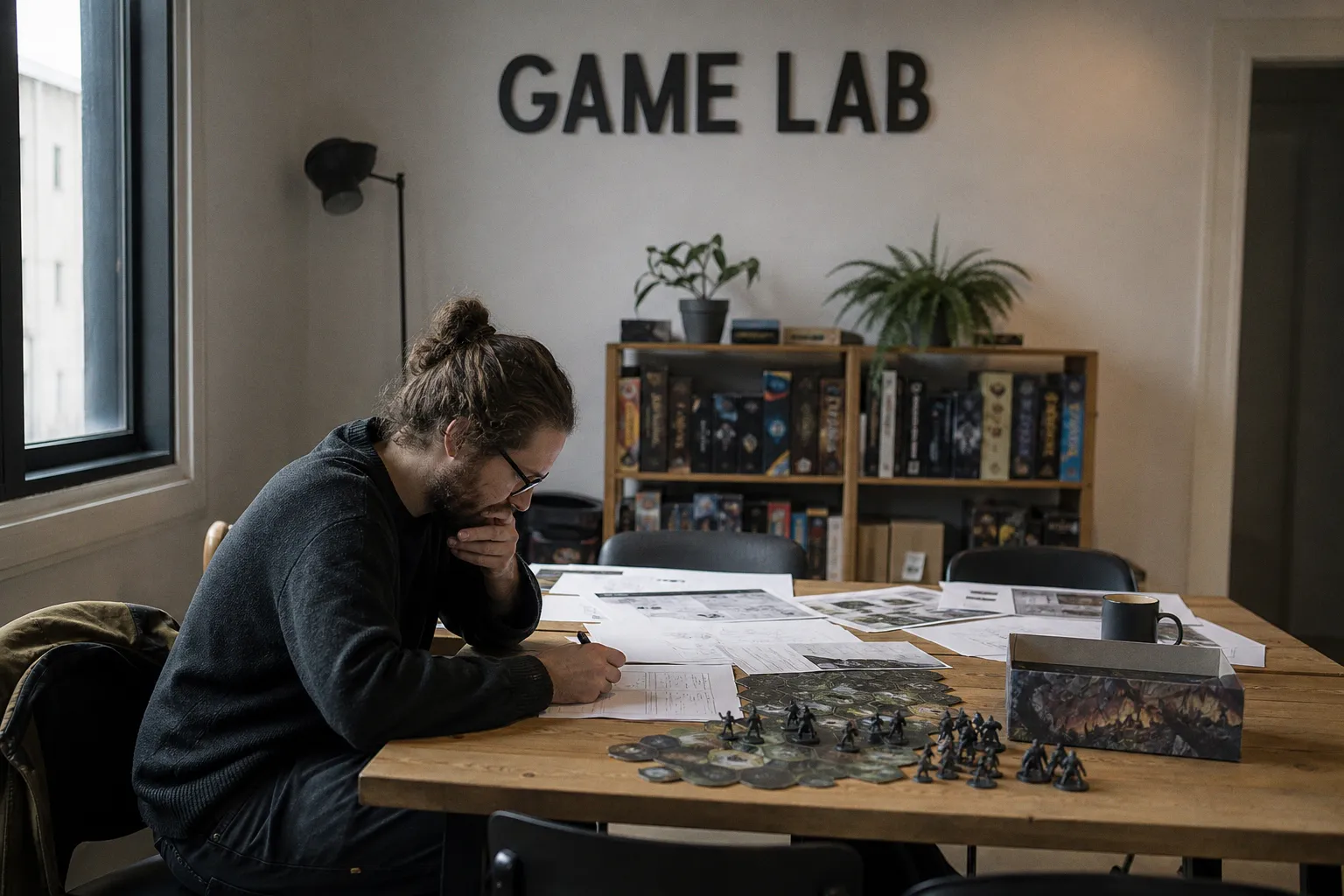
Because the numbers TTGDA turned up aren't just a designers' problem — they're sitting in your portfolio folder too.
Per BoardGameWire's report on the inaugural Tabletop Market Contract Analysis, TTGDA spent the last year reviewing standard publishing agreements from more than 50 board game publishers against 110 criteria — advances, royalties, IP, expansion rights, financial transparency. The headline finding, and the one that should travel outside the design community: 75% of publishers retain rights to a game's name after publication agreements end, and 40% can develop expansions without ever consulting the original designer.
Why an artist should care about a designer's contract
Here's the part that genuinely made me sit up. None of the publisher contracts TTGDA reviewed — and I do mean zero — give the designer final approval over artwork or graphic design. Only 38% guarantee the right to review production-ready files before manufacturing, and just 10% let a designer remove their name from a game if they disagree with creative direction.
Now translate that to your side of the table. You deliver a creature concept. The publisher recolors it for production, crops it for the box, places it under a different artist's continuity edits — and in the majority of standard contracts reviewed, you have no contractual right to object. If you've built a portfolio around a signature silhouette or a specific creature language, that risk isn't hypothetical. It ships under someone else's game name.
What to actually do when the brief lands
The good news is that TTGDA built this as a working tool, not a wall of shame. The org explicitly framed it as a way to help designers negotiate stronger agreements, and several publishers already revised their standard contracts mid-review — some by more than 20 points before the report even went public. The five highest-scoring publishers on the inaugural list: 25th Century Games, Fireside Games, Lunarpunk Games, Plaid Hat Games, and UP Games.
So when your next tabletop brief arrives, treat the contract the way you'd treat a reference sheet. Ask which rights revert to you after a print run ends. Ask who owns unused sketches and process studies. Ask whether "final art" includes the press-ready file or only the source PSD. Ask what happens if the publisher wants an expansion five years from now — and whether your name travels with it.
The rubric project was initiated by TTGDA's contract and grievance committee — Geoff Engelstein, Elizabeth Hargrave, Matt Leacock, and James Lowder — and Engelstein's framing was the line worth carrying into your next kickoff call: this isn't a call to avoid particular publishers. It's a call to negotiate. And as a commissioning editor who has signed plenty of these, I can tell you — the questions above aren't rude. They're how professional relationships actually last.