Why Magic: The Gathering’s Lead Designer Wants to Merge Artifacts and Enchantments
According to Popverse, head designer Mark Rosewater recently admitted that the line between the two card types is, in his own words, "fuzzy," and that if he could remake the game from scratch, he'd…
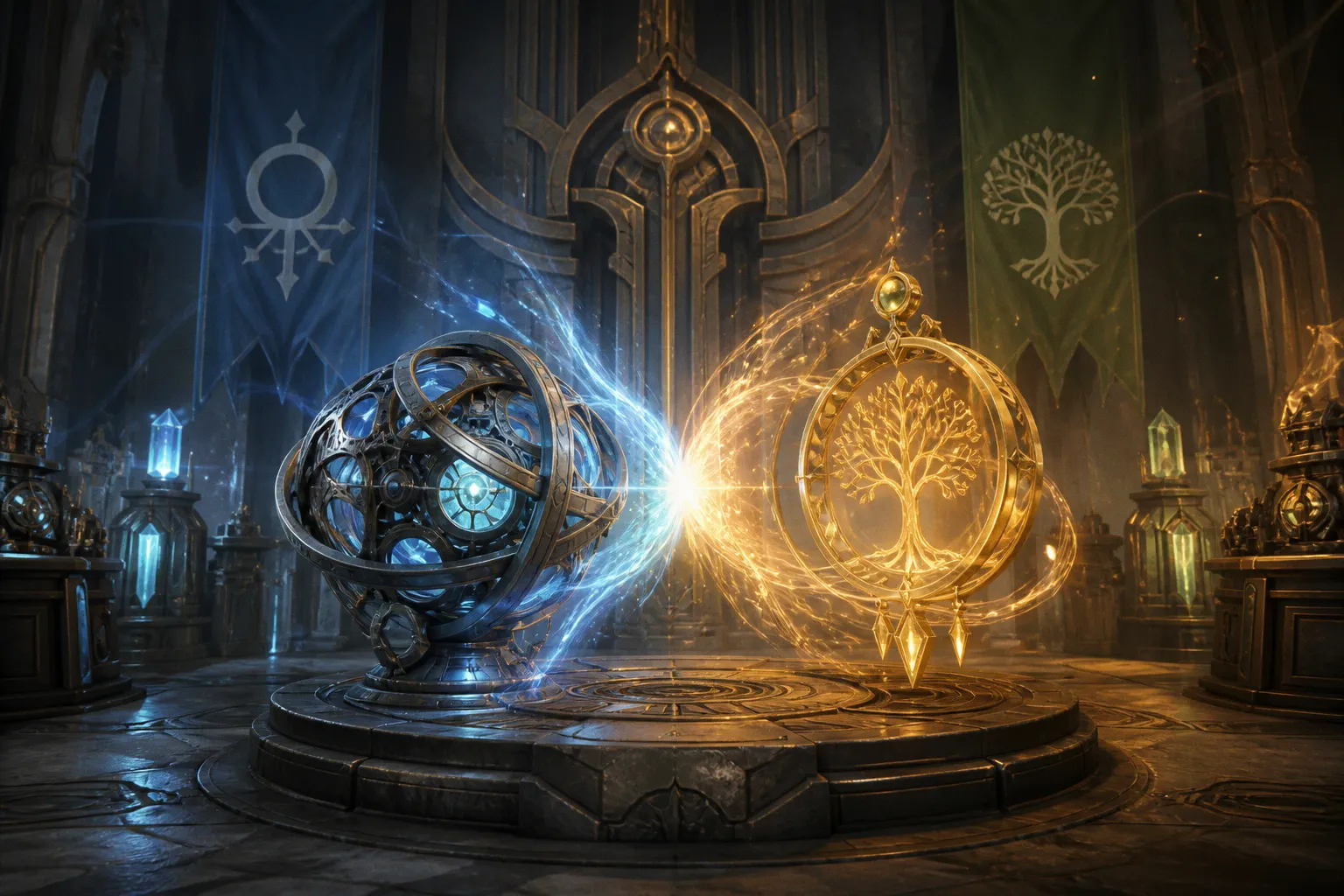
When "Fuzzy" Card Types Matter to Your Brush
If you've ever stared at a Magic: The Gathering art brief trying to decide whether your glowing sword belongs on an artifact or an enchantment, you're not alone. According to Popverse, head designer Mark Rosewater recently admitted that the line between the two card types is, in his own words, "fuzzy," and that if he could remake the game from scratch, he'd merge them into a single noncreature permanent category with "Artifact" and "Enchantment" as subtypes. That's a quiet confession from the person who's been shaping Magic's design for decades, and it's worth paying attention to if you paint for the game.
The Original Logic (And Why It Cracked)
Rosewater explained that artifacts started colorless on purpose, so any deck could include them. The idea was inclusivity at the table, but it created a design ceiling. Colorless cards can't be pushed too hard, because every deck in the format gets access, and overpowered colorless staples have historically caused exactly the kind of balance headaches you can't easily ban your way out of. So colored artifacts entered the card pool, and the old clean division between "tangible object" and "intangible magic" started smudging. Cards like Chaos Orb, Mox Emerald, and Black Lotus now sit on banned lists in Commander and Legacy partly because of that original colorless-anywhere ethos.
What "Artifact vs. Enchantment" Looks Like on a Brief
Here's where this lands in your sketchbook. Even with the mechanical blur, the art direction still leans on a working shorthand: artifacts are objects you can imagine someone holding, while enchantments are the mood, the curse, the aura you can't pick up. Rosewater himself noted that much of artifact art shows the item cradled in a character's hands when scale allows. So when a commissioning editor hands you a brief, that label still shapes composition, silhouette, and how much negative space the object occupies against the figure. Popverse's piece also flags that the tangibility line blurs often, which means your portfolio pieces that play in that gray zone, like a floating rune that reads as both relic and spell, are sitting right in the sweet spot the design team is wrestling with.
What to Watch as an Artist
A few practical takeaways. First, don't stress over policing your old work if you labeled a piece "enchantment art" when a client might have filed it under artifacts; the boundaries are honestly softer than the rules text suggests. Second, if you're building a TCG portfolio, lean into the "tangible versus intangible" cue in your silhouettes, because art directors still use it as a sorting compass even when the rules team admits it's loose. Third, keep an eye on how Universes Beyond sets continue expanding the visual vocabulary, since each crossover asks illustrators to translate new source material into that artifact/enchantment frame, and a looser definition gives you more room to play. The rulebook may eventually catch up to what your brush already knows: that a beautifully painted sword on a velvet cushion and a swirl of binding light aren't always as different as the card frame makes them look.