Why Warlock: Dungeons & Dragons Is Essential Study for Fantasy Illustrators
According to But Why Tho?'s extended Gamescom coverage, Wizards of the Coast and Invoke Studios have just revealed the first gameplay for their dark fantasy open world action-adventure, Warlock: Dungeons & Dragons.
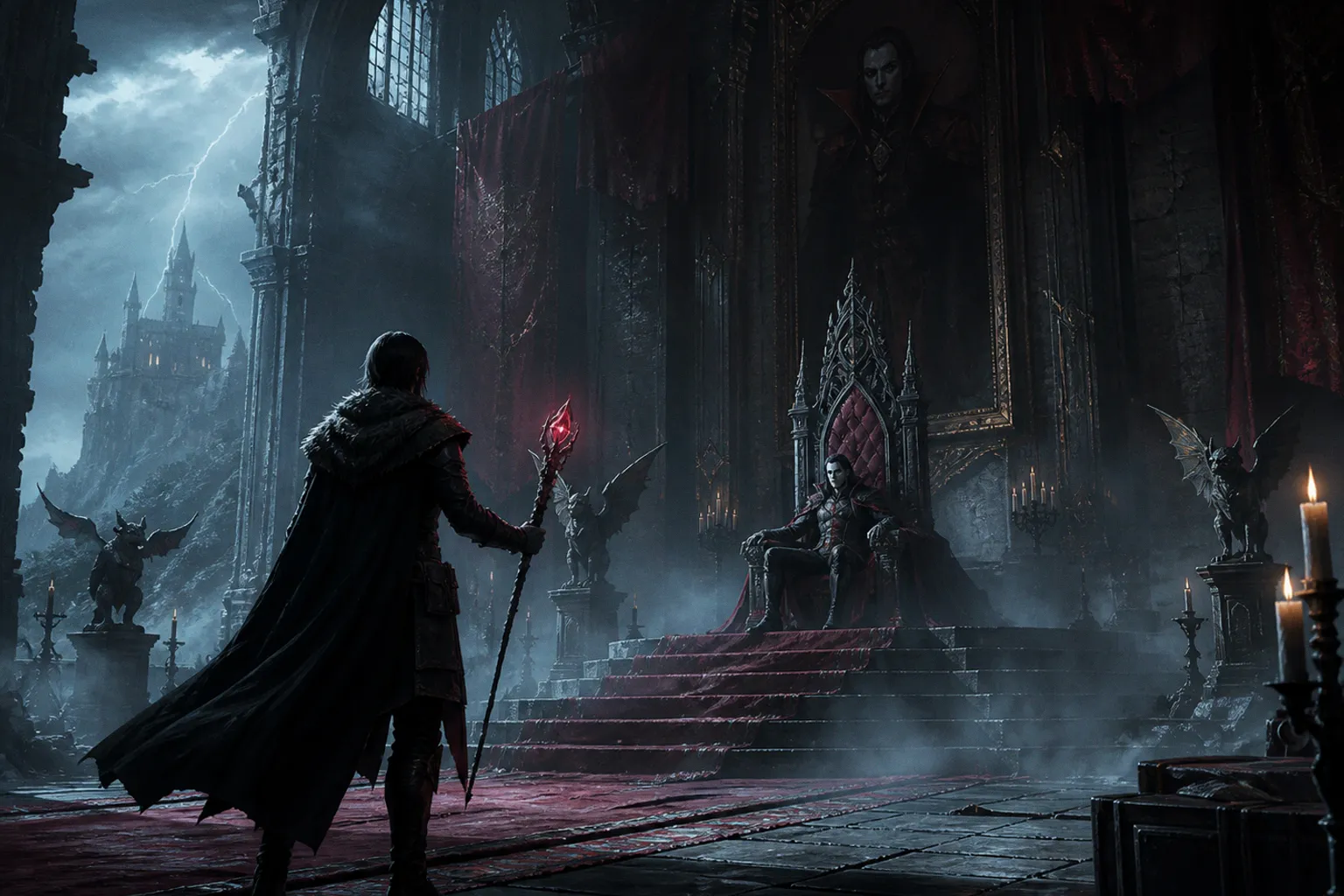
If you are a fantasy illustrator keeping one eye on the TCG and board game pipeline, this is exactly the kind of drop you want to be studying frame by frame.
Almost every spell in Warlock pulls double duty — combat and out-of-combat problem solving — and the entire map sits under fog of war to push players toward experimenting with spell combos. The hunt for Raw Magic across the lands of Darkon is the throughline, and protagonist Kaatri learns the Warlock trade under the guidance of Tasha, voiced and motion-captured by Maggie Robertson.
Reading Warlock as a portfolio brief
Look at how the game stages its beats. Shacknews' hands-on walkthrough moves from the village of Crickshank — where Kaatri's winged imp companion Skev draws side-eye from locals, a beggar drops a hint, and ground marks trigger a side quest — into a catacomb where a conjured Black Tentacle is paired with Tasha's Leash to stack rubble into a makeshift platform. Later, Kaatri faces a tentacled eyeball called the Death's Kiss, then a raw-magic-infused ogre with a club big enough to crack the screen.
Every one of those beats is a silhouette study waiting to happen. The Death's Kiss reads instantly as a threat. The ogre reads as a silhouette even when the room is full of clutter. That is the bar for card art and token design — your creature needs to register in a thumbnail, not just at full canvas. If your portfolio does not have three pieces that pass that thumbnail test, that is your homework before the next submission cycle.
The other detail worth your attention is the performance capture. Robertson voices Tasha and did the motion capture for the role, so the acting and the visual reference are coming from a single performance. For character illustration and card art, that is the gold-standard workflow: one strong reference that carries the pose, the weight, and the intent across every angle and expression sheet.
Castle Ravenloft is coming back — and bringing art jobs with it
While everyone is busy watching the Warlock trailer, do not sleep on the Castle Ravenloft announcement from Renegade Game Studios. The cooperative dungeon-crawler is returning in February 2027 with refreshed artwork, refreshed logos, and refreshed graphic design tuned for the current D&D ruleset, with both standard and premium editions planned.
Premium board game editions live and die on the painterly finish. Think atmospheric fogging over Barovia, rim light catching on a vampire's cape, surface texture that survives the shrink from full-page illustration down to a two-inch card. If you have gothic crypts, misty graveyards, or moody villain portraits sitting in your back folders, this is your moment to tighten them, refine the reads, and prep a Ravenloft-themed submission before the cycle fills up.
What to put on the calendar
Two dates to pin to your wall. First, Warlock's release whenever Wizards of the Coast confirms a date — until then, the Gamescom reveal is a free masterclass in creature silhouette, spell VFX readability, and environmental storytelling. Pull the cleanest frames, drop them in your swipe file, and study them the way you would a reference plate. Second, Castle Ravenloft's February 2027 ship date, which gives you roughly a year to refresh your dark fantasy portfolio with at least one Ravenloft-ready piece.
Your art director brain already knows what to do. Now is just the part where you actually do it.