Adventure Island tickets: is the second-day pass worth it?
Every summer, visitors search for “Adventure Island second day pass” and come away with the wrong mental model. They are looking for a water-park ticket that works for two separate days at Adventure Island.
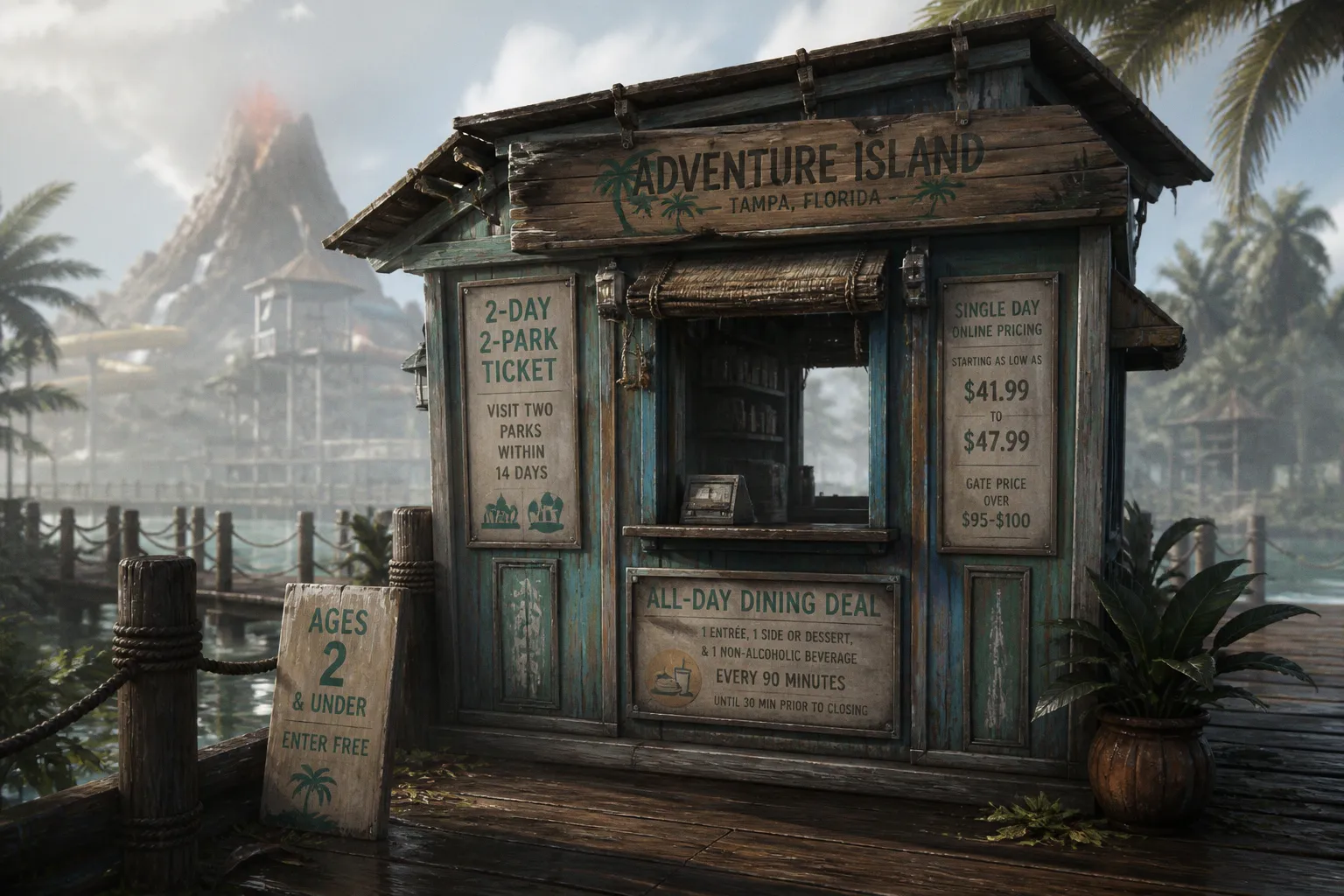
The product they usually find is different: a multi-park ticket that combines Adventure Island with Busch Gardens Tampa Bay, SeaWorld Orlando, or Aquatica Orlando.
 Tampa
TampaTickets and prices
Adventure Island
Entry ticket — access to slides and pools
fromUSD39.46
Book onlineOfficial ticket — single-day admission
fromUSD41.99
Book onlineThat distinction is not cosmetic. It determines whether the second admission is useful or whether you have paid for access to a park that was never part of your itinerary.
The gap between a single-day online ticket and a 2-Day, 2-Park ticket can be narrow enough to make the bundle look irresistible. But a bundle is only a bargain when you would actually use both parts. If your plan is one long day in the water park and nothing more, the right comparison is not “one day versus two days.” It is “one Adventure Island admission versus one Adventure Island admission plus access to another park.”
That is where the real decision begins.
The reality of single-day pricing versus multi-park bundles
Adventure Island’s ticket structure rewards planning and punishes improvisation. Date-specific online tickets are generally the most attractive option for visitors who already know when they will go. Any Day products provide more flexibility at a higher price, while buying at the entrance usually places you in the most expensive pricing tier.
The gate price is not a minor variation on the online price. It is the cost of making the decision at the last possible moment, after you have already driven to the park, organized the family, and committed the day. By then, the convenience of simply walking up to the entrance can be worth more to some visitors than the money they save by planning ahead. For everyone else, it is an avoidable surcharge.
The online-versus-gate difference also changes how people interpret the multi-park offers. When a 2-Day ticket appears only modestly more expensive than a single-day admission, it can feel as though the second visit is almost free. That comparison is useful, but only if you compare the bundle with the admissions you would otherwise buy.
A 2-Day, 2-Park ticket is not automatically a cheaper version of two days at Adventure Island. It is a package built around admissions to participating parks. The value comes from combining destinations, not from extending a water-park ticket at the same address.
There may also be other routes to repeat admission, depending on the season and the offer available when you book. Fun Cards, annual passes, and temporary promotions can all change the calculation. These products are aimed at different kinds of visitors: someone making several visits over a season should not evaluate a pass in the same way as a family visiting Tampa once during a tightly scheduled vacation.
The basic comparison looks like this:
| Option | Best for | What to watch |
|---|---|---|
| Date-specific online ticket | Visitors with firm travel dates | The selected date matters, so changing plans may be inconvenient |
| Any Day ticket | Travelers whose schedule is genuinely uncertain | Flexibility usually comes with a higher price than a date-specific ticket |
| 2-Day, 2-Park ticket | Visitors planning Adventure Island plus another participating park | The second admission is not simply another Adventure Island day |
| Fun Card or annual pass | Local visitors and people expecting repeat visits | The value depends on the number and timing of visits, pass terms, and current promotions |
| Gate purchase | Last-minute visitors with no practical alternative | Usually the least favorable price tier |
The cheapest option often requires the most commitment. The most flexible option usually costs more. The multi-park option can be excellent, but only when your route already includes another park.
Why the single-day ticket can still be the smart choice
A single-day ticket is not a bad product just because a bundle exists. For many visitors, it is the cleanest match for the trip.
Adventure Island is easy to treat as a full-day destination. A family may arrive in the morning, spend hours moving between pools and slides, stop for food, take a break in the shade, and still find that the day has disappeared. Adding a second park to the plan does not necessarily make the first day better. It can make the holiday more expensive and more tightly scheduled.
The same applies to travelers staying in Tampa for only a short time. If Busch Gardens is not on the itinerary, the extra admission has no practical value. A ticket can be financially attractive on paper and still be the wrong purchase for the trip you are actually taking.
The question to ask is simple: if the multi-park bundle were not offered, would you have bought admission to the second park anyway? If the answer is no, do not count that unused admission as savings.
A second admission has value only when it leads somewhere you genuinely planned to go.
Navigating the 14-day window for your second park visit
The product many visitors call the “second-day pass” is generally the 2-Day, 2-Park ticket. It provides two admissions that can be used across participating parks, including Adventure Island, Busch Gardens Tampa Bay, SeaWorld Orlando, and Aquatica Orlando, with the second visit used within 14 consecutive days of the first.
That 14-day window is the feature that makes the bundle workable for an ordinary Florida vacation. You do not have to visit both parks on consecutive days, and you do not need to turn the trip into a punishing sequence of attractions. Adventure Island can be the first stop, followed by Busch Gardens later in the week. Or the order can be reversed. The point is that the ticket gives the itinerary some room to breathe.
The window is still a boundary, not an invitation to postpone the decision indefinitely. Before buying, look at the shape of the trip:
- How many nights are you staying in the Tampa area?
- Is another participating park already on the route?
- Are you willing to spend a second day in a theme park after a full water-park day?
- Will weather, rest days, or other reservations make the second admission difficult to use?
- Are you comparing the bundle with the actual alternative price, rather than with a vague idea of getting “another day for almost nothing”?
For a Tampa vacation that includes Busch Gardens, the 2-Day ticket may fit naturally. The two parks are close enough to combine without turning the holiday into a long-distance transfer. For a wider Florida itinerary, SeaWorld or Aquatica may also make sense, but the travel time and the number of competing plans become more important.
The bundle is less convincing when Adventure Island is the only park you want. In that case, the 14-day validity period does not solve the central problem: the second admission is still tied to another destination. You are not buying extra time on the same set of slides.
Multi-park tickets, passes, and seasonal promotions
It is also worth resisting the idea that the 2-Day bundle is the sole route to repeat admission. The available product mix can include Fun Cards, annual passes, and seasonal promotions. Their terms and pricing can vary, so they should be compared at the moment of purchase rather than treated as permanent alternatives.
A Fun Card or annual pass becomes more interesting when you live within driving distance or expect to return during the same season. It may also be relevant if several members of a family are likely to visit more than once. But a pass can bring its own conditions, blackout dates, exclusions, or limitations, and the break-even point depends on the offer being sold.
For a one-time visitor, the cleanest comparison is usually between:
1. A single-day Adventure Island ticket.
2. A 2-Day, 2-Park ticket.
3. Any current multi-visit product that applies to the dates and people in your group.
Do not assume that the product with the largest headline benefit is the cheapest choice. Count the visits you will use, then price the unused flexibility honestly.
Maximizing value with the All-Day Dining Deal upgrade
Tickets are the first expense, but food is where a water-park day can quietly expand. Families rarely plan to spend heavily on meals once they are inside. Then the heat arrives, children become hungry at different times, and a quick lunch turns into snacks, drinks, dessert, and another meal before departure.
The All-Day Dining Deal is designed for that pattern. For a flat add-on price, each participating guest receives one entrée, one side or dessert, and one non-alcoholic beverage at the permitted interval. In the version described for Adventure Island, redemptions are available once every 90 minutes until 30 minutes before the restaurant closes.
That schedule matters more than the headline promise of “all day.” The deal is not an unlimited buffet and it does not allow meals to accumulate. If you do not use one redemption opportunity, you generally cannot save it and claim two meals at the next window. The useful question is therefore not whether your family eats a lot in the abstract. It is whether each person will make enough eligible purchases during the day to justify the add-on.
A family with teenagers may have no trouble using the benefit. A lighter eater may not come close to the break-even point. Someone who is happy with one meal, a shared snack, and water can easily pay for more food than they would otherwise buy.
A rough decision can be made before entering:
- List the meals, drinks, snacks, and desserts each person would probably buy.
- Separate items that qualify from purchases that do not.
- Compare that likely spending with the add-on price for each guest.
- Account for the fact that not everyone in the group needs the same plan.
- Leave room for appetite, weather, and the possibility that the family leaves earlier than expected.
The timing can also shape the day. If you plan to use the deal, check the participating locations and think about when you will be near them. A redemption window is less useful when the whole family is standing in a long line for a slide on the other side of the park.
It is tempting to plan every meal around the clock, but that can turn a relaxed water-park visit into a food-schedule exercise. Use the benefit when it is convenient, not simply because a window has opened. The value is lost if the upgrade forces you to interrupt the day or buy food you do not want.
The dining upgrade rewards predictable appetites, not optimism. Price the food your group will eat, not the food the offer makes possible.
Strategic booking: avoiding the $100 gate price trap
The most expensive ticket is often the one purchased after the rest of the trip has already been arranged. Once hotel rooms, transport, and time off work are committed, the admission can feel like a fixed cost. It is not. The choice between date-specific, flexible, multi-visit, and gate products can still materially change the day’s budget.
Start with the calendar. If your travel dates are firm, a date-specific online ticket is usually the logical place to begin. It asks you to commit to a day, but that commitment is what allows the lower promotional pricing to exist. Waiting until the morning of the visit removes the advantage of planning and leaves you exposed to the gate price.
If the schedule is genuinely uncertain, compare the Any Day option with the likely cost of changing a date-specific booking. Flexibility is worth paying for when a flight delay, work obligation, medical appointment, or unpredictable family schedule could derail the original plan. It is not worth paying for merely because you dislike choosing a date.
The same discipline applies to the multi-park ticket. Build the itinerary first, then choose the admission that supports it. If you know you want Adventure Island and Busch Gardens during the same trip, compare the 2-Day bundle with two separate admissions. If you are still undecided about the second park, avoid treating the bundle as an automatic bargain.
For people who live nearby, check the Fun Card and annual-pass options before purchasing several individual tickets. A seasonal pass can make sense for repeat visitors, while a one-time traveler may be paying for benefits that will never be used. Promotions can alter the calculation, so the relevant question is always what is available for your dates and your group—not what was offered during a previous season.
There is one more booking mistake worth avoiding: searching for a product name instead of comparing admission rights. “Second-day pass” sounds as though it must mean a second day at Adventure Island. In practice, the important details are the number of admissions, the participating parks, the validity period, and any restrictions attached to the product.
Read those details before looking at the percentage or dollar saving displayed on the sales page. The discount is meaningful only when the ticket matches the route.
Essential logistics for families and young children
Children aged two and under may be admitted without a ticket under the park’s stated admission policy. That does not mean families should assume that age can never be questioned or that no documentation will ever be useful. If a child is close to the age boundary, bring whatever proof of age you would normally carry and check the current terms before traveling. A free-admission policy is helpful; it is not a reason to rely on guesswork at the entrance.
For older children, the ticket is only one part of the calculation. Water parks magnify small logistical mistakes. A missing change of clothes, an unprotected phone, or a child who has spent too long in direct sun can turn an inexpensive day into an uncomfortable one.
Adventure Island is a seasonal park, and the experience changes with the calendar. A July visit can mean more heat, heavier crowds, and longer waits than a visit during a quieter part of the season. A spring visit may feel more manageable in terms of lines and temperature, but operating schedules and attraction availability can vary. Do not book on the assumption that every attraction will operate continuously or that the conditions will match a peak-season marketing image. Check the current park calendar, operating hours, and attraction notices close to the visit.
The trade-off is practical rather than abstract:
- Peak summer dates can make the water especially appealing, but they also raise the cost of waiting in the sun.
- Quieter periods may be easier for families with young children, though weather and operating schedules deserve closer attention.
- A flexible ticket can help when weather is difficult to predict, but it costs more than committing to a date.
- An early arrival can give you more control over the first part of the day, before queues and heat begin to accumulate.
- A break is not wasted park time when it prevents the youngest members of the group from running out of energy.
Packing should be treated as part of the ticket decision. Water shoes can make hot or rough surfaces easier to manage. Reef-safe sunscreen, a dry bag for phones and wallets, spare clothes, and enough water between meal opportunities all reduce avoidable friction. Families with toddlers should also think about shade, nap timing, and how much walking the child can tolerate after leaving the water.
None of this changes the admission price, but it changes the value of the admission. A ticket used during a rushed, overheated, badly timed day is not a bargain just because it was bought online.
Final read: when the second-day pass is worth it
The 2-Day, 2-Park ticket is worth considering when your itinerary already includes another participating park and you can use the second admission within the 14-day window. For visitors pairing Adventure Island with Busch Gardens Tampa Bay, the bundle can be a sensible way to cover both destinations without buying two unrelated single-day admissions.
It is also worth comparing with a Fun Card, annual pass, or seasonal promotion if you live nearby or expect to return. Those products can provide repeat admission, but their value depends on the terms available when you buy and the number of visits you will actually make.
For visitors who want two days at Adventure Island and nowhere else, the answer is less exciting: do not assume the 2-Day, 2-Park product is a substitute for a two-day water-park ticket. It grants a different kind of access. If the second park is not part of the plan, buy the single-day online ticket, consider the dining upgrade only if your group will use it, and spend the saved money on making that one day easier.
The best Adventure Island tickets are not necessarily the ones with the biggest headline discount. They are the ones that fit the route, the dates, the appetites, and the stamina of the people actually going.
The smart ticket is the one that matches your itinerary—not the one that looks most generous before you read the conditions.
Match the product to the plan. The rest is pricing-page noise.