The Best Ashwagandha Options for Stress Support in 2026
The wrong ashwagandha format can make a simple routine awkward, expensive, or impossible to follow.

A common supplement-buying mistake is treating every ashwagandha product as interchangeable. It is not. A 450 mg capsule, a loose root powder, a gummy, and a liquid extract create very different routines—and the label may not disclose the same kind of information across those formats.
At a glance
- NOW Foods Ashwagandha 450 mg, 180 vegetarian capsules — For shoppers who want a large capsule supply from a widely reviewed, standardized-extract listing.
- Swanson Vitamins Full Spectrum Ashwagandha 450 mg, 100 vegan capsules — For budget-conscious buyers who want a vegan capsule and a low entry price.
- Starwest Botanicals Organic Ashwagandha Root Powder 453.6 g — For people who specifically prefer bulk organic root powder over capsules or gummies.
- Gaia Herbs Ashwagandha Gummies, 45 apple-cinnamon gummies — For shoppers who will follow a gummy routine more consistently than a capsule routine.
- Herb Pharm Ashwagandha Alcohol-Free 120 ml — For adults who want a liquid, alcohol-free format and are comfortable measuring each serving.
- Oregon's Wild Harvest Organic Ashwagandha 400 mg, 180 vegan organic capsules — For buyers prioritizing an organic, vegan capsule with a clearly stated 400 mg amount.
- LoveBug Probiotics Complete Mood Probiotic 30 capsules — For shoppers who deliberately want a probiotic formula that also includes organic ashwagandha.
Our picks: Ashwagandha stress support picks
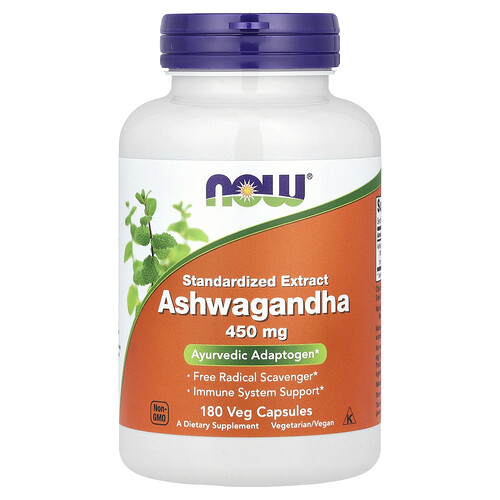
Best for: For shoppers who want a large capsule supply from a widely reviewed, standardized-extract listing.
Pros
- 450 mg stated per capsule
- 180 vegetarian capsules
- Standardized extract named on the listing
- 4.7/5 from 47,709 reviews
Cons
- Capsule format may not suit everyone
- Extract details beyond the stated standardization are not disclosed
What to watch: Check the current Supplement Facts panel for extract details, serving directions, and interactions before use.
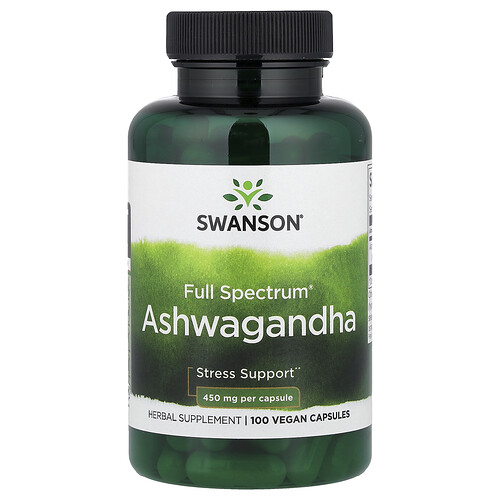
Best for: For budget-conscious buyers who want a vegan capsule and a low entry price.
Pros
- 450 mg stated per capsule
- 100 vegan capsules
- Low-cost entry point
- 4.7/5 from 30,499 reviews
Cons
- Smaller container than several capsule alternatives
- Full-spectrum details are not disclosed in the supplied information
What to watch: Verify the full-spectrum preparation, serving size, and any cautions on the package rather than relying on the product name alone.
Best for: For people who specifically prefer bulk organic root powder over capsules or gummies.
Pros
- 453.6 g, or 1 lb., container
- Organic root powder format
- Flexible for mixing into food or drinks
- No capsule shell
Cons
- Serving amount is not disclosed in the supplied information
- Requires measuring and mixing
- 4.5/5 from 788 reviews
What to watch: Check the package for a serving measure, storage guidance, and preparation instructions before using the powder.
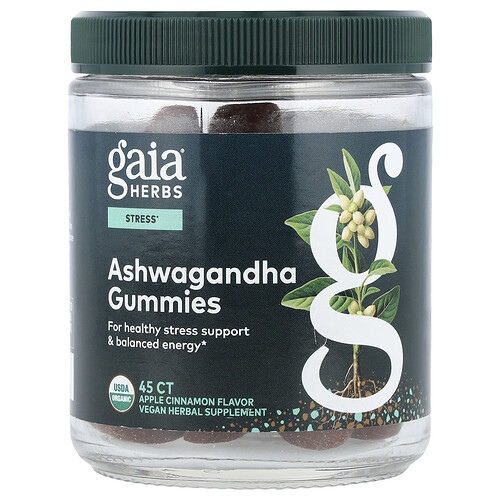
Best for: For shoppers who will follow a gummy routine more consistently than a capsule routine.
Pros
- Gummy dose form
- Apple-cinnamon flavor
- 45 gummies per container
- 4.6/5 from 366 reviews
Cons
- Active amount per gummy is not disclosed in the supplied information
- Smaller count than many capsule options
What to watch: Check the Supplement Facts panel for serving size, sweeteners, and the stated ashwagandha amount before buying.
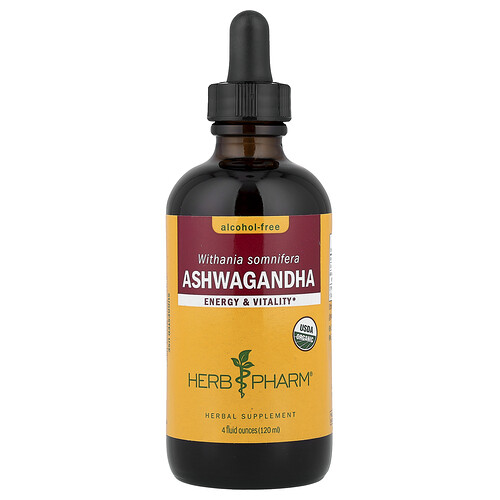
Best for: For adults who want a liquid, alcohol-free format and are comfortable measuring each serving.
Pros
- 120 ml liquid format
- Alcohol-free listing
- Useful alternative to capsules and powders
- 4.7/5 from 361 reviews
Cons
- Serving amount is not disclosed in the supplied information
- Liquid dosing requires careful measurement
- Higher price tier
What to watch: Confirm the serving measure, ingredients, storage instructions, and suitability for your medications before use.
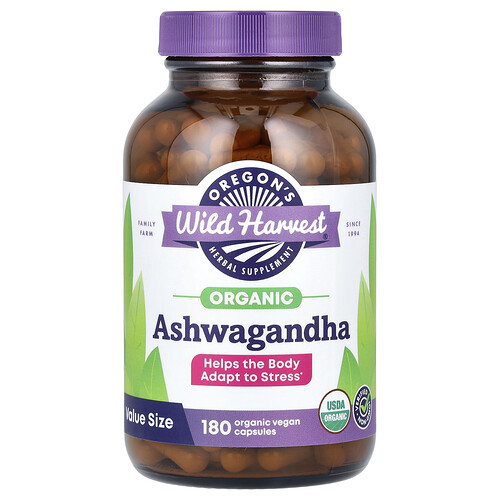
Best for: For buyers prioritizing an organic, vegan capsule with a clearly stated 400 mg amount.
Pros
- 400 mg per capsule stated in the listing
- 180 vegan organic capsules
- Organic capsule option
- 4.7/5 from 478 reviews
Cons
- Higher price tier
- Extract standardization is not disclosed in the supplied information
What to watch: Check the current label for the plant preparation, serving directions, and organic certification details.
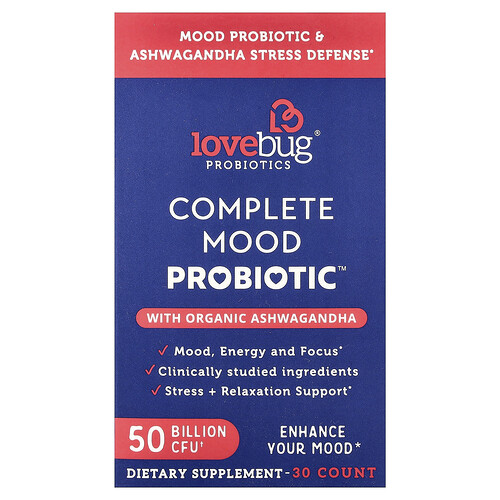
Best for: For shoppers who deliberately want a probiotic formula that also includes organic ashwagandha.
Pros
- 30-capsule combination formula
- Includes organic ashwagandha
- Probiotic-centered format
- 4.6/5 from 452 reviews
Cons
- Ashwagandha amount is not disclosed in the supplied information
- Not a single-ingredient ashwagandha product
- Smaller container
What to watch: Review every probiotic and ashwagandha amount on the label and ask a clinician about compatibility with your health needs.
| Product | Price | Rating | Best for |
|---|---|---|---|
| NOW Foods Ashwagandha 450 mg, 180 vegetarian capsules | €23.77 | ★ 4.7/5 · 47,709 reviews | For shoppers who want a large capsule supply from a widely reviewed, standardized-extract listing. |
| Swanson Vitamins Full Spectrum Ashwagandha 450 mg, 100 vegan capsules | €8.17 | ★ 4.7/5 · 30,499 reviews | For budget-conscious buyers who want a vegan capsule and a low entry price. |
| Starwest Botanicals Organic Ashwagandha Root Powder 453.6 g | €29.64 | ★ 4.5/5 · 788 reviews | For people who specifically prefer bulk organic root powder over capsules or gummies. |
| Gaia Herbs Ashwagandha Gummies, 45 apple-cinnamon gummies | €17.33 | ★ 4.6/5 · 366 reviews | For shoppers who will follow a gummy routine more consistently than a capsule routine. |
| Herb Pharm Ashwagandha Alcohol-Free 120 ml | €46.28 | ★ 4.7/5 · 361 reviews | For adults who want a liquid, alcohol-free format and are comfortable measuring each serving. |
| Oregon's Wild Harvest Organic Ashwagandha 400 mg, 180 vegan organic capsules | €40.74 | ★ 4.7/5 · 478 reviews | For buyers prioritizing an organic, vegan capsule with a clearly stated 400 mg amount. |
| LoveBug Probiotics Complete Mood Probiotic 30 capsules | €24.32 | ★ 4.6/5 · 452 reviews | For shoppers who deliberately want a probiotic formula that also includes organic ashwagandha. |
I built this shortlist around practical portfolio-style questions: what is the dose form, how much product is in the container, is the formula single-ingredient or blended, and does the label give you enough detail to make a sensible comparison? Price and public rating helped break ties, but neither one proves that a supplement will relieve your stress.
You will see no promise of a cure here. Ashwagandha is a food supplement, not a medicine, and stress, sleep, anxiety, thyroid concerns, pregnancy, and medication questions belong with a qualified doctor. Treat the cards as a focused buying shortlist, then use the label as your final brief.
Which ashwagandha format is easiest to use every day?
Capsules are usually the cleanest fit for a routine because they are portable, pre-measured, and less demanding than mixing a powder or measuring a liquid. They are a strong starting point if you want a straightforward single-ingredient option and do not mind swallowing pills.
The trade-off is that capsule convenience can hide important differences. Check whether the product identifies the amount per capsule, whether it is vegetarian or vegan, how many servings the container provides, and whether the label gives any extract or standardization detail. A number such as 450 mg tells you the stated amount, but it does not by itself explain the full preparation or guarantee a particular result.
Powder is more flexible but asks more from you: you need a spoon, a drink or food to mix it into, and a consistent way to measure each serving. Gummies and liquid products may suit people who dislike capsules, but their serving information and added ingredients deserve extra attention before you buy.
Is a lower price the best way to choose ashwagandha?
No. A lower shelf price can make a product easier to try, but the useful comparison is the relationship between price, container size, dose information, and how reliably you will use the format. A cheap product that sits untouched in a cupboard is not a good value for your routine.
For this ranking, price is one editorial signal rather than a performance claim. The listed options range from a low-cost capsule entry point to larger containers, bulk powder, premium liquid formats, and combination products. I have kept those price tiers visible without pretending that the most expensive option is automatically more potent or more suitable.
If you are comparing containers, calculate the approximate cost per capsule, gummy, millilitre, or gram only when the label gives enough information to do so honestly. When serving size or active amount is not disclosed in the supplied product information, treat that uncertainty as part of the buying decision—not as an invitation to fill in the blank.
Should you choose a single-ingredient product or a blend?
A single-ingredient product gives you a cleaner brief: you are assessing ashwagandha without also introducing several other named ingredients. A blend may be attractive if you specifically want a broader formula, but it makes it harder to know which ingredient suits you or causes a problem.
The combination options in this selection include products paired with ingredients such as turmeric, ginseng, ginkgo, probiotics, or other formula components named on the product listing. That is not automatically a flaw. It simply means you should read the complete Supplement Facts panel rather than judging the front label by the word “ashwagandha.”
Combination formulas also create more interaction questions. If you take prescription medicines, manage a chronic condition, or are already using several supplements, show the full ingredient list to your doctor or pharmacist. Do not use a blended product as a shortcut around a medical decision.
Do organic, vegan, or alcohol-free labels matter?
They matter when they match your personal requirements, but they do not replace dose information or make a stress-support claim certain. Organic, vegan, vegetarian, and alcohol-free descriptors help narrow the field for a particular routine; they do not tell you whether the product is right for your health situation.
The cards distinguish those useful fit signals so you can make a decision based on your actual constraints. Someone avoiding animal-derived ingredients may need a vegan capsule or gummy. Someone who dislikes alcohol-containing liquids may prefer an alcohol-free format. Someone seeking an organic product should still check the current package and certification details, because the product listing alone does not disclose every label standard.
This is where your own brief matters. Decide whether your priority is ingredient simplicity, dietary compatibility, a particular format, or container size before you let a high rating pull you off course. Ratings are useful for spotting products with broad buyer interest, but they are not clinical evidence and do not predict your individual response.
What should you check before taking ashwagandha for stress?
Check the serving directions, the stated amount per serving, the full ingredient panel, dietary claims, and any warnings on the current package. If those details are not disclosed in the product information, do not guess—ask the manufacturer or choose a product with clearer labeling.
Also check whether the format fits your real habits. Powder requires measuring; gummies may contain additional ingredients; liquid extracts require careful dosing; and capsules may not suit you if swallowing pills is difficult. “Natural” is not a safety pass, and a familiar plant name does not remove the need to consider allergies, medication interactions, pregnancy, breastfeeding, thyroid issues, liver concerns, or other health conditions with a clinician.
Start with one clearly labeled product rather than changing several supplements at once. Keep your expectations modest, follow the package directions, and stop to seek medical advice if you develop concerning symptoms. The best selection is not the one with the loudest promise; it is the one whose format, label, and risk profile you can understand before it enters your routine.
This article is not medical advice. Food supplements replace neither a balanced diet nor treatment — if you have symptoms, your doctor decides.
Ad · affiliate links · If you buy through these links, we earn a commission.