Immune Support Supplement Face-Off: Which Vitamin C Format Fits You?
The wrong vitamin C supplement is rarely a dramatic failure; it is usually a poor fit for your routine, budget, or tolerance. Here is how three sharply different options compare when you want immune support without shopping by hype.

A common shopping mistake is treating every 1,000 mg vitamin C supplement as the same product in a different bottle. On a crowded supplement shelf, the real difference is often the brief: are you trying vitamin C for the first time, stocking up for a regular routine, or looking for a formula that adds another named ingredient?
| Product | Price | Rating | Best for |
|---|---|---|---|
| California Gold Nutrition Gold C, 1,000 mg, 60 Capsules | €5.56 | ★ 4.8/5 · 385,575 reviews | For shoppers who want a straightforward vitamin C format without committing to a large count. |
| California Gold Nutrition Gold C, 1,000 mg, 240 Capsules | €16.06 | ★ 4.8/5 · 385,574 reviews | For regular users who already know they want a larger supply of the same basic vitamin C format. |
| Life Extension Vitamin C and Bio-Quercetin, 250 Tablets | €24.50 | ★ 4.8/5 · 8,195 reviews | For shoppers who specifically want a named vitamin C and Bio-Quercetin combination. |
Editors' pick
California Gold Nutrition Gold C, 1,000 mg, 60 Capsules — For shoppers who want a straightforward vitamin C format without committing to a large count.
Our picks: Vitamin C supplement picks
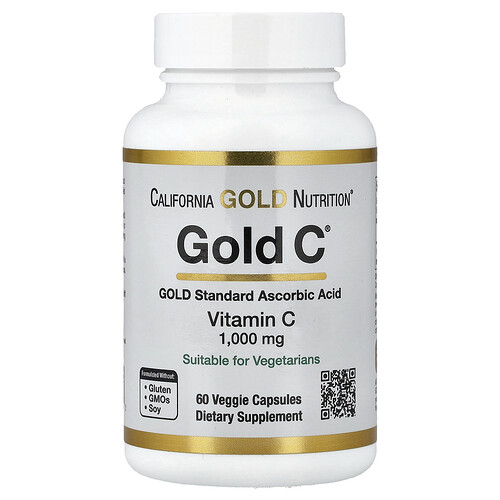
Best for: For shoppers who want a straightforward vitamin C format without committing to a large count.
Pros
- 1,000 mg vitamin C
- 60 plant-based capsules
- Lower-commitment count for a first purchase
- 4.8/5 rating from 385,575 reviews
Cons: Smaller count than the matching 240-capsule option · Full ingredient and serving details are not disclosed here
What to watch: Check the complete label for serving directions, inactive ingredients, and suitability alongside medicines or other vitamin C products.
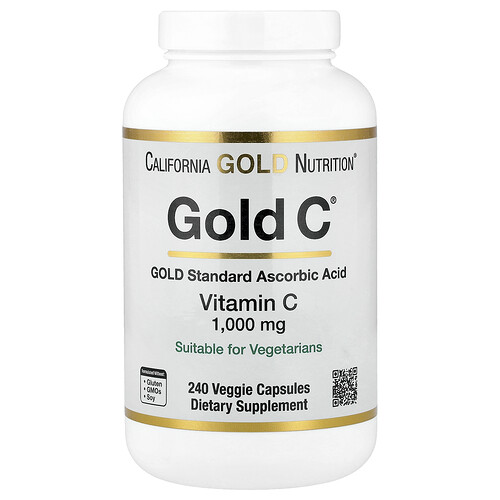
Best for: For regular users who already know they want a larger supply of the same basic vitamin C format.
Pros
- 1,000 mg vitamin C
- 240 plant-based capsules
- Large count for a consistent routine
- 4.8/5 rating from 385,574 reviews
Cons: Higher upfront commitment than the 60-capsule count · Bulk buying is wasteful if the format does not suit you
What to watch: Confirm the serving size and total daily intake before combining it with fortified foods or another vitamin C supplement.
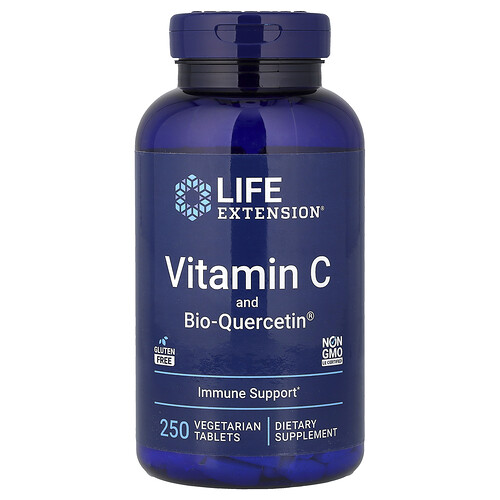
Best for: For shoppers who specifically want a named vitamin C and Bio-Quercetin combination.
Pros
- Combines vitamin C with Bio-Quercetin
- 250 plant-based tablets
- 4.8/5 rating from 8,195 reviews
- Distinct formula rather than plain vitamin C
Cons: The Bio-Quercetin amount is not disclosed in the supplied data · Tablets may not suit people who prefer capsules
What to watch: Review the full active-ingredient panel and ask a pharmacist about possible interactions before using a combination formula.
That distinction matters more than a glossy label. A supplement can be highly rated and still be the wrong choice if you dislike tablets, cannot use a particular dose form, or will never finish a large count. I selected these three options because they create a clean head-to-head: a lower-commitment capsule count, a larger-value format, and a combination formula rather than three near-identical single-ingredient products.
I am also keeping the claims deliberately tight. The supplied product information gives us names, dosage or count where stated, prices, ratings, and review totals. It does not disclose full Supplement Facts panels, serving directions, excipient lists, allergen statements, or third-party testing, so those are label checks—not assumptions.
What should you compare before buying an immune support supplement?
You should compare the active ingredients, dose form, count, and label transparency before you compare star ratings. Those four points tell you whether a product will actually fit your habits and whether you can evaluate it responsibly.
Start with the format. Capsules and tablets may be straightforward for one person and a daily obstacle for another. If swallowing is difficult, the products selected here may not solve that problem, because the permitted product data do not describe powders, liquids, or chewable formats for these three choices. Do not infer that “plant-based” means every ingredient is suitable for every diet; check the full label.
Next, separate a high dose from a complete formula. A 1,000 mg statement tells you the amount named in the product listing, not whether the product contains a broad range of nutrients or suits your medical situation. Combination ingredients can make a formula more interesting, but they also create more label details to review.
Is a larger bottle always the better value?
No—the larger bottle is only better value if you will use it consistently and the dose fits your plan. A smaller count can be the more sensible buy when you are testing tolerance, changing routines, or trying not to lock money into a product you may not finish.
This is where supplement shopping behaves a little like reviewing a card illustration at thumbnail size: the headline number gets attention, but the working details decide whether the piece holds up. A bulk count may reduce the effective cost per unit, yet that advantage disappears if the format is inconvenient or the product is not appropriate for you. Compare the listed price with the count, then check whether the label’s serving size changes the calculation.
The supplied prices also show a meaningful spread between these selections, but price is not a quality score. The ratings are useful as a signal of broad buyer satisfaction, not proof of effectiveness, safety for you, or superior formulation. Review volume can tell you how much public feedback exists; it cannot replace a label review or medical advice.
Does adding another ingredient make a vitamin C formula stronger?
Not automatically; an added ingredient makes the formula different, not necessarily better for your needs. A combination product may appeal if you specifically want both named components, while a single-ingredient option is easier to understand and compare.
For a combination formula, check the amount of every active ingredient rather than stopping at the front-label vitamin C number. The supplied listing names vitamin C and Bio-Quercetin, but it does not provide the amount of Bio-Quercetin, the serving size, or the complete ingredient panel. Those missing details are important when you already take other supplements or medicines.
With a simpler formula, the trade-off is clarity rather than breadth. You may find it easier to track what you are taking, but you should not read simplicity as a promise of better absorption, stronger immune effects, or fewer side effects. Those claims are not established by the product facts provided here.
Who should skip a vitamin C supplement until checking with a professional?
Anyone with a relevant medical condition, a restricted diet, pregnancy or breastfeeding questions, or regular medication use should check with a doctor or pharmacist before choosing. Medical questions belong with a qualified professional, and a food supplement is not a medicine.
That caution is especially practical when the full label is not available in the shopping snippet. Ask about dose, duration, interactions, and whether the ingredient combination makes sense alongside your current routine. Also check for warnings related to the exact form—capsule or tablet—and review inactive ingredients if you have allergies or intolerances.
Do not use an immune support supplement as a substitute for diagnosis or treatment. If you have persistent, severe, or concerning symptoms, the right next step is medical care rather than escalating a supplement dose.
How would I narrow this choice for a real shopping cart?
I would narrow it by commitment level first, then by formula complexity. Choose the smaller count when flexibility matters, the larger count when you already know the product format works for you, and the combination option only when you have a clear reason to want the second ingredient.
Keep your portfolio—your supplement routine—readable. One new product at a time makes it easier to notice whether the format suits you and to avoid accidentally duplicating ingredients across several bottles. Before checkout, verify the current label, serving directions, allergen information, and any warnings; the product data supplied for this comparison do not disclose those details.
Which immune support supplement would I buy first?
I would buy the 60-capsule California Gold Nutrition option first for someone who wants a straightforward, lower-commitment vitamin C choice. For an established routine, I would move to the 240-capsule version for its larger count; I would reserve the Life Extension formula for shoppers who specifically want vitamin C paired with Bio-Quercetin and are willing to inspect the fuller label.
This article is not medical advice. Food supplements replace neither a balanced diet nor treatment — if you have symptoms, your doctor decides.
Ad · affiliate links · If you buy through these links, we earn a commission.