The Most Defensible L-Theanine Supplements for Stress in 2026
Most L-theanine products differ less by headline ingredient than by dose control, delivery format, serving count, and undisclosed formulation details.
Stress supplements fail at the label before they fail in the body. The decisive variables are dose, delivery form, ingredient isolation, serving count, and whether the manufacturer discloses enough information to evaluate the formula. A large capsule count is not automatically a better formulation. A lower price is not proof of inferior material. The label is the evidence.
| Product | Price | Rating | Best for |
|---|---|---|---|
| NOW Foods L-Theanine, 120 vegetarian capsules | €26.78 | ★★★★★ 4.7 · 18,622 reviews | For buyers who want a plain capsule format with the largest public review base in this selection. |
| Nutricost L-Theanine, 200 mg, 30 capsules | €5.81 | ★★★★★ 4.8 · 9,719 reviews | For budget buyers who want a stated 200 mg capsule with a low initial purchase cost. |
| NutraLife L-Theanine, 200 mg, 60 capsules | €11.34 | ★★★★★ 4.7 · 4,020 reviews | For buyers seeking a middle-ground capsule supply with a clearly stated 200 mg strength. |
| NOW Foods Chewable L-Theanine, 90 chewable tablets | €16.29 | ★★★★★ 4.7 · 1,601 reviews | For buyers who need a chewable form because swallowing capsules is impractical. |
| Nutricost L-Theanine, unflavored, 100 g | €16.27 | ★★★★★ 4.8 · 1,853 reviews | For buyers who specifically want an unflavored powder and can measure each dose consistently. |
| Sports Research L-Theanine, 200 mg, 120 softgels | €47.30 | ★★★★★ 4.7 · 1,694 reviews | For buyers who prefer softgels and want a large stated 200 mg supply. |
| Life Extension L-Theanine, 100 vegetarian capsules | €16.81 | ★★★★★ 4.8 · 2,565 reviews | For buyers who want a lower-dose capsule option and are willing to resolve the product’s stated dose wording on the label. |
| EVLution Nutrition Magnesium Plus L-Theanine, 90 vegan capsules | €11.94 | ★★★★★ 4.8 · 893 reviews | For buyers deliberately seeking a vegan combination formula rather than isolated L-theanine. |
Editors' pick
NOW Foods L-Theanine, 120 vegetarian capsules — For buyers who want a plain capsule format with the largest public review base in this selection.
Our picks: L-Theanine Stress Supplement Picks
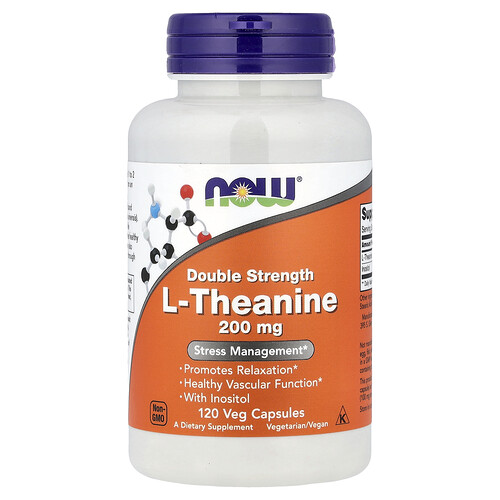
For buyers who want a plain capsule format with the largest public review base in this selection.
Pros
- 120 vegetarian capsules
- 4.7/5 from 18,622 reviews
- Plain L-theanine format
Cons: Higher price tier · Stated dose is not disclosed in the supplied product data
What to watch: Check the Supplement Facts panel for the per-capsule dose, serving size, and inactive ingredients before use.
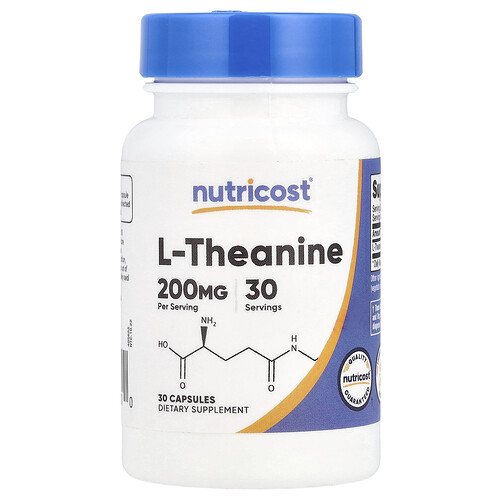
For budget buyers who want a stated 200 mg capsule with a low initial purchase cost.
Pros
- 200 mg per stated product name
- 30 capsules
- 4.8/5 from 9,719 reviews
- Lowest listed price in the selection
Cons: Small capsule count · Not a flexible-dose format
What to watch: Do not assume a 200 mg capsule can be divided accurately; verify serving directions and the complete label.
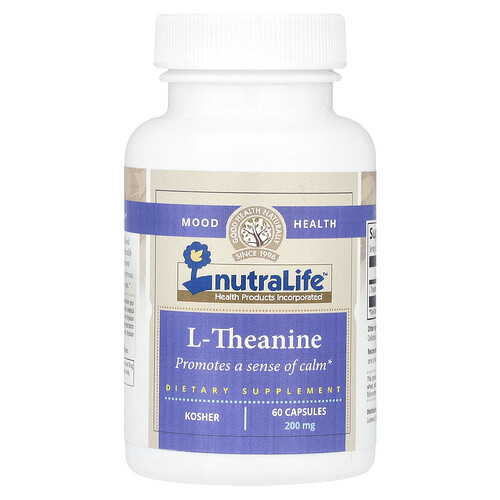
For buyers seeking a middle-ground capsule supply with a clearly stated 200 mg strength.
Pros
- 200 mg per stated product name
- 60 capsules
- 4.7/5 from 4,020 reviews
- Moderate price tier
Cons: Capsule format only · No additional formulation details are disclosed
What to watch: Confirm whether the stated 200 mg applies per capsule or per serving and review all inactive ingredients.
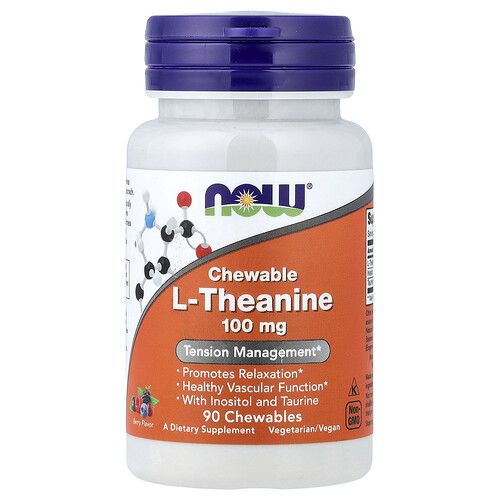
For buyers who need a chewable form because swallowing capsules is impractical.
Pros
- 90 chewable tablets
- Berry flavor
- 4.7/5 from 1,601 reviews
- Avoids capsule swallowing
Cons: Flavor and chewable excipients may not suit everyone · Stated dose is not disclosed in the supplied product data
What to watch: Check the amount per tablet, sweeteners, flavoring, and directions before treating it as equivalent to a capsule.
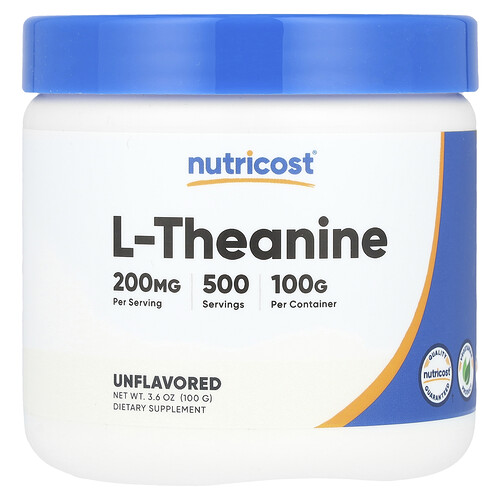
For buyers who specifically want an unflavored powder and can measure each dose consistently.
Pros
- Unflavored powder
- 100 g format
- 4.8/5 from 1,853 reviews
- Potentially flexible measurement
Cons: Dose per gram is not disclosed in the supplied data · Requires a reliable measuring method
What to watch: Verify the powder’s measurement instructions; do not estimate a dose from the total 100 g container weight.
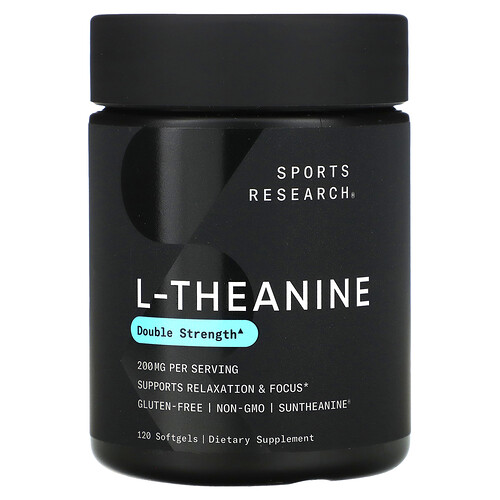
For buyers who prefer softgels and want a large stated 200 mg supply.
Pros
- 200 mg per stated product name
- 120 softgels
- 4.7/5 from 1,694 reviews
- Large-count format
Cons: Premium price tier · Softgel format may not suit buyers avoiding gelatin or larger units
What to watch: Check the softgel shell composition, serving size, and full inactive-ingredient list before purchase.
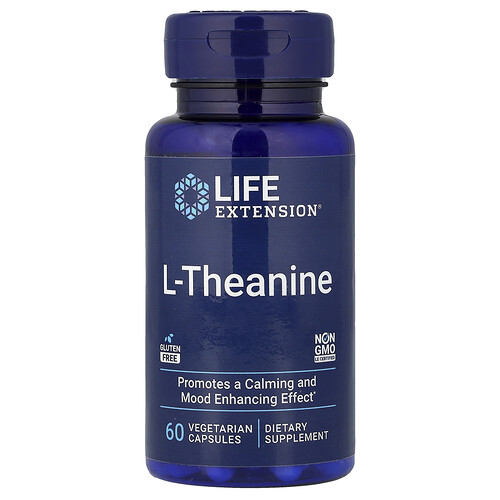
For buyers who want a lower-dose capsule option and are willing to resolve the product’s stated dose wording on the label.
Pros
- 100 vegetarian capsules
- 4.8/5 from 2,565 reviews
- Lower-dose positioning in the supplied name
- Suitable for dose-conscious label comparison
Cons: The supplied name contains conflicting dose wording · Exact per-capsule amount requires label confirmation
What to watch: Resolve whether the label specifies 60 mg or 100 mg per capsule before use; do not infer the dose from the product title.
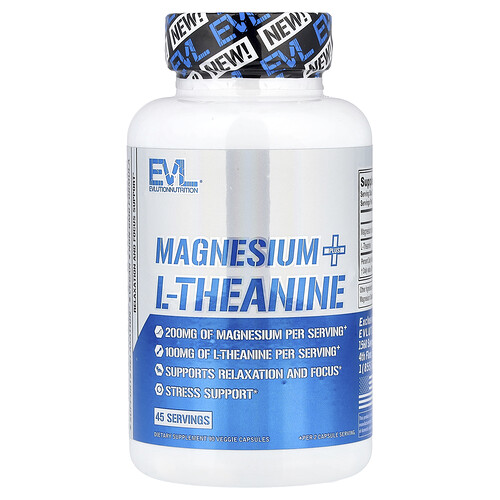
For buyers deliberately seeking a vegan combination formula rather than isolated L-theanine.
Pros
- 90 vegan capsules
- Combines magnesium with L-theanine
- 4.8/5 from 893 reviews
- Lower listed price tier
Cons: Not a plain L-theanine product · Amounts of magnesium and L-theanine are not disclosed in the supplied data
What to watch: Check both active amounts and review the combination with a doctor or pharmacist if taking medicines or other mineral supplements.
This ranking uses only the listed product facts: brand, stated dose or format, capsule or tablet count, price, rating, and review volume. Products with additional ingredients are treated as separate formulations, not interchangeable substitutes for plain L-theanine. Ratings indicate public buyer response. They do not establish clinical effectiveness, purity, absorption, or suitability for a particular medical condition.
L-theanine is a food supplement, not a medicine. It should not be used to diagnose, treat, or cure a disorder. Anyone taking prescription medicines, managing a medical condition, pregnant or breastfeeding, or experiencing persistent or severe stress should put the label in front of a doctor or pharmacist before deciding on a dose.
What makes an L-theanine supplement suitable for stress?
The most suitable product is the one with a clearly stated dose, a manageable format, and no unnecessary ingredient complexity for the buyer’s intended use. For some readers, that means a plain 200 mg capsule. For others, it means a chewable, powder, lower-dose capsule, or formula that combines L-theanine with another named ingredient.
Dose control is the first inspection point. A 200 mg capsule is not equivalent to a 100 mg capsule, and neither is automatically preferable. Lower-dose units can provide finer adjustment, while higher-dose units reduce the number of capsules required. The permitted product data do not disclose serving directions, timing, extraction methods, purity testing, or laboratory verification. Those omissions remain omissions.
Format is the second point. Capsules and softgels require swallowing. Chewables remove that mechanical barrier but add flavoring and tablet-specific label considerations. Powder can permit flexible measurement, but only if the buyer has a reliable way to measure it. A mixed formula introduces additional substances and therefore additional reasons to inspect the label or skip the product.
Which option is best for a plain, high-volume capsule supply?
A high-count plain capsule is the most rational choice for buyers who want a simple L-theanine format and do not want to reorder frequently. The ranked cards place this type of product first when its large review base and stated capsule supply outweigh the higher purchase price.
The reason is logistical, not therapeutic. More capsules can reduce replacement frequency, but the listed data do not reveal the number of capsules per serving or the amount of L-theanine in each capsule for every product. Buyers must confirm the Supplement Facts panel rather than infer daily supply from the headline count. A product with many capsules does not disclose a guaranteed duration without serving instructions.
This category should be skipped by anyone who cannot swallow capsules or who wants a precisely adjustable powder. It should also be excluded when the label fails to state the amount of L-theanine per serving clearly. “L-theanine” on the front panel is not a substitute for a quantified facts panel.
Is a low price enough to justify a 200 mg capsule?
No. A low price makes a product attractive for budget testing, but it does not establish ingredient quality, tolerability, or suitability. The correct use of a budget-ranked capsule is as a low-commitment purchase, not as proof that the cheapest option is the best option.
The listed products show a wide price spread for broadly similar capsule concepts. That difference may reflect count, brand positioning, format, or other factors that are not disclosed in the supplied data. It cannot be converted into a purity or efficacy claim. Public ratings and review totals provide purchasing context only.
Budget buyers should check the exact capsule strength, serving size, inactive ingredients, allergen statement, and suggested use. Anyone seeking a lower starting amount should not assume that a 200 mg capsule can be divided accurately. A capsule is not a calibrated measuring device.
When is a chewable or powder format more defensible?
A chewable is more defensible when swallowing capsules is the primary obstacle. Powder is more defensible when the buyer needs flexible measurement and can measure the material consistently. Neither format is automatically faster, stronger, or more effective; the supplied facts do not establish those outcomes.
Chewables require inspection of flavoring, sweeteners, tablet size, and the stated amount per tablet. The berry-flavored chewable in the selection is therefore a format-specific choice, not a direct replacement for every capsule. A buyer who wants an unflavored product should not choose it merely because the ingredient name matches.
Powder creates a different failure point: measurement error. The product data identify an unflavored 100 g format but do not disclose a scoop size, per-gram dose, or measuring method. Buyers must verify those details on the container. Anyone who needs premeasured units, dislikes powders, or cannot measure consistently should skip this format.
Should a stress formula contain magnesium, amino acids, caffeine, or GABA?
Only if the buyer intentionally wants a combination formula and is prepared to evaluate every active ingredient. A product containing L-theanine plus other substances cannot be judged as plain L-theanine, and an undisclosed amount for any component is a material limitation.
Combination products can be appropriate for a narrower use case, such as avoiding a single-ingredient capsule or selecting a formula built around another nutrient. They also increase the label burden. The supplied data do not provide the amount of magnesium, caffeine, GABA, L-tryptophan, L-phenylalanine, L-glutamine, or other companion ingredients in the relevant products. That prevents a more exact comparison.
Readers sensitive to stimulants should be particularly cautious with products whose names identify caffeine. Readers taking medicines or using other calming, stimulating, or mood-related supplements should seek professional advice before combining products. The presence of a familiar ingredient does not make the full formula risk-free.
How should the label be checked before purchase?
Confirm the amount of L-theanine per serving, the number of units per serving, the full ingredient list, and the directions for use. Then check whether the product is plain L-theanine or a multi-ingredient formula, whether the dosage form is practical, and whether the count matches the intended trial period.
The listed data support comparisons of stated dosage, format, count, price, rating, and reviews. They do not disclose independent testing, batch analysis, manufacturing location, allergen controls, or medical suitability. Those details must not be invented or inferred from brand reputation.
A buyer should also distinguish capsule count from dose count. Sixty capsules may represent sixty servings, thirty servings, or another schedule; the product list alone does not settle that question. If the label is ambiguous, the ambiguity is a reason to pause, not a reason to guess.
Who should avoid self-selecting an L-theanine supplement for stress?
Anyone with severe, persistent, worsening, or unexplained symptoms should obtain medical advice rather than treating the supplement aisle as a diagnostic system. The same applies to people using prescription medicines, managing a medical condition, or unsure whether an ingredient combination is appropriate.
The products ranked here are consumer supplements. None is presented as a treatment for anxiety, insomnia, depression, or any other diagnosis. Product cards identify practical strengths and limitations, but they cannot replace a clinician’s assessment of symptoms, interactions, contraindications, or dose.
The final screening question is mechanical: can the buyer state the exact dose, identify every active ingredient, and explain why the selected format fits the intended use? If not, the correct action is to inspect the label further or ask a qualified professional—not to compensate with a larger dose.
This article is not medical advice. Food supplements replace neither a balanced diet nor treatment — if you have symptoms, your doctor decides.
Ad · affiliate links · If you buy through these links, we earn a commission.