Qasr Al Hosn tickets: booking traps for reference artists
The booking trap snaps shut before you even pack your brushes. Qasr Al Hosn tickets for adults aged 18 and over are listed at AED 30, and the booking is non-refundable, non-exchangeable, and non-transferable.
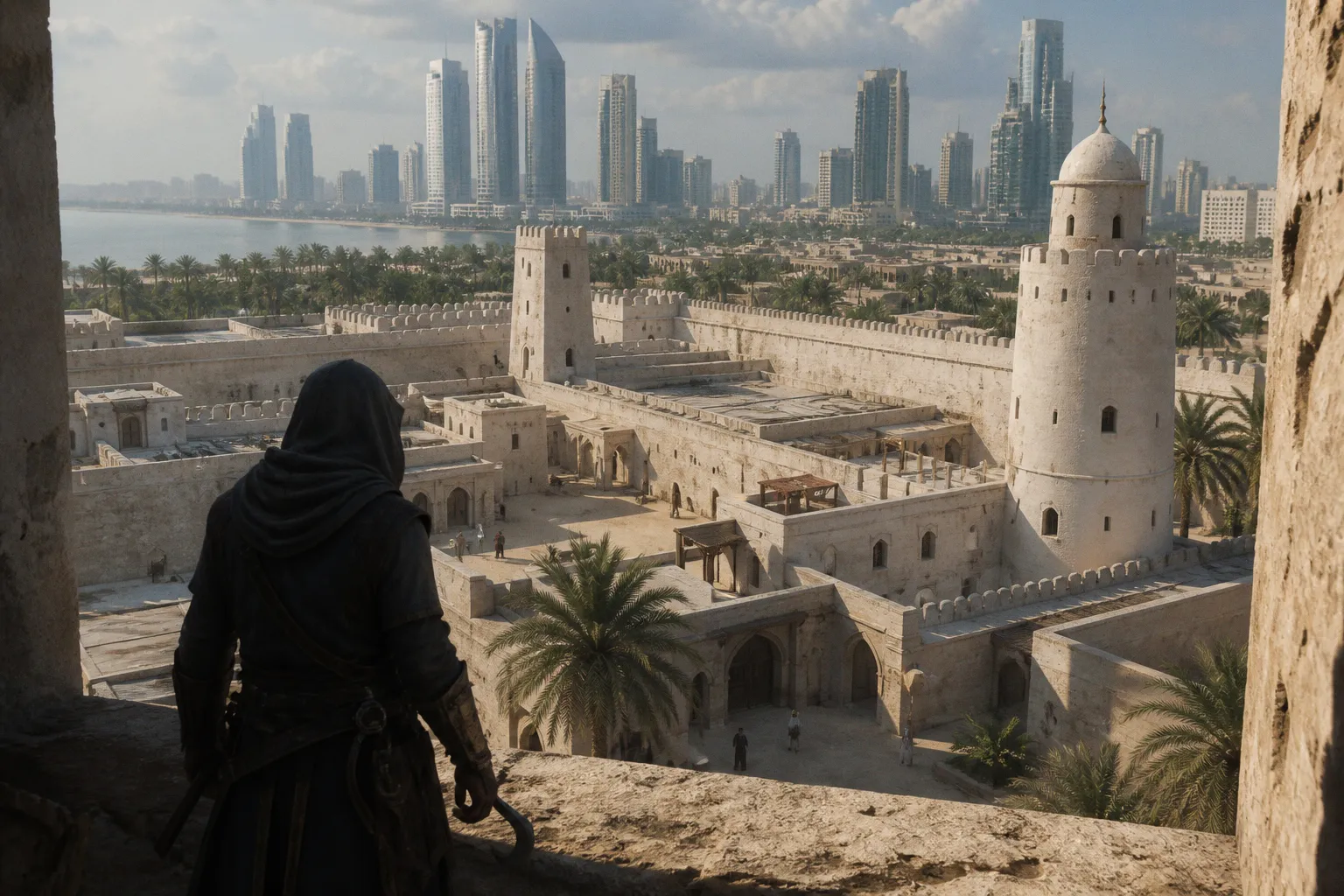
For an artist planning a reference-gathering trip, this is the first material fact to process: the ticket is not a flexible reservation you can casually move around your day.
A delayed flight, an overambitious itinerary, a change in the light, or the simple discovery that the site does not allow the equipment you intended to bring can leave the booking unused. The practical response is not to treat the ticket as the centre of the trip. Treat it as one part of a location study, with the free areas and the exterior approaches doing more work than the paid interior for many kinds of visual research.
Navigating the non-refundable booking system
The most important decision is made before arrival: whether the fort interior justifies locking in a paid visit at a particular time. This sounds obvious, but artists often plan around the image they want to make rather than around the conditions in which the site can actually be observed. A reference trip may need several hours of wandering, changes in light, repeated angles, and enough time to stop and draw. A fixed, non-refundable ticket does not provide that flexibility.
The current adult ticket price is AED 30. That is not a large admission fee in isolation, but the cost is less important than the way the booking behaves. If you are using the visit as part of a wider Abu Dhabi itinerary, a missed booking may be inconvenient rather than ruinous. If you are travelling specifically to collect architectural references, however, the loss includes the opportunity to work at the time of day you selected.
Before booking, separate the questions that are often folded into one:
- Do you need access to the Inner Fort, or would the exterior geometry and surrounding public areas serve the project?
- Is the visit mainly for drawing, phone photography, architectural observation, or professional image-making?
- Can you arrive at the selected time without relying on a tight transfer or a single connection?
- Are you prepared to work with a small, handheld kit if your preferred camera equipment is not accepted?
- Does the paid section offer something that cannot be studied from the complimentary zones?
This is also where the search phrase “Qasr Al Hosn booking online” can mislead artists into thinking that the online transaction solves the planning problem. It only secures the admission under the stated booking conditions. It does not confirm that every part of a reference workflow—camera setup, recording, lighting study, or extended equipment use—will be permitted once you arrive.
A sensible booking strategy is to build the visit around a time you can reliably keep, rather than around the most dramatic possible light. Leave enough space before and after the fort visit to work in the surrounding areas. That way, a shorter-than-expected interior session does not turn the entire day into a failed shoot.
The two-tier access model
Qasr Al Hosn is easier to plan once its spatial division is clear. The paid ticket covers the Inner Fort and the permanent exhibitions within it. This is the principal historical structure: the watchtower associated with 1761 and the later palace expansions. The ticket therefore buys access to a controlled heritage environment, not unrestricted access to every useful viewpoint around the complex.
For a reference artist, that distinction matters. The interior offers designed rooms, architectural details, exhibition displays, and a more concentrated historical reading of the site. It also brings practical constraints: lower interior light, restrictions on flash photography, security supervision, and the need to move through a public cultural space rather than occupy it as a studio.
The surrounding landscape and the House of Artisans are complimentary zones. The House of Artisans is not simply a waiting area outside the paid attraction. It is a working cultural space where traditional crafts such as sadu weaving, pottery, and metalwork can be observed. For an illustrator, this may be the more productive part of the visit when the goal is to gather human-process references, hand positions, repeated patterns, tools, textures, and gestures.
The free areas also change the economics of the trip. You can begin with preliminary sketches and visual notes without spending the value of a ticket. You can assess the atmosphere, the available sightlines, and the amount of activity on site before deciding how much energy to invest in the fort interior. If the main project concerns material culture or craft, the complimentary zones may carry the visit even if the paid section turns out to be less photographically accommodating than expected.
| Area | Access | Strongest use for a reference artist |
|---|---|---|
| Inner Fort | Paid ticket required | Historical architecture, interior spaces, exhibitions, controlled observational studies |
| Permanent exhibitions | Included with the fort visit | Context, objects, display details, and visual research connected to the site |
| Surrounding landscape | Complimentary zones | Exterior silhouettes, approaches, courtyards, broad architectural studies |
| House of Artisans | Complimentary zone | Craft processes, gestures, tools, patterns, material and human references |
This is why the Qasr Al Hosn entry fee in Abu Dhabi should be evaluated against the actual purpose of the visit. If you need the interior rooms, the ticket has a clear function. If your project can be built from exterior forms, craft activity, and open-air observation, the free areas may provide a better return in time and freedom.
The ticket buys access to the fort. It does not automatically buy the conditions of a private reference session.
Photography restrictions and the reality of professional permits
The photography question is more complicated than a simple “phone allowed, camera forbidden” rule. The useful distinction is between ordinary personal photography and equipment or activity that requires prior approval.
Professional cameras, recording equipment, tripods, and selfie sticks are prohibited without a pre-approved permit. That is the operational limitation an artist should plan around. It is narrower than saying that every camera beyond a phone is categorically forbidden, but it is still significant: a DSLR or mirrorless body, a dedicated video setup, a tripod, or a selfie stick should not be treated as ordinary casual gear that can be explained away at the entrance.
The safest approach is to resolve the question before the visit if your project depends on any of those items. A permit is not something to improvise at the security gate, and a ticket does not function as a photography authorization. The same applies to a shoot that involves a visible production setup or professional recording activity. The relevant issue is not only what the final images will be used for; it is also how the activity appears on site and what equipment it requires.
| Equipment or activity | Planning position | Practical implication |
|---|---|---|
| Phone camera | Generally the most workable option for personal reference notes | Keep the setup discreet and follow site instructions; do not use flash where it is restricted |
| Professional camera | Prohibited without a pre-approved permit | Confirm authorization in advance rather than relying on the ticket or an explanation at entry |
| Recording equipment | Prohibited without a pre-approved permit | Do not assume that a short video clip is treated like a still photograph |
| Tripod | Prohibited without a pre-approved permit | Plan for handheld work unless written approval has been secured |
| Selfie stick | Prohibited without a pre-approved permit | Leave it out of the field kit unless specifically authorized |
| Individual sketching gear | Exact rules are not clear from the available information | Keep the kit compact and ask the venue about any unusual or bulky items beforehand |
The final row is deliberately less definite. Individual sketching-gear rules remain unknown. A small sketchbook and ordinary pencils may be straightforward, but that does not establish a universal rule for larger pads, charcoal, wet media, cases, metal pencil holders, easels, clamps, or other specialist tools. The available restriction on professional cameras and recording equipment should not be expanded into an invented blanket ban on every drawing implement.
For a digital painter, a phone can still provide useful evidence. It can record a composition, the relationship between a tower and adjoining walls, a surface colour in broad terms, or the position of people within a courtyard. It is less useful when the project requires controlled perspective, repeatable framing, long-lens compression, high-resolution texture, or a sequence of exposures under changing light. Those limitations should influence the kind of reference you promise yourself before arriving.
The phone also works better when treated as a notebook rather than as a replacement for a full photographic workflow. Use it to support quick sketches, written colour observations, thumbnail compositions, and notes about scale. Photograph the same structure from several distances instead of expecting one image to carry every architectural relationship. Draw the parts that the camera renders poorly: the rhythm of openings, the transition between wall planes, the way a person occupies a doorway, or the visual weight of a roofline.
Do not build the visit around trying to conceal professional intent. The useful question is not how to get a large camera through unnoticed. It is whether the project can be adapted to the conditions of the site, or whether a pre-approved permit is necessary. If the work genuinely requires professional equipment, that requirement belongs in the planning stage.
Cultural dress codes and gear considerations for on-site sketching
The dress code is part of the working conditions, not a decorative detail to remember after the ticket is booked. Visitors should plan for modest clothing that covers the shoulders and knees and avoids tight or revealing garments. For an artist spending time outdoors in Abu Dhabi, the practical solution is clothing that provides coverage without becoming another source of fatigue: loose natural-fibre shirts, lightweight trousers or long skirts, and a layer that can handle strong sun and air-conditioned interiors.
This is especially relevant when the visit includes sketching. Drawing is slow, and slow work exposes every poor packing decision. Clothing that feels manageable during a short walk may become uncomfortable when you are standing in a courtyard, sitting briefly to draw, or moving repeatedly between bright exterior light and a cooler exhibition space.
The field kit should be treated as a compact observational kit rather than a portable studio. A useful arrangement might include:
- one small or medium sketchbook that can be opened without blocking a passage;
- a limited pencil range rather than a complete drawing case;
- an eraser and sharpener packed so that loose fragments do not spread through a bag;
- a phone for quick visual notes and broad compositional studies;
- a protective folder or sleeve for pages if the paper is light;
- water and sun protection where appropriate, while respecting the site's instructions about what may be carried inside.
That list is not a confirmed equipment policy. It is a way to think about reducing friction while the individual rules for sketching materials remain unclear. Security may assess unusual items differently from ordinary personal belongings, and the fact that metal detectors are in use does not, by itself, establish that a particular pencil case, sketchbook binding, or drawing tool will be accepted or refused.
Ask about unusual equipment before arrival if your work depends on it. This is particularly important for charcoal, ink, paint, fixative, cutting tools, large boards, portable stools, easels, or anything that changes the scale of the setup. Do not assume that a tool is acceptable merely because it is used for drawing, and do not assume that a compact item will automatically be treated as personal baggage. The rules for individual sketching gear are not fully clear, so the conservative approach is to pack small, clean, and easy to put away.
The site also rewards observational discipline. A sketchbook can remain open for only as long as it does not interfere with circulation or other visitors. The best working position is often one that lets you make a series of short studies rather than one ambitious, fully rendered drawing. Note the angle, proportions, material breaks, and cast shadows first. Finish the image later, when the site is no longer imposing its own pace on the work.
Strategic timing: light, crowds, and the shape of the day
The draft schedule is listed as Saturday to Thursday, 9:00 AM to 8:00 PM, and Friday, 2:00 PM to 8:00 PM. Those hours create two very different types of visit. On Saturday through Thursday, an early arrival offers the clearest chance of working before the day becomes crowded and before exterior heat begins to dominate. Friday's later opening removes the morning option and changes the purpose of the visit: it is less suitable for anyone whose project depends on low-angle morning light.
Arriving at 9:00 AM from Saturday to Thursday is a strong working choice, but it should not be treated as a promise of empty courtyards or perfect illumination. Light changes with the season, weather, surrounding structures, and the exact angle from which a wall is observed. The value of the early slot is that it gives you the best chance of finding more manageable conditions before the site fills and the sun becomes more severe.
Use the first part of the visit for broad studies. Establish the fort's silhouette, the relationship between the watchtower and later additions, the geometry of the walls, and the main movement routes. Do not spend the entire early window on one façade. A few quick drawings made from different positions will usually serve a later illustration better than a single overworked page that records only one viewpoint.
The sequence can be simple:
1. Begin with the exterior and surrounding approaches, noting the largest shapes before entering the paid area.
2. Move through the Inner Fort and permanent exhibitions with a specific list of details to observe rather than an expectation of unrestricted photography.
3. Use the phone for permitted personal reference notes, avoiding flash and any equipment that requires prior approval.
4. Shift to the House of Artisans and complimentary courtyards for craft, gesture, texture, and process references.
5. Before leaving, review the sketches and identify missing relationships while the architecture is still fresh in memory.
This order protects the most fragile part of the visit: your attention. If you enter the fort without first understanding the exterior, you may spend the paid portion collecting isolated details with no sense of how they fit together. If you postpone the craft areas until the end, you may find that heat, crowds, or fatigue have made the most humanly useful observation impossible.
The noon sun is a poor partner for subtle architectural modelling. It tends to produce harder, more top-down illumination and can flatten the relationships that make a wall or tower useful as a painting reference. That does not make midday worthless. Strong light can reveal surface contrast, sunlit planes, and the graphic rhythm of openings. It simply calls for a different kind of study. Use it for shape and pattern, not for a definitive record of atmospheric form.
Friday's 2:00 PM opening is therefore not automatically a bad time to visit, but it demands realistic expectations. The visit may work for interior observation, broad material notes, and late-day studies, while offering less control over the early shadows available on other days. If the project depends on a specific morning look, Friday is the wrong day to force the issue.
Crowd management should also be understood as an artistic variable. People are not merely obstacles in front of the architecture. They provide scale, movement, clothing shapes, and a sense of how the spaces function. The problem begins when the density prevents you from stopping, repeats the same visual interruption, or makes a quiet sketching position impossible. Early arrival gives you more control, but it does not require you to erase the human presence from the reference. Record it selectively.
Verdict for the practitioner
Qasr Al Hosn is a useful reference location precisely when its limitations are accepted at the planning stage. It is a regulated cultural site, not an open-air studio. The paid ticket gives access to the Inner Fort and permanent exhibitions, while the surrounding landscape and House of Artisans provide complimentary areas that may be more productive for exterior studies, craft references, and process-based observation.
The current Qasr Al Hosn ticket price is modest compared with the cost of a failed trip, but the non-refundable booking conditions make timing and purpose important. Book the fort when you have a clear reason to need the interior. Do not book simply because the site is famous or because a paid ticket feels like the “complete” version of the visit.
For most independent illustrators, the most resilient plan is to arrive early from Saturday to Thursday, work first with the exterior geometry, use the Inner Fort for targeted observation, and reserve time for the free House of Artisans and surrounding courtyards. Bring a compact sketching kit, but do not assume that every individual drawing tool has a confirmed policy. Professional cameras, recording equipment, tripods, and selfie sticks are prohibited without a pre-approved permit; if your project depends on them, resolve that requirement in advance.
A phone, sketchbook, and a disciplined eye can still produce valuable material. They will not replicate a professional shoot, and they do not need to. The strongest reference session at Qasr Al Hosn is likely to combine quick visual notes with drawings that record structure, gesture, proportion, and texture—the information that often survives the translation from observed place to finished fantasy or historical illustration.
Work within the defined conditions, and the site gives you architecture, craft, material, and human scale. Treat it as a studio without walls, and the booking, security rules, and public setting will work against you.