Batalha Monastery Tickets: Choosing the Right Entry Path
The easiest mistake at Batalha Monastery is assuming that there is one entrance, one ticket, and one version of the visit. There isn’t.
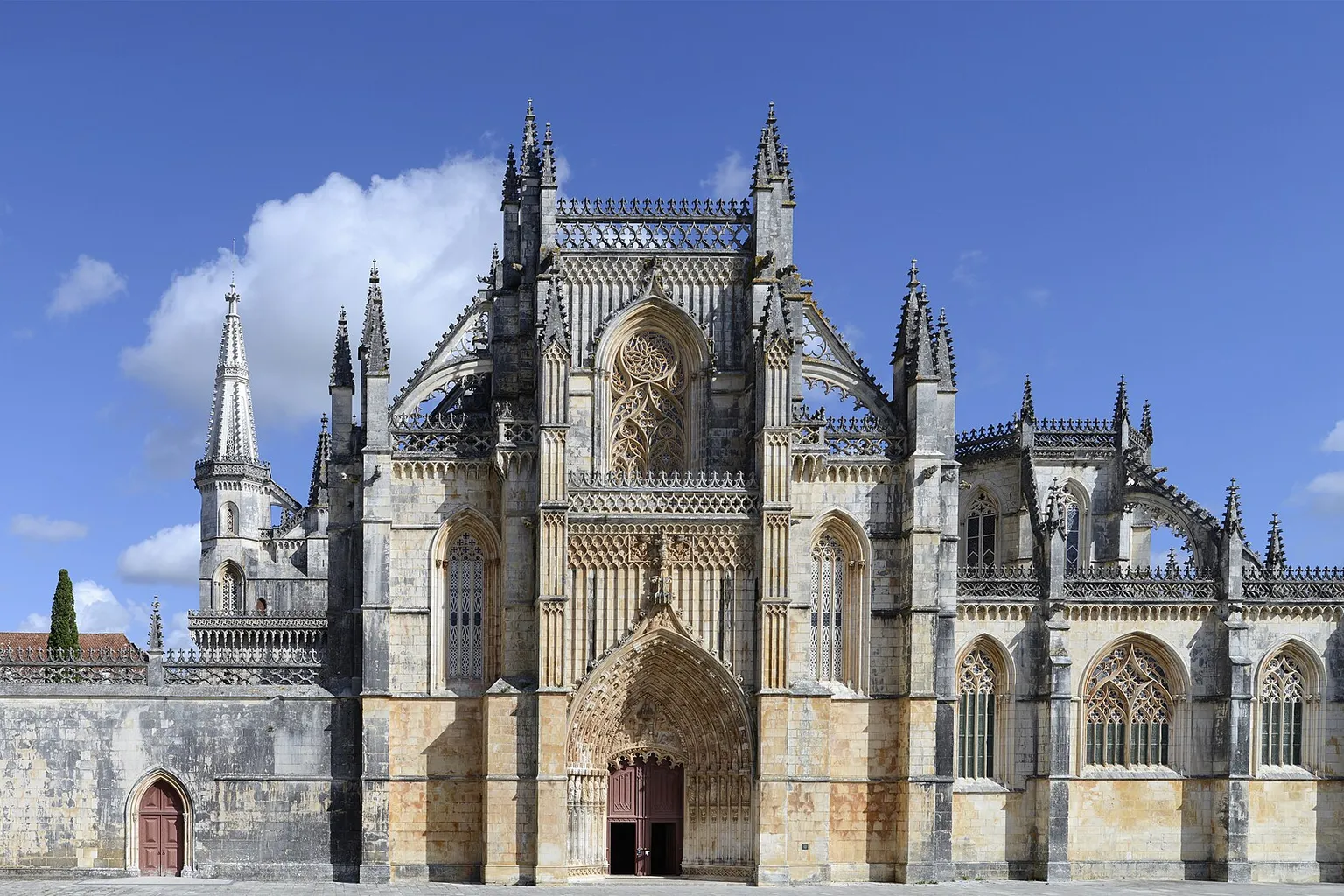
The nave of the church is free to enter, while the cloisters, Founder’s Chapel, and Unfinished Chapels belong to the paid monument route. If you arrive without knowing that distinction, you can either pay for more than you planned to see—or leave having missed the most distinctive spaces in the complex.
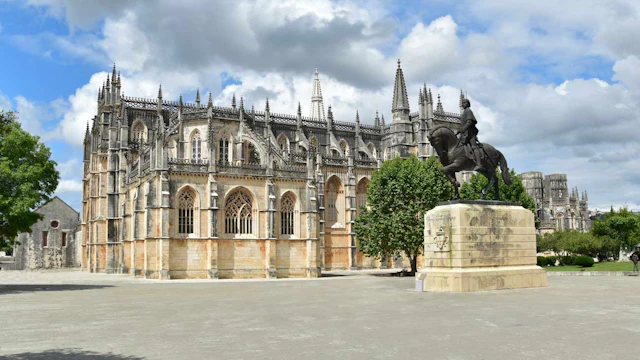 Batalha
Tickets and prices
Batalha Monastery
Skip-the-line ticket · 1.5-hour tour
from€240
Book onlineOfficial ticket · Standard entry
from€15
Book onlineThat matters because the real character of Mosteiro de Santa Maria da Vitória is not contained in the church nave alone. The Royal Cloister, the Chapter House, the tombs associated with the Aviz dynasty, and the openwork stone of the Capelas Imperfeitas are where the building moves from impressive Gothic church to full architectural experience. Your Batalha Monastery tickets should match the kind of visit you actually want.
The free nave is a useful first look, but the paid route is where Batalha’s architecture starts to unfold in depth.
Free church access versus the paid monument route
Batalha’s main church is generous in one important way: you can enter the nave without buying a ticket. That makes it possible to see the scale of the interior, the Gothic verticality, and the broad ceremonial layout even if you are making a brief stop or travelling on a tightly managed sightseeing route.
But the free area is only one part of the monument. A ticket is required for the interior sections, including:
- the Founder’s Chapel, where the tomb of King John I and Philippa of Lancaster is located;
- the Royal Cloister, one of the monastery’s most refined architectural spaces;
- the Cloister of D. Afonso V;
- the Unfinished Chapels, or Capelas Imperfeitas.
This is the first decision to make before you worry about online tickets, tours, or queues: are you visiting the church, or are you visiting the monastery?
For a quick architectural pause between other stops in central Portugal, the free nave may be enough. It gives you a sense of the monument’s scale and allows you to understand why the monastery was built as a royal statement after the Battle of Aljubarrota in 1385. Construction began in the late fourteenth century, traditionally dated to 1386 or 1388, and the building developed over generations.
For anyone interested in Manueline detail, late Gothic stonework, royal funerary architecture, or the unfinished eastern chapels, I would treat the paid areas as the core visit rather than an optional add-on. The exterior is extraordinary, but the interior route explains how the monastery works as a ceremonial and religious complex.
What you can see with each access level
| Visit type | What it includes | Best suited to |
|---|---|---|
| Free church access | The main nave and publicly accessible church area | Short stops, budget-conscious visitors, or travellers with limited time |
| Standard monument admission | The Founder’s Chapel, cloisters, and Unfinished Chapels, in addition to the church | First-time visitors who want the full architectural experience |
| Guided or local tour | Monument access arranged as part of a hosted visit, depending on the selected option | Visitors who want historical orientation and help with timing |
| Lisboa Card admission | Complimentary access to the monument’s ticketed areas for eligible cardholders | Travellers already using the card across Lisbon and nearby UNESCO sites |
The table is simple, but it prevents a common mismatch. A tour product may include skip-the-line handling or local commentary, while a standard ticket gives you independence. Neither is automatically better. The right choice depends on whether your priority is flexibility or interpretation.
The standard ticket is for the complete interior experience
The standard adult admission is currently listed at €15.00 by the official monument management. However, I would not build your planning around a price printed in a travel article, because museum and monument tariffs can change more quickly than editorial updates. Check the current ticket display when you book or arrive.
The more useful question is what that admission unlocks. The paid route takes you beyond the nave and into the spaces that make Batalha a UNESCO World Heritage Site rather than simply another handsome Portuguese church.
The Founder’s Chapel is the most immediately legible stop. It connects the monastery to the royal history behind its foundation and gives the building a human scale after the height and formality of the church. The tombs of King John I and Philippa of Lancaster are not incidental decorative features; they are part of the political and dynastic purpose of the monument.
The cloisters require a different kind of attention. Their value is not just in one spectacular viewpoint. Look for the rhythm of the arcades, the changing frame of the sky, the relationship between carved stone and open courtyard, and the way light travels across the passageways. This is where a slow visit pays off. A rushed walk through the cloister can reduce it to a sequence of photographs, when the real pleasure is in noticing how repeated forms are varied.
Then come the Unfinished Chapels. These are often the section visitors remember most clearly because the building appears to stop mid-sentence. The open roof and elaborate stone tracery create a dramatic contrast with the completed Gothic spaces. Later Manueline ornament is particularly important here, but you do not need a specialist vocabulary to appreciate the effect: the chapels feel both monumental and exposed, designed for a finished enclosure that never arrived.
That combination is exactly why the paid route earns its place in an itinerary. The visit moves through completed, enclosed, ceremonial architecture and then ends in a structure whose unfinished state is its defining feature.
Who may enter without paying for the paid sections?
Children aged 12 and under are eligible for free admission to the ticketed monument areas. Lisboa Card holders also receive complimentary entry, including access to Batalha’s paid sections. The card is especially useful for travellers combining Batalha with Alcobaça and Tomar, which are also part of the same broader UNESCO itinerary in central Portugal.
If you are travelling with children, do not assume that everyone in the group needs the same ticket. Eligibility can depend on age and card status, so have the relevant documents available at the desk or when validating online arrangements.
Batalha Monastery online tickets or entrance desk?
There are two practical ways to arrange Batalha Monastery tickets: buy online in advance or purchase at the entrance desk. Neither route removes the need to understand the monument’s layout.
Online booking makes sense when Batalha is one fixed point in a busy day. It gives you a clearer sense of the planned stop and may be useful if you are travelling with a group, selecting a hosted tour, or trying to coordinate the monastery with nearby destinations. It can also reduce uncertainty during busy travel periods, although the exact advantages depend on the ticket or tour provider.
Buying at the entrance keeps your day flexible. That is valuable if you are driving through the region and do not want to commit to a precise arrival time. It also lets you decide after seeing the church whether you want to continue into the paid areas. For a first visit, though, I would be cautious about making that decision too late in the day. The last admission is earlier than the closing time, and the ticketed route deserves more than a hurried final half-hour.
Some visitors search specifically for a Batalha Monastery combined ticket, usually imagining one admission that covers Batalha, Alcobaça, and Tomar. Availability of multi-monastery products can change, and a combined ticket should not be assumed to be on sale at the entrance. If that format matters to your itinerary, confirm the current offer through the official ticketing channel before travelling rather than relying on older travel pages.
There are also local tours and hosted options that package access with commentary. These can be useful if you want the history explained as you move through the complex, particularly if Batalha is part of a wider day trip. The trade-off is less independence: a guide’s pace may be excellent for context but too quick for the cloisters if you prefer to linger over details.
I usually think about the choice this way:
1. Choose the entrance desk when your schedule is flexible. You can decide how much of the monument you want to see once you arrive.
2. Choose online tickets when Batalha is tied to a firm itinerary. This is particularly sensible for a pre-booked tour or a day with several timed stops.
3. Choose a hosted visit when the architecture is not your main area of expertise. The monastery has enough dynastic and stylistic layers that a good guide can add real value.
4. Do not choose a ticket solely because it promises speed. The monument’s most rewarding details are not necessarily the ones you see while moving quickly through the entrance.
Opening hours, seasons, and the last-entry trap
Batalha Monastery opens at 09:00 throughout the year. The closing schedule changes seasonally:
- October 16 to March 31: 09:00–18:00, with last entry at 17:30.
- April 1 to October 15: 09:00–18:30, with last entry at 18:00.
That final-entry rule is the practical detail most likely to disrupt a loosely planned visit. The building may remain open for a short period after ticket sales or admissions stop, but arriving at the last moment is not the same as having time for the complete route.
For the ticketed sections, I recommend allowing at least two hours. That is not because every visitor needs to read every panel or inspect every capital. It is because Batalha rewards changes of pace. You may spend a few minutes in the Founder’s Chapel, move steadily through the cloister, and then pause much longer in the Unfinished Chapels. Add time for photographs, orientation, and the inevitable moment when a particular arch or carved screen catches your eye.
If you are visiting as part of a wider route, aim to arrive well before the last-entry window. A late arrival can turn the trip into a choice between the church and the paid areas, which is precisely the confusion good planning avoids.
The monastery is closed on four annual holidays:
- January 1;
- Easter Sunday;
- May 1;
- December 25.
These dates are easy to overlook because they are not a general weekly closure. If your Portugal itinerary is built around a holiday period, check the operating calendar before setting off.
At Batalha, arriving thirty minutes before closing is not a clever shortcut; it is a gamble with the part of the monument you came to see.
Using the Lisboa Card across the UNESCO route
The Lisboa Card provides complimentary admission to Batalha Monastery for cardholders. It also covers nearby UNESCO sites at Alcobaça and Tomar, making it potentially useful for travellers planning a heritage-focused route beyond Lisbon itself.
There is a small but important distinction here. The card may remove the admission charge, but it does not remove the need to follow the monument’s access procedure. You may still need to present or validate the card at the entrance, and the site’s opening hours and last-entry rules still apply.
A Lisboa Card is most convincing when it already fits the rest of your journey. If you are using it for Lisbon transport and several participating museums, Batalha becomes an additional benefit. If you are purchasing the card solely for one visit outside the capital, calculate the wider value rather than treating the monastery admission in isolation.
For a multi-site day, plan the route around geography and closing times rather than trying to force every monument into a checklist. Batalha, Alcobaça, and Tomar each deserve more attention than a quick exterior stop, and travel time can quietly consume the afternoon. The card simplifies access; it does not create extra hours.
Keep your ticket accessible inside the monastery
One operational detail deserves more attention than it usually receives: keep your ticket with you after the first check.
Admission can be scanned or checked more than once as you move between separate ticketed areas, including the Founder’s Chapel, cloisters, and Unfinished Chapels. Do not fold the ticket into the bottom of a bag or hand it to someone else in your group for safekeeping. You may need it again before the visit is over.
The same principle applies to a Lisboa Card. Keep it accessible and follow the instructions given at entry. A smooth visit depends on small pieces of logistics: having the right ticket, entering before the cutoff, and being ready to show your admission as you move through the route.
This is also why I would avoid treating the monastery like a single-room attraction. The paid sections are distributed through the complex, and the route has its own rhythm. You enter one space, move through another, and gradually build an understanding of how the monastery connects royal memory, religious life, and architectural display.
A practical route for a first visit
If you have around two hours, this order works well:
1. Begin with the church nave. Take a few minutes to understand the scale and orientation of the building before moving into the ticketed areas.
2. Continue to the Founder’s Chapel. This anchors the monument in the story of King John I, Philippa of Lancaster, and the Battle of Aljubarrota.
3. Walk through the Royal Cloister without rushing. Look at the relationship between the repetitive arcade and the individual carved details.
4. Allow time for the Cloister of D. Afonso V. It is easy to move through too quickly when the more famous spaces are ahead, but the secondary cloister helps explain the monastery’s larger working structure.
5. Finish at the Unfinished Chapels. Their open, incomplete form makes more sense after you have seen the completed Gothic interiors.
6. Keep the ticket until you leave the final controlled area. The ticket may be checked again along the route.
This is not the only possible order, and a guided tour may set a different sequence. The point is to give the visit a shape. Without one, people often spend too long photographing the first impressive arcade and then hurry through the Unfinished Chapels, which are among the most unusual spaces in the monastery.
What your ticket does not solve
A ticket gives you access, but it does not automatically solve the experience. Batalha is a working heritage site with multiple zones, changing light, and a lot of visual information packed into carved stone. The best visit depends on what you bring to it.
If you are interested in Gothic and Manueline architecture, take time to compare the completed and incomplete areas. The contrast is more instructive than looking at either one alone. The completed cloisters show control, repetition, and enclosure; the Capelas Imperfeitas reveal ambition, ornament, and the consequences of an unfinished project.
If you are approaching the monastery as a photographer, the most obvious wide shot is not always the strongest image. The cloisters offer layers of framing, while the Unfinished Chapels give you open sky against dense stonework. Midday light can flatten carved detail, so a slower visit with attention to shadow and direction will usually produce more satisfying results than a rapid collection of exterior views.
If you are travelling with children, the free admission for those aged 12 and under makes the paid route easier to justify, but the building still needs pacing. Give younger visitors a simple visual task: find repeated patterns, compare two arches, or notice where the roof disappears in the Unfinished Chapels. You do not need to turn the monastery into a lecture.
And if you are short on time, be honest about the trade-off. The free nave is worthwhile, but it is not a substitute for the full interior route. Conversely, buying a ticket five minutes before last entry does not guarantee a satisfying visit. Batalha is not difficult to navigate, but it is easy to under-allocate time.
The best Batalha Monastery ticket depends on your route
For most first-time visitors, the standard ticket for the paid monument areas is the sensible choice. It gives you access to the spaces that distinguish Batalha from a brief church stop: the Founder’s Chapel, cloisters, and Unfinished Chapels. Buy online if your day is tightly scheduled; use the entrance desk if flexibility matters more.
Choose a local tour when you want the history and architectural sequence explained as you go. Use the Lisboa Card when it already supports a broader Lisbon and central Portugal itinerary. Do not assume that a combined Batalha–Alcobaça–Tomar ticket is currently available without checking the latest official arrangements.
Above all, plan around the seasonal hours and last admission. The monastery opens early, and a morning or early-afternoon arrival gives you room to move through the complex without turning the final rooms into a race.
Batalha’s free nave is an excellent invitation, but the paid route is the complete argument. Once you have seen the royal chapel, walked the cloisters, and stood beneath the unfinished stonework, the monument stops being a single impressive façade and becomes what it was designed to be: a long, layered act of memory in architectural form.
Practical info
Currency: EUR
Driving: on the right
Emergency number: 112
Key facts
Built: 1386
Architect: Afonso Domingues
Heritage status: World Heritage Site
Official website: mosteirobatalha.pt
FAQ
Is it possible to visit Batalha Monastery for free?
How much does a standard ticket to Batalha Monastery cost?
Do children need a ticket for Batalha Monastery?
Can I use the Lisboa Card at Batalha Monastery?
What are the opening hours for Batalha Monastery?
Should I keep my ticket after entering the monastery?
Photo: Alvesgaspar / CC BY-SA 4.0 — Wikimedia Commons