How Banned and Restricted Lists Shape the Legacy of Fantasy Card Illustration
Every so often, a client requirement reminds you that the cards you're illustrating aren't just portfolio pieces—they're living game components.
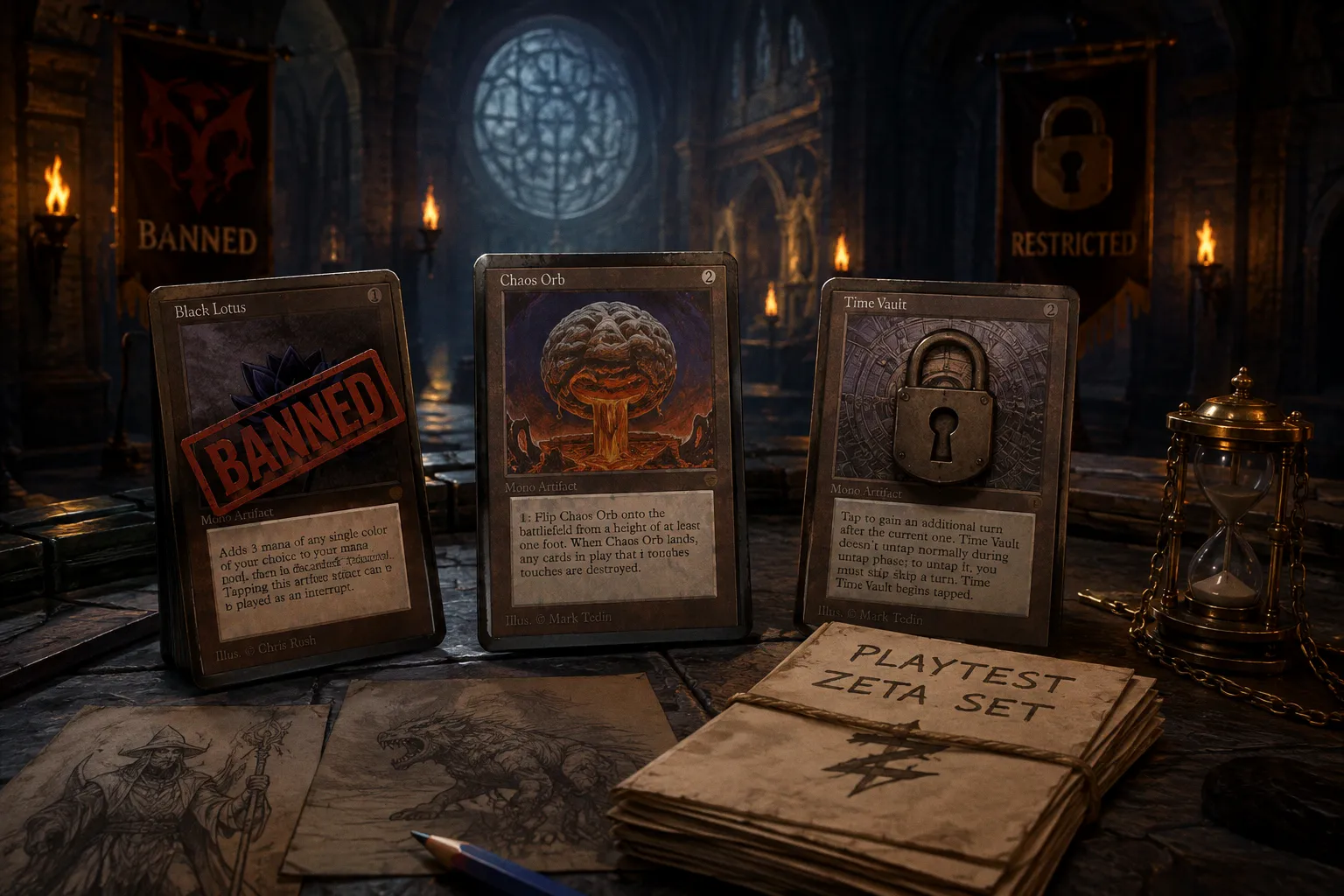
If you've been pouring detail into a beautiful, intricate illustration for a card that later gets banned from competitive play, that artwork's real-world context shrinks overnight. It's a practical lesson in the ephemeral nature of this specific gig.
The Lay of the Land: Banned Lists as a Moving Target
Wizards of the Coast maintains Banned and Restricted lists for all their officially sanctioned formats, including Commander. A ban means players cannot use that card at all in that format's tournaments. For you, the artist, this means the audience for a card's gameplay function can vanish with a single announcement. Vintage adds another layer with restricted cards, where only one copy is allowed per deck.
This isn't abstract game theory. It directly affects the perceived value and demand for your art. A card that was a four-of staple in Modern might become a collector's oddity after a ban. When you're briefing a new piece or reviewing a commission, understanding the card's likely lifespan in the meta is part of the job. It informs the gravitas you might give it, or the playful liberties you can take.
The Retro Revival: Context for Your Collection
On the flip side, the recent announcement of Secret Lair x MSCHF: The Zeta Set is a fascinating case study in artistic context. This release takes Magic back to its 1990s playtest roots, with cards designed to look like rough photocopies from that era. The art is intentionally retro, with black-and-white photocopy treatments, color banding, and photocopy negatives.
For your portfolio, this is a reminder that the style of a card is as crucial as its content. A hyper-realistic oil painting wouldn't fit this product at all. It's a specific brief with a very particular, nostalgic voice. If you're pitching to projects like this, your samples need to show you can adapt your core skills—understanding of form, color theory, composition—to a wildly different aesthetic. It’s not about your best glazing technique; it’s about your versatility and your read on the product's brief.
What to Actually Check and Do
So, what's the practical takeaway? Before you finalize a piece or sign a contract, take thirty seconds. Bookmark the official Wizards of the Coast Banned and Restricted lists page. When you get a brief for a high-stakes card (likely to see competitive play), have a quick look. Is this card in a tense, playtested environment where bans are possible? It doesn't mean you illustrate it differently, necessarily, but it helps you manage your own expectations and the story you tell about the work later.
Also, pay attention to these side projects like the Zeta Set. They represent a different kind of commission—one that's more about style, homage, and collector appeal than tournament play. Broadening your understanding of these avenues means you can spot more opportunities and tailor your pitches more effectively. Your portfolio should show you can handle both the epic, staple-worthy art and the clever, stylistic deep cuts. That range is what keeps you working.